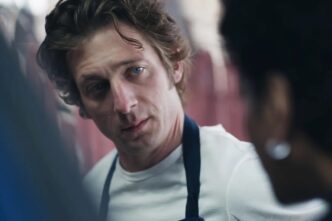
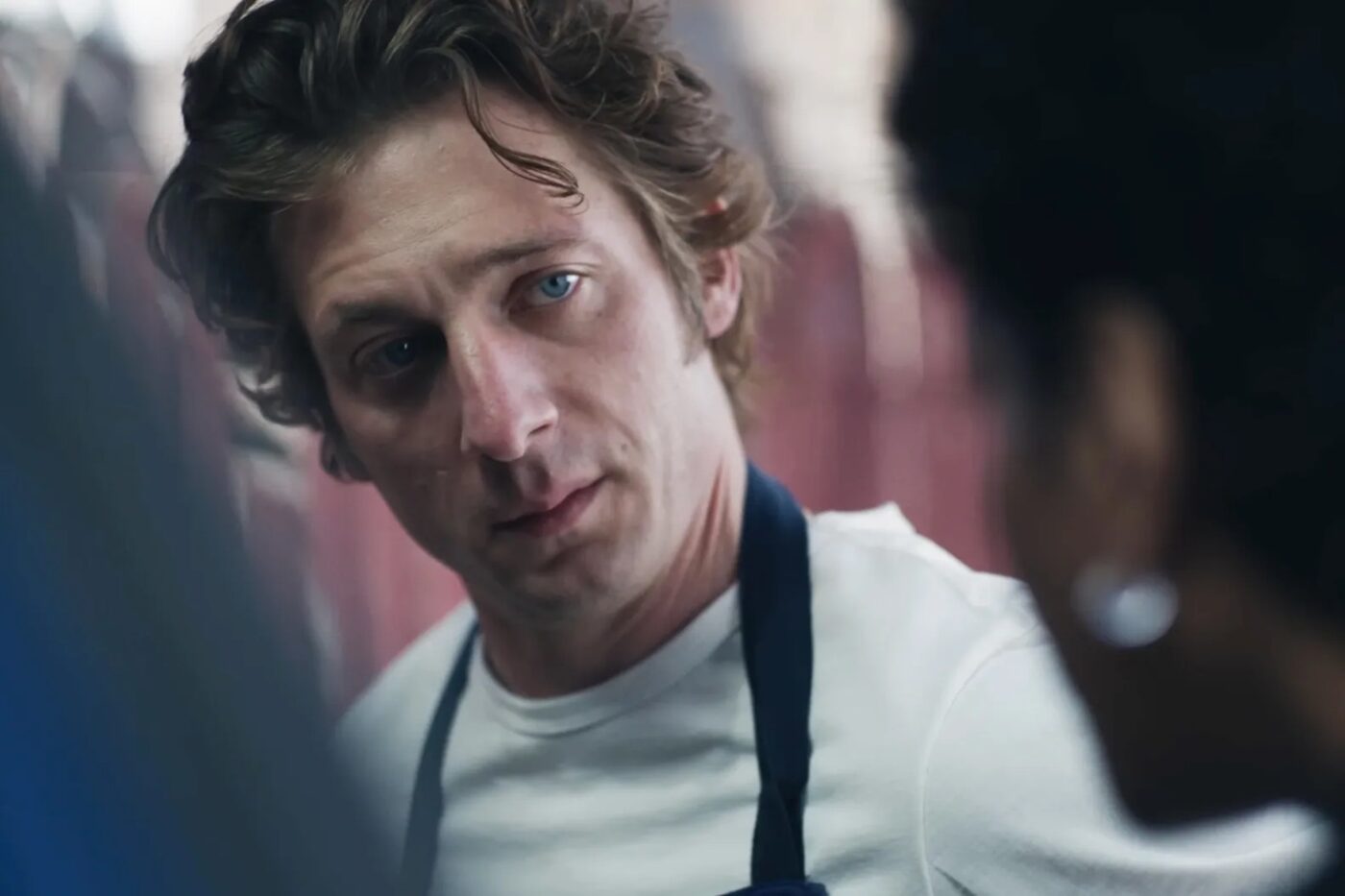

It starts with steam. A stockpot hisses. Condensation beads along the hood and falls onto the stainless steel counter. A kitchen timer chirps. A cook with old burn marks on his arm silences it with a flat palm. At the back of the room, a phone leans against a flour bin, dusted white. On the screen, a new episode of The Bear plays. No one is shouting. No orders fly in. The camera sits with Carmy as he talks. The scene does not hurry.
The cook glances at the phone between tasks. He waits for the snap of the old show: the rush, the printer’s grind, the clang that once felt like a heartbeat. It doesn’t arrive. The shot lingers. Words gather. The room keeps its own pace—tray down, door hisses, cloth twists. The kitchen carries on.
When The Bear began, it felt like a revelation. The first season moved like a service gone sideways: tight frames, quick cuts, the honest noise of a line under pressure. Critics praised the craft. Cooks nodded. Viewers said they could feel the heat and smell the oil. The show put urgency into a half-hour and made it sing. That was the promise.
Across later seasons the tempo changed. The edits slowed. The camera learned to love the hold. For some, the shift felt earned. For others, it sounded like drift. A viral YouTube rant said the pacing had grown sluggish, the monologues endless, the subplots aimless. It argued that the show had swapped “adrenaline-fueled tension” for “slow, self-indulgent drama.” The claim stuck because parts of it felt true.
The show’s rise did not happen in a vacuum. For decades, food television trained us to watch kitchens. The Food Network taught the pleasure of close-ups and competent hands. Competition shows like Top Chef and Hell’s Kitchen gave us timers, judges, and weekly stakes. Anthony Bourdain and those who followed turned appetite into a form of travel and argument. Streaming media refined the look: sleek lenses, mic’d sizzles, long slow shots that made a skillet feel like a cathedral. By the time The Bear arrived, the audience already spoke this visual language. A scripted series could now inherit it, twist it, and build a character drama inside it.
The Bear used that inheritance well. It set a story in a family sandwich shop and treated the work as both craft and debt. Jeremy Allen White’s Carmy was not just talented. He was haunted. Grief sat on his shoulders and would not move. The series framed his hands like tools and his face like a plate in a beam of careful light. Every choice felt like penance and rescue at the same time.
The early craft obeyed a simple rule: tension is a debt you take in one scene and pay in the next. The camera favored proximity over coverage. It stayed inside problems. It let sound design do part of the storytelling: printer teeth grinding, door gaskets sighing, pans shrieking, knives knocking a rhythm on boards. Service scenes were not action sequences, but they carried momentum.
You held a shot because it contained a choice. When the cut landed, it moved the story across a line—from desire to decision. Time stretched and snapped, but the pull never slackened.
Season two kept the nerve and widened the scope. The shop shed its skin. A remodel forced new rhythms—permits, budgets, delays. Then came two hours that made critics argue over superlatives. One charted a front-of-house man learning a code and adopting it with pride. One staged a family holiday as a hurricane in a dining room, all noise and hurt and guest turns. The series proved it could step off the line, expand, and still land the plate hot.
Success brought weight. The more the show got right, the more missteps rang. Expectations grew like a line wrapped around the block. Audience goodwill was deep, but not bottomless.
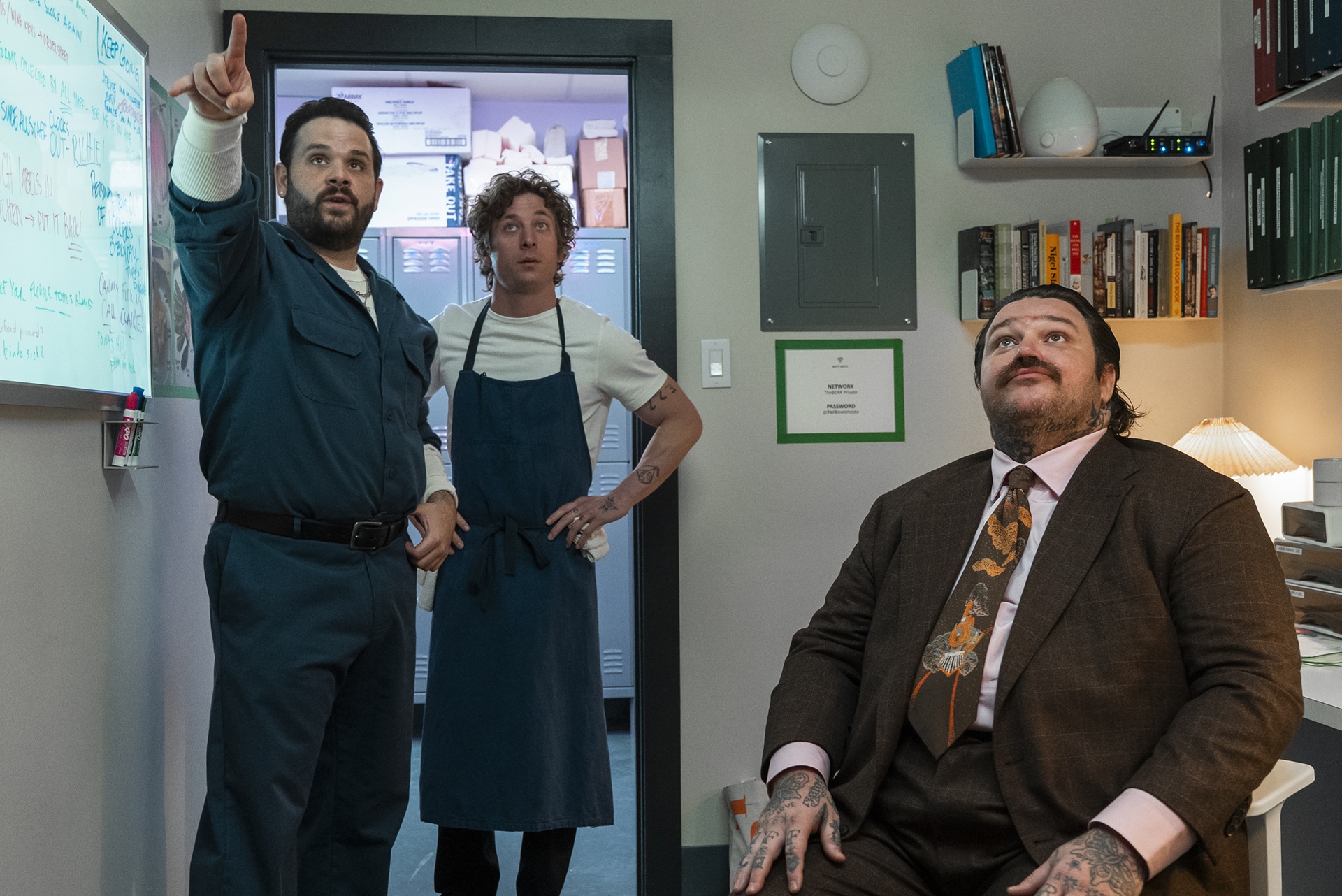
Season three chose aftermath. It opened with Carmy locked in the walk-in freezer on opening night, spilling words he could not unsay. Then it slowed. The themes were grief, reflection, and legacy. The season had the feel of a long breath. It took time with secondary characters. “Napkins” went home with Tina. She lost a job, hunted for another, and found herself at The Beef, and later The Bear. The episode had warmth and hard truth. Music carried part of its logic: busy jazz for hustle, a blast of “Sabotage” when pressure spiked. “Ice Chips” followed Sugar into labor and toward a wary reconciliation with her mother. The scene work was tender and funny. The show found a natural balance between pain and relief.
The approach divided the room. Critics praised the risk and the patience. Some viewers felt stranded in filler and unresolved arcs. Rotten Tomatoes told the split in numbers: critics near-unanimous; audiences far less so.
The word “self-indulgent” started to show up often in user reviews. A fair critic called the season a waiting game, a crescendo with no drop. Even fans who liked the tone admitted they were ready for more story.
Season four arrived with a clean fuse. A Chicago Tribune review questioned the restaurant’s harmony. Uncle Jimmy dropped a blinking countdown timer over the kitchen. The team had two months to become profitable or close. This should have triggered old strengths: service scenes loaded with panic and precision. For long stretches, it did not. The clock blinked in the background while characters stood in doorways and talked. Monologues leaned into psychotherapy speak. A few scenes ran the length of a full song. Earnest platitudes pooled until conflict softened.
None of this meant the season lacked bright moments. A Janicza Bravo–directed episode followed Sydney Adamu on a day off. She sat for a hair appointment at her cousin’s home, cooked for a sharp, funny kid, and saw her own career dilemma with new clarity. The hour was light and humane. It gave the ensemble room. Another scene returned Bob Odenkirk as Lee for a talk with Carmy about breaking patterns. The script stayed simple. The acting did the rest. The moment mattered because it bent Carmy’s trajectory, if only a little. It also showed what the show can do when it puts two strong performers in a room and lowers the volume.
Still, the structural complaint lingered. The countdown set a clear promise. The season often treated that promise as optional. Some critics called this bold. Others called it a breach of basic craft. One sharp review argued that most shows use plot as spine and texture as garnish, but The Bear has reversed the order. In good scenes, that inversion frees the story to feel human and specific. In weaker ones, it becomes repetition and fog.
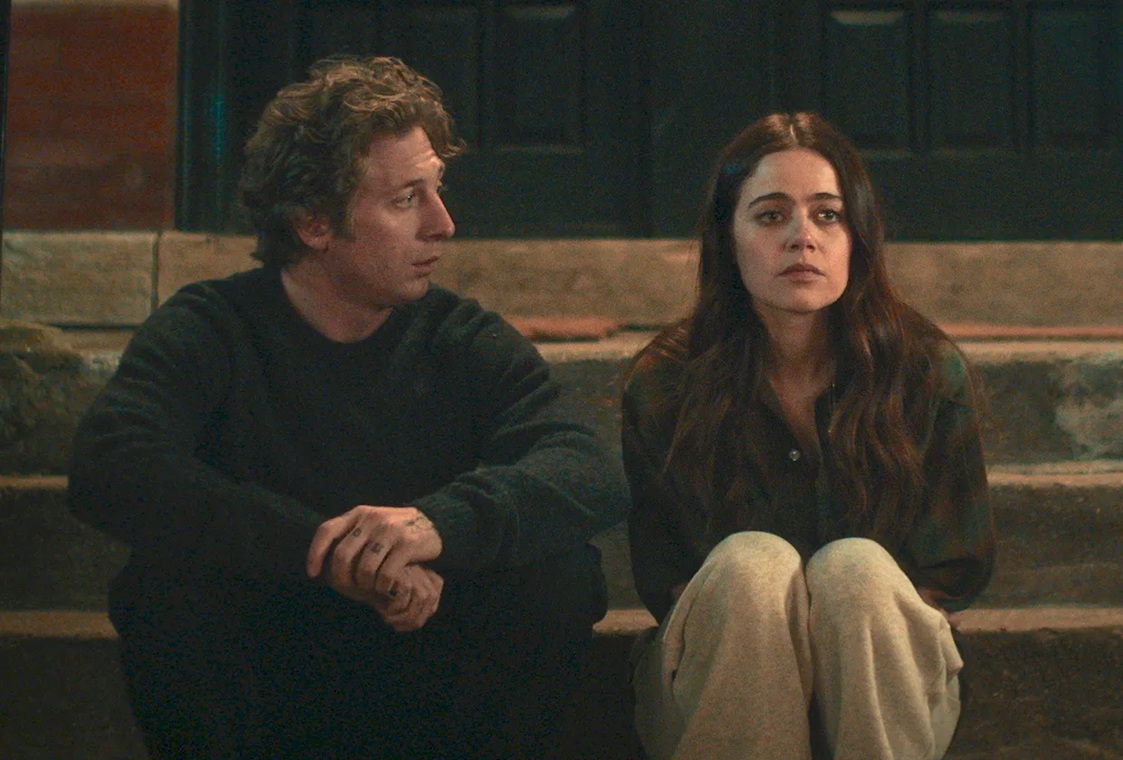
The Carmy problem sat at the center. The camera’s love for him hardened into habit. Close-ups treated grief like marble. His perfectionism, once the motor of the story, stalled it. He had to be brilliant for the premise to hold, and he is. But brilliance wrapped in the same lesson each week wears thin. The actor gives small, alive choices. The scripts around him circle the same wound. Over time, that choice flattens the character and narrows the show. It also steals time from the ensemble, where the series often finds its best work.
The ensemble offers an answer the show sometimes reaches for and sometimes avoids. Richie grows into grace and competence without losing his voice. Tina’s path in “Napkins” turns perseverance into a quiet form of glory. Sydney’s day off shows talent, doubt, and leadership arriving in small steps. Sugar keeps the lights on and forces hard conversations. Even Uncle Jimmy, with his spreadsheets and threats, makes the stakes feel real. This is a room full of stories. When the series widens its frame, the world deepens.
Part of the audience split comes down to expectations and context. Television criticism, trained to reward stylistic risk, praises the tone, the patience, and the choice to defy convention. Many viewers, especially those who loved season one’s heat, want momentum and payoff. They watch late, after work, and need the story to keep its appointments. Both sides have a point. The show worked best when it honored both truths: the rush and the quiet, the debt and the payment.
Even with its stumbles, craft survives in hundreds of small decisions. The edit still knows how to glide through a threshold and settle on a second that matters. The coverage still respects hands, tools, and what they say without words. The sound design still treats the room like an instrument. Music remains a powerful knife. When scenes earn a needle drop, the choice lands. When they don’t, the music admits the scene needs help. The series also uses the two-hander often. Some of them change characters and move the story. Others repeat declared intentions and sag. The difference is action. Change lands when someone tries, fails, and tries again, not when someone simply announces desire.
Cameo appearances have also shifted. The guest parade in season two sparked debate. Later seasons use familiar faces more sparingly. When they appear, they tend to have real jobs to do in the story. This restraint helps. It keeps attention on what’s happening rather than on who walked through the door.
The season four finale repeats a pattern: a hint of reset, a tease of change, an invitation to return. The move can feel like hope or habit. It depends on your patience. It also reframes the central question: is lingering the price of ambition, or a dodge? In a show that asks us to treasure patience, when does waiting become the point? When does it become the problem?
A clearer answer sits in the kitchen that holds the phone. Work demands choices. You prep or you don’t. You fire or you hold. You push a dish because it is ready, not because you are attached to it. The Bear still knows this truth in spirit. It loses it when it treats tension as optional and plot as an accessory. The fix is not speed for its own sake. The fix is purpose. Slowness is fine when it reveals, alters, or pays off. It’s a problem when it replaces those things.
The show’s indulgence is real, but so is its integrity. You can feel the belief in the work. You can see the care in shots that linger on a fold of napkin or the gleam of a quenelle. You can hear the love in a line cook’s offhand “corner” and “behind.” The question is not whether beauty belongs here. It does. The question is whether beauty serves the story or asks the story to serve it. The first choice feeds an audience. The second flatters taste.
One scene hints at a better balance. The countdown clock blinks red while the staff debates small changes that add up: menu stability, tighter ordering, a calmer pass. Those adjustments feel like story because they carry stakes. They might save the place. They also pull at character: Carmy’s need for reinvention, Sydney’s need for growth, Sugar’s need for order, Jimmy’s need for a return. When actions answer needs, the series steadies. When speeches answer needs, it drifts.
It helps to remember why the show hit in the first place. It respected labor. It took kitchens seriously without turning them into operas. It let tension pay the bill for ambition. It allowed beauty as seasoning, not as the meal. Returning to that balance does not mean abandoning reflection. It means tying reflection to choice. It means letting scenes change the ledger, not just discuss it.
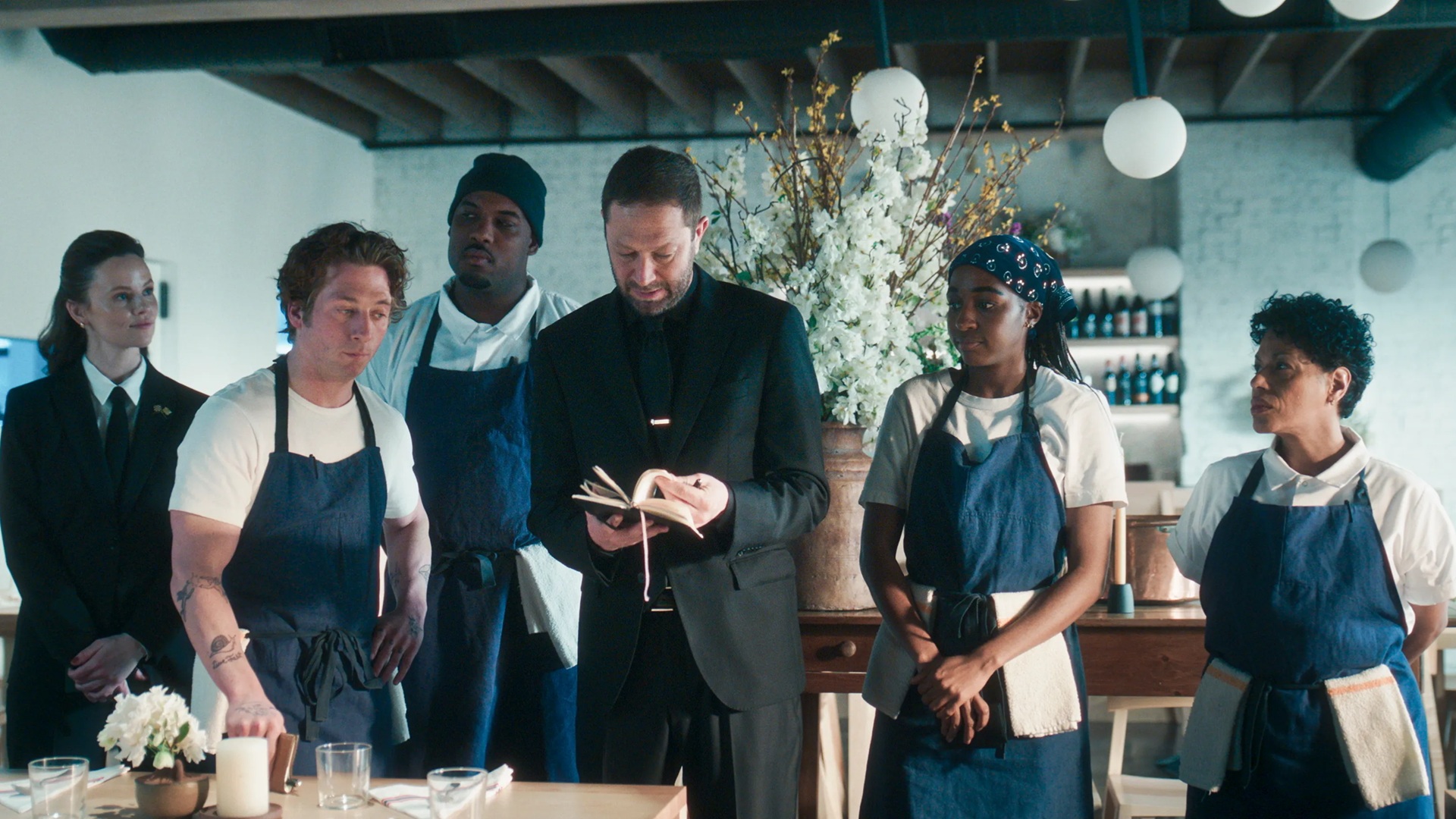
There are also simple gains to make on the page. Shorten monologues. Replace a sermon with three exchanged looks and one new action. Cut a song cue in half. Use repetition sparingly. Keep vivid details that pull us into rooms—the smell of bleach, the sting of steam, the sound of a sharpening stone. Let music earn its place. Let cameos advance the story or keep them out. Give the ensemble real time. When a clock appears, mean it.
None of this makes the show less ambitious. It makes the ambition legible. It also makes the series kinder to its audience, who have given it time and attention through seasons that sometimes paid more in promise than in delivery. Viewers forgive a lot when they feel the story respects their patience. They turn when the story forgets what it owes.
Back in the prep room, the phone drops to low battery. The cook pockets it and checks a tray at eye level. It looks right. He slides it into a rack and wheels it toward the pass. On the show, Carmy says he wants to be better. The line sounds familiar. It’s supposed to. Wanting to be better is a beginning. It is not an ending.
Service is about to start. Hands are called. The floor shifts from talk to motion. You plate what you have been working on. You send it when it’s ready. You adjust when it isn’t. The room tells you if it works. The Bear still has the tools to win that room back, not by running faster, but by cooking with purpose again. The bill is coming either way. Better to pay it with a dish that feeds.
The story does not need to abandon self-regard to find itself. It needs to direct it outward. Generosity is the antidote: of frame, of time, of attention to characters who are not the man in the center. Make space for Richie’s competence, Tina’s calm, Sydney’s leadership, Sugar’s steel, Marcus’s grief and invention. Let Carmy stay brilliant, but stop letting his wound eclipse the room. He works better as part of a line than as marble on a pedestal.
The show’s best scenes already prove the point. A child learns to trust a cook who shows up with a pan and patience. A former rival watches a service land clean and smiles without speaking. A sister and a mother talk too long and still find a sentence they can stand on. These moments are small, but they move people. They move stories, too.
If The Bear wants to test television’s rules, it can. It already has. But a countdown should count. A conflict should ripple into action. A season should not end where it began unless that circle cuts deeper. The show has earned the right to slow down. It must now earn the right to stop, look up, and move.
The phone is back in the pocket. The pass warms. The cook lines up plates like clean thoughts. The episode on the screen will finish without him. He will see the ending later, if the night allows it. For now, he stacks, garnishes, and calls “hands.” The plates lift. The dining room waits. The work answers. The lesson, old as kitchens, applies to television too: eventually, you have to serve.