
The air inside Hazrat Shahjalal International hit like wet wool—tobacco, rotting mango, last night’s sweat. Ahsan’s earliest memory. Six years gone, and his lungs still recognized it. Seventeen hours in transit compressed into this: fluorescent LED brightness, a thousand brown elbows jabbing for position.
Sadia drifted ahead, phone angled for video. “We made it,” with dancing cartoon tigers. Ahsan’s wrist hung limp from her overstuffed bag. Citrus sanitizer pooled in his palms, his passport still damp from the pre-landing ritual.
The signs: “FOREIGN PASSPORTS” to the right, behind a red bar. Pale NGOers. Bearded British uncles. To the left, “LOCAL”—twice as long, triple the noise, motionless. His hand found hers. She towed him toward the blue-velvet corral before his old instinct could drag him left, into the sticky throng where he belonged.
The man in the orange vest glanced at Ahsan’s navy booklet. Chin jerk. Approval.
Sadia held her phone low, thumb hovering. “You okay?” Barely audible over the wailing baby.
“Feels weird.” His tongue was a spent muscle. He wanted to say more—something about being shuffled through his birthplace like a VIP at a zoo. The words stuck.
The immigration officer looked up. Balding, sweat-stippled pores, mustache trimmed to mathematical symmetry. Ahsan wondered if he trimmed it at his desk during lulls. The man paged through the passport. American visa. Green card. Face. Sadia’s face. Eyes calculating.
“Purpose of visit?”
“Family wedding.”
“Duration?”
“Two weeks. Maybe less.”
Grunt. Two stamps. Booklets returned. No lecture, no raised eyebrow. No “Welcome home.” Glass and two metal detectors separated them from baggage claim.
Sadia snapped the “WELCOME TO BANGLADESH” sign, paint flaking at the edges. “Homecoming,” with a smiling emoji. Posted before he could stop her. He could already see it: forwarded through WhatsApp threads, cousin to cousin. Ahsan Bhai finally returns! With wife! From America!
He wiped his hand on his jeans.
Belt 4. Travelers pressed against trolleys and sweat, eyes fixed on the rubber tongue of the carousel. The overhead display flashcycled: QR codes, cryptic Bangla, English—”Baggage Delivery In Progress.” The belt glistened, freshly oiled. Nothing moved except a water bottle orbiting the far end. Abandoned satellite.
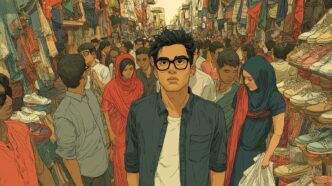
Sadia wandered toward a complimentary Wi-Fi sign. Ahsan inventoried the crowd: matching tracksuits haggling with a porter, two old men in lungis snoring on luggage, hijab-clad girls giggling at TikTok. The air conditioner strained against bodies. Sweat prickled his scalp.
Forty minutes. He set an alarm to track the absurdity. When it buzzed, he scanned for an official. There—woman with walkie-talkie, professional slouch.
“Excuse me.” American crispness in his vowels. “Do you know when Belt Four will be operational? We’ve been waiting almost an hour.”
She smiled with her eyelids. “System problem, brother. Wait a little.”
“Are they fixing it? Or is someone—”
Universal South Asian wobble. “Few minutes, okay? Sorry for inconvenience.”
She drifted off, phone in hand, already fielding the next complaint.
Ahsan paced the perimeter. Machinery unresponsive to his glare. Sadia chatted with a kid in a green vest, all teeth, voice staccato. She mimed driving. The kid snorted, shook his head.
“Making friends?” Brittle lightness.
Sadia grinned. “Broke last week too. Some Hajji’s suitcase jammed in the gears.”
The porter rapped knuckles on metal, rapid Bangla.
“He’ll fetch our bags from the back. For a tip,” Sadia translated.
“American logistics, meet Bangladeshi improvisation.” Ahsan considered the principle, the waiting. “Ten minutes.”
She pocketed the five-dollar bill.
The water bottle scraped another lap. Wearing grooves through rubber. The carousel coughed, went silent. Sadia balanced her phone on her thigh, assembling a collage: jet bridge selfie, Tokyo ramen, Ahsan asleep, mouth open. He wanted to ask her to stop. To exist unrecorded. But he could hear her answer: Your whole family lives on WhatsApp, and you’re worried about privacy?
He shifted foot to foot. Counted things: people pressed side-by-side, bags in the holding pen (none theirs), minutes since the last announcement. Forty-nine.
The porter had vanished. Probably hunting another tip. Ahsan scanned for someone who looked ready to answer questions. Found only uniformed men with matching mustaches, clustered around a phone, chuckling at memes.
No urgency. In America: clocks, digital boards, managers in vests. Here: hand-scrawled sign. “Bag Delay Sorry.” His checked suitcase—overpriced Samsonite, PhD honor cord tied to the handle—trapped in some back room. Or Karachi. Or already auctioned by a bored customs agent. He tried willing the belt into motion. Nothing moved except sweat down his back.
Minute fifty-three. Someone yelled his name. Full-swing, pre-hyphen: “Ahsanul.”
He spun. Man in peach-pink shirt, waving from behind security. Rashed, his sister’s husband, somehow inside the baggage-claim zone. Grinning like he owned the place.
Sadia shrugged. Just Bangladesh things.
Rashed ducked the rope, sidestepped a luggage cart. Cinnamon gum preceded him.
“Bhaiya! You didn’t call! We waited outside like beggars.” Shoulder clap. Both hands shaking Sadia’s. “This system’s a joke. Come, we’ll get your bags the real way.”
No question of protest. Rashed steered them to the belt’s end, flagged down another porter—twice his age, half his height. Folded note exchanged, crisp and secret. Magic trick speed. The porter nodded, ducked behind rubber flaps. Emerged dragging two suitcases, plastic-wrapped, slightly muddy.
Rashed beamed. “See? Easy.”
Ahsan stared. The bags. The porter’s shoes slick with machine oil. The space behind those flaps where anything could happen. Pulse in his temple. Nostalgia, outrage, unnamed shame.
Sadia took a picture. “Officially the best airport pickup ever.” Arm looped through his.
He wanted to say something about protocols, safety. The words tasted hollow before they reached his mouth. He thanked the porter. Eyes never rising above shoe-level.
Rashed led them out, confidence of inherited ownership. Past triple-glazed doors that whooshed open. Stinging wall: noise and heat.
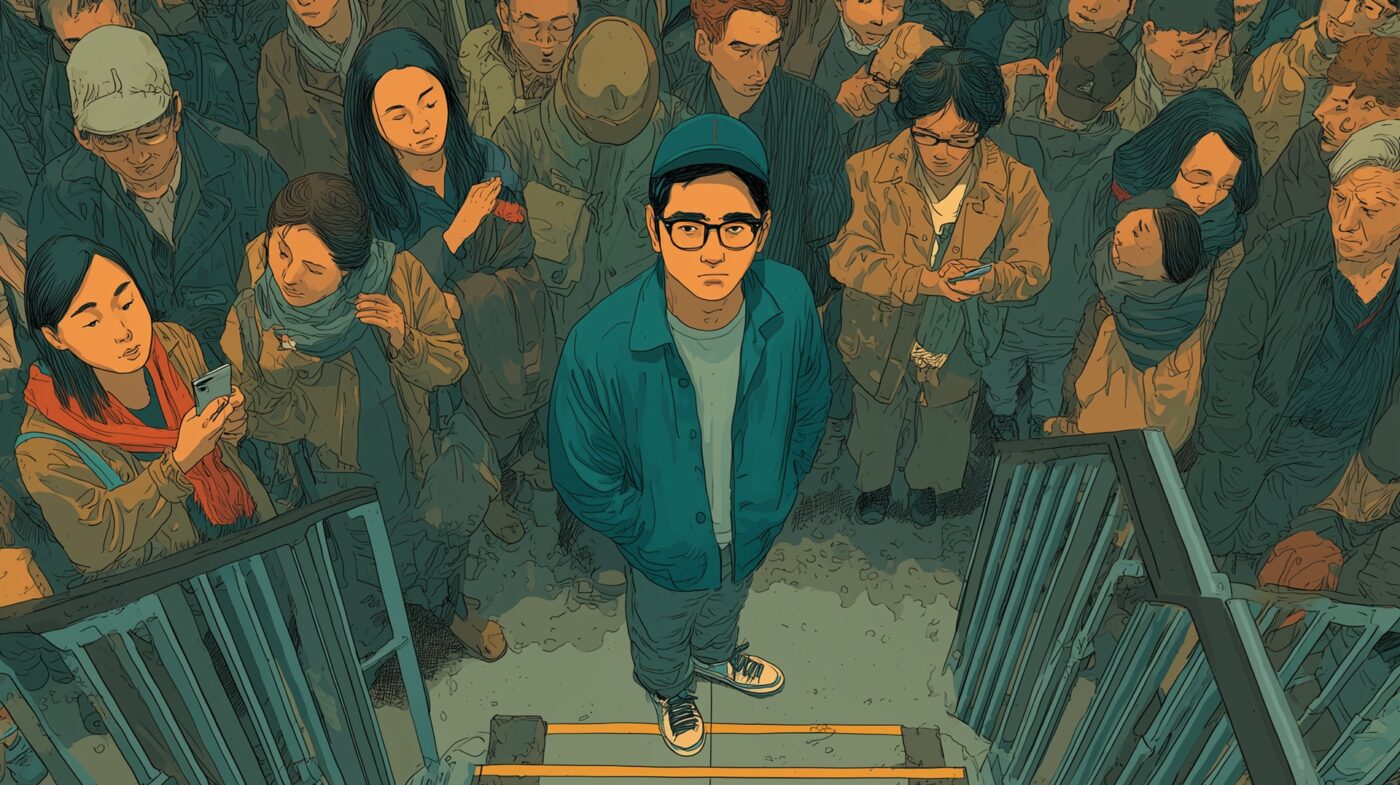
Outside, the arrivals ramp fanned into concrete canyon, yellowed by streetlight. Bodies everywhere: men holding name cards overhead, children perched on trolleys, women in bright salwar kameezes standing sentinel. Beyond police barricades, faces pressed against railing. Tilted upward. Hungry.
The stares hit his chest. Heavier than humidity. Every muscle braced. He’d forgotten this—raw, unfiltered surveillance. Hundred strangers scanning: hair, skin, height, American sneakers, Sadia’s cropped jeans. He tipped his cap lower. Wished it could swallow his head.
Sadia raised her palm. Parade wave. Visiting dignitary. Shrill whistles, shouts of “Welcome, Sir!” drifted over the barricade. She beamed, nudged his ribs. “They’re so friendly!”
Eyes on the ground. Slick chai patches. Ratty cable snaking through the walkway. “They’re curious.” He hated how this place made him feel. Always performing. Always two seconds from slipping. Every smile had three frowns behind it. He could feel the gossip writing itself: Look at the prodigal son. Back from America. Too good to meet our eyes.
Rashed moved with his own forcefield, parting touts and relatives with one outstretched hand. Their car—battered silver Corolla, hazard lights pulsing—already idling at the curb.
The curb was war. Every car inched forward, unspoken schedule, horns blaring counterpoint. Half the arrivals hall funneled onto sidewalk, trailing carts and relatives. Motorcycle couriers threaded through, brakes squealing, dodging children and ancient women in saris. Heat roared off asphalt. Diesel and durian.
Nusrat first: standing by the trunk, phone wedged between chin and shoulder, rapid-fire argument. The car looked smaller. Rear fender duct-taped, body speckled with rust that curled paint into scabs. She kept glancing at her watch, lips pursed so tight the kohl between her eyebrows threatened to snap.
She clocked them. Single up-and-down sweep. Call clicked off. No hug, no smile. Sharp inspection, eyes flicking from Ahsan to Sadia to suitcases. “This is all?” English. The question preempting deeper reunion.
“Checked baggage. Sadia’s carry-on. You want to—”
Trunk already popped. Bangla instructions barked at Rashed, who relayed with choreographed gestures. She seized Sadia by the elbow, steered her toward the back seat, paused. Jabbed a finger at Ahsan’s hand. “Look at this. His skin so soft now. Like marshmallow. American soap does this?” Thumb pressed to his knuckle. Amused, vaguely disgusted. Wiped her finger on air.
Ahsan bit down. His scalp tingled. Last time she’d touched his hand—decades ago, probably. Sunbaked hallway. Before he’d figured out how to hate everything she stood for. The dimples in her cheek were deeper. Tone unchanged: dissecting, efficient, never sentimental.
Bags loaded in silence. Air thick as melted chocolate. Sadia hovered at passenger side, uncertain. Nusrat shooed her in, closed the door. Gentle click. Sadia the only delicate object in the scene.
A beggar materialized. Boy, maybe ten. Barefoot, rope-thin. Hands cupped, eyes bright. Predatory hope. “Please, sir, dollar? I hungry. Just one dollar.” Script smooth, unbroken.
Ahsan recoiled. Patience shot from travel, jaw still buzzing from baggage claim. “Bhai, move.” Flick somewhere between rude and involuntary.
Nusrat watched. Mouth set in a line. Then, as Rashed got in the driver’s seat, she reached into her purse. Crumpled ten-taka note handed to the boy. “Next time, ask the lady. Men are always cheap.” Glance at Ahsan, then Sadia, pretending to scroll but not seeing the screen.
The boy grinned. Teeth flashed. Vanished into crowd.
Ahsan got in. Front passenger seat already sticky from years of unidentifiable residue. Different ecosystem inside: old sweat, fried garlic, chemical tang of tree-shaped air freshener masking both. He found the seatbelt buckle by feel, remembered no one used them. Least of all Nusrat, who’d started the engine, already cursing at a rickshaw blocking their path. AC rattled to life. Air so feeble it barely moved hair on his arm.
They pulled away. Every lane change a brush with death. Every honk a coded message. Billboards for skin whitening cream slipped past. Cell towers wrapped in tarps. Tangle of pastel shanties stacked three stories high. Old shame crept up his spine. Tickle turned to itch behind his eyes. Home, no matter how hard he’d tried to sandpaper it off.
Nusrat drove, both hands on wheel, eyes ahead. “Next time, I’ll send for a van. Your wife is not a travel person, I see. She’s tired?” English. Ostentatiously clear.
Sadia looked up, startled. “I’m fine! Just jet lag.” But her leg bounced double-time under the dashboard. Anxious drumming. Someone who’d rather be anywhere else.
Ahsan slumped against the headrest. His tongue had dried out. Words caught behind a checkpoint in his brain. Nusrat filled silence. Radio switched to news, voices rapid and sharp, static undercurrent to street clamor.
Every red light, another kid appeared. Hands on glass, faces pressed against window. Pale, sweating ghosts. Nusrat ignored them, gaze never leaving the road. Sadia tried not to look. Ahsan felt the weight of her discomfort. Could map it in the air between them.
Highway. The Corolla rattled at sixty kilometers per hour. Dodging goats and potholes with equal urgency. Rashed finally spoke: “You want tea? There’s a place near the bridge.”
Sadia nodded. Too quick. “Yes, please.”
They pulled over. Roadside stall—turquoise shack, three plastic chairs out front. Nusrat ordered for everyone, lit a cigarette. Smoke blown out the window with force. Like it owed her money. She handed Ahsan his tea in a glass. Still too hot to hold. Looked him over again. Flight had transfigured him anew.
“So. America.” Not a question.
Ahsan sipped. Scalded tongue. Pain a small relief. “Yeah. It’s… different.”
Noncommittal noise. One eyebrow arched. “You eat beef now?” Tone neutral. Trap visible.
“Sometimes.” He waited for her to press. She only shrugged.
“Everyone eats beef. It’s protein. Better than this.” Chin pointed at the boiled egg floating in Rashed’s cup.
Sadia laughed. Thin, nervous. Nusrat favored her with a sidelong smile. “You like tea?”
Nusrat nodded. This time real. “It’s very sweet.”
“It’s only sugar. We have nothing else to put in.”
They drank in silence. City noise constant in the background. Ahsan tried imagining the next two weeks compressed into moments like this: the three of them, wedge of time and distance between every word, every movement. Would it get easier? Or would he just get better at pretending?
Back in the car. City lights stuttered past. He tried not to think about what waited at the apartment: tangle of old grievances, weight of expectation, thousand invisible injuries that would bloom the moment he crossed the threshold. Sadia leaned her head against window. Lips moving in silent rehearsal of something she wanted to say.
Nusrat drove faster. Corolla weaving through traffic. Stubborn logic of someone who’d never once considered the possibility of failure. Ahsan watched her hands on the wheel. Callouses on her knuckles. How she handled every curve with muscle memory of years spent surviving. He remembered her as a little girl. Fearless, sharp-tongued. Always first to leap onto the roof during monsoon. Always first to dare him to follow.
He looked at his own hands. Pale and soft, as she’d said. Flexed his fingers. Wondered if they’d ever toughen up.
The city grew louder, brighter, more impossible. He wanted to ask Sadia how she was holding up. The words felt childish. Admission of weakness. Instead, he stared past her at the neon blur. Tried to memorize every detail. As if he could will himself into belonging.
No escape. He was here.
He was home.