


Hours before the show, Los Angeles wears its usual mask of ease: warm air, slow traffic, palms cutting the sky. Inside a mirrored practice room, six young women mark through choreography with steady focus. The speakers push a low, constant bass. The floor hums with it.
At the center, Lara Raj steadies her breath. She is nineteen, Tamil American, with chrome hoops and a small bindi set neatly between her brows. She checks the line of her eyeliner, makes a quick joke, and watches tension ease as the others laugh. The cue comes. Music rises. Six bodies move like one—sharp cuts, clean transitions, the practiced pulse of a unit that has counted these steps a hundred times.
The rehearsal is for a major award show. For Katseye—the “global girl group” built by HYBE and Geffen—it is proof they belong on a giant stage. For Lara, it means something more private and more public at once. It is a chance to be seen the way she once wished she could see someone else: a brown girl with a bindi and an Om pendant, fully present in the center of American pop spectacle.
The room smells faintly of hairspray and warm electronics. An assistant calls time. They run it again. In the mirror, Lara catches a double exposure—part kid who got teased for wearing the adornments she now wears to work, part woman who decided to wear them anyway.
She touches the pendant at her throat—an Om her mother wore as easily with jeans as with a sari—and retakes her mark. The track clicks on. The downbeat lands. The choreography hits clean. In another room, a stylist lays out black and chrome for the night. In this one, the grind is the glamour. Lara counts under her breath and pushes into the next eight.
House of prayer and pop
Before all of this, home is a blend. Connecticut first, then New York. The house smells like sambar and whatever candle is on sale. Tamil chants mix with weekend chores. American radio drifts through open windows. Her parents came from South India with the familiar immigrant math of risk and hope. They ask the usual things: work hard, remember who you are, eat when you can.
Her paati—her grandmother—is the quiet center. She believes objects can hold intention. A crystal can be a prayer you keep in a pocket. That idea sticks. The Om necklace is not a costume. The bindi is not only decoration. These details link two places and two selves. On nights when the city feels loud and strange, Lara holds the pendant and feels that thread pull tight.
School feels different. The same details that feel beautiful at home can draw a different kind of attention. A comment in a hallway. A glance that holds a joke too long. Those small stings settle deep. Later, under stage lights, the same cues become signatures.
Her mother models another path: wedding jewelry thrown into everyday American outfits, not for shock but because it pleases her. It becomes a blueprint. Prayer and pop do not cancel each other. Together, they make a new chord. The lesson is simple and durable—wear what matters and let it stand.
Two sisters and a laptop
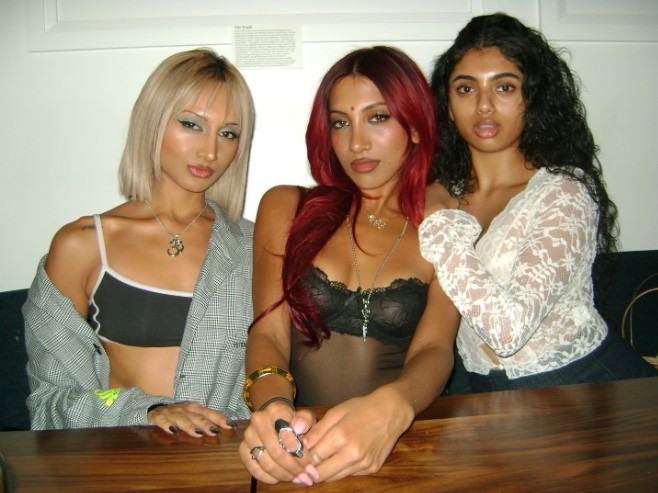
Sound gives her a voice. The first studio is a bedroom. The first console is a laptop on a scuffed desk. There are two chairs. Her older sister, Rhea, has gone first. She already speaks the language of pop and pulls Lara in beside her. They learn the grammar of simple beats and stack harmonies until they bloom.
They sing into cheap mics and listen back with teenage patience. Some covers come out thin. Others land with surprising weight. They reach for songs that ask for range and feeling—Destiny’s Child’s “Emotion,” Rihanna’s “Love on the Brain.” They try. They miss. They try again. In the trying, they learn the first rules: keep time, breathe from low in the body, mean it.
Rhea gives precise notes. Lara learns what cannot be handed over: how to hear a song’s spine, how to tuck a run into the pocket where it belongs, how to subtract when a track is crowded. When a recording finally matches the version in her head, something clicks. This is not a hobby that will fade. It feels like a direction.
They post their covers. The internet does the usual—some attention, lots of quiet. It is enough. They sing after homework. They nudge the compressor a little. They learn to put sound into the world and see what comes back.
The message that changed everything
Opportunity rarely arrives with fanfare. Sometimes it is a line of text on a phone. The message is simple. HYBE and Geffen are building a new kind of girl group—global by design. Scouts have seen Lara’s videos. Would she audition for a competition that will pick six members from twenty trainees?
She is seventeen. The choice feels both enormous and obvious. Weeks later, she is on a plane to Los Angeles. The city spreads beneath the window: freeways like threads, ocean like metal, a future still a sketch.
The Debut: Dream Academy moves fast. Mornings begin with vocal warm-ups meant to turn nerves into tone. Afternoons are choreography—counting your body into the same lines as others, learning to speak in motion. Evenings are evaluations. Notes. Adjustments. Another round. Cameras watch everything and almost nothing: the rush of being chosen, the panic of exposure, a tight ankle that will not ease, a quiet fear that this might not work.
The international mix helps and challenges in equal measure. Girls from cities Lara has known only from screens stand beside girls whose stories feel like hers. Language lags, then finds a way. Food does a lot of translating. They learn each other by degrees—shared snacks, traded painkillers, a borrowed hoodie for a cold walk to the idling van.
Evaluation days change the air. The room sharpens. Judges keep steady faces. Feedback carries real stakes. Some lines can flatten you if you let them; others can build a better spine. Lara keeps the advice, drops the noise, and goes back to work. She keeps a cat’s eye crystal in her bag. Her paati pressed it into her hand. It is a quiet anchor.
The stakes are obvious. Twenty into six does not work without something breaking. The process still shows its integrity. This is the job. The job is both beautiful and blunt. She learns what it takes. She still wants it.
Grief and grit
Two months before the final lineup, grief fills the room. Her grandmother in Chennai is gone. Family gathers across an ocean. Time zones turn mourning into a split-screen. Lara works. She cries after rehearsals. She holds the crystal. She keeps moving.
On the day of the announcement, she smiles and hugs and feels the surge of relief every montage tries to capture. The deeper feeling is quieter. A path that had been cloud now feels solid. Six young women will be Katseye. She will be one of them. She presses the crystal hard against her palm, as if to sign a promise.
Building Katseye
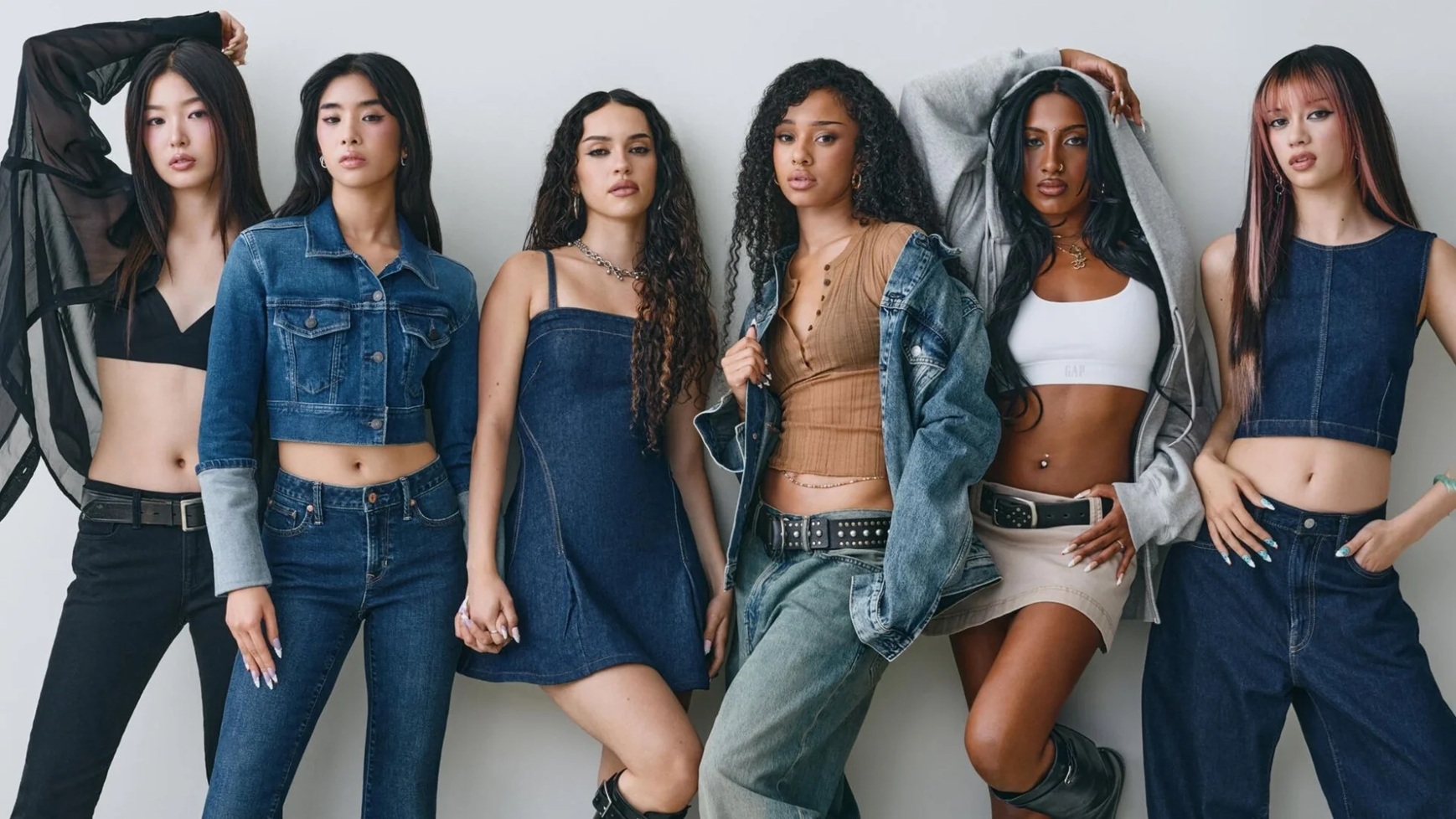
“Global girl group” can sound like a slogan until people in a room make it real. The mix is not a headline; it is daily practice. Bring who you are. Learn to move as one. Treat difference as strength.
The first months have the glow that follows a hard-won slot and the grind of any new job. Train. Record. Shoot. Repeat. The debut EP, Soft Is Strong, announces itself in its title. Pastel visuals. Harmonies that soften edges. Choreography that braids speed with tenderness. The group looks like many places at once and feels like one.
The next project, Beautiful Chaos, pushes harder. Lines sharpen. The pulse turns wild in places. On “Gnarly,” bodies shake and bend with a manic edge that challenges any neat idea of what this group is. If the first EP builds a shared voice, this one gives it grain.
Inside that evolution, Lara keeps her own signatures. A small bindi under hot light. A gesture adjusted to echo South Asian classical shapes without turning into a history lesson. Gold layered over a Diesel tank. Tiny decisions build a language. None of it lectures. It simply exists.
Practice rooms tell the truest story. Correct a wrist angle ninety times. Sing a line again and again until the vowel stops betraying you. Collapse on a bench and stand up because the schedule says so. Nothing about this work is glamorous. That is the point. Repetition is the cost of craft. The stage is the receipt.
The sound of a breakout
Every pop story collects its turning points. “Touch” is one of them. On record, the song moves with unhurried confidence. On stage, it asks for control and invitation at once. It wants a body strong and loose, a face that holds calm even when breath runs thin.
The performance circuit turns it into an anthem. First come smaller stages with camera cranes and white light. Then comes a stage with trophies somewhere in the wings. If the eye goes to the center, it keeps returning to Lara on the edges—clean lines, a presence that faces the room without building a wall. The bindi catches light and tosses it back. The necklace flashes with the rise and fall of breath. Six become one without erasing the six.
The award—MTV’s Push Performance of the Year in 2025—puts a name to that moment. Headlines stand the story upright: a first major win, a signal that the experiment works. At kitchen tables in Queens, Fremont, and Scarborough, the win reads differently. It looks like a brown girl with a bindi holding a microphone where their daughters can see it. It looks like a future with a shape you recognize.
The song spins outward. In a studio across town, a class of preteens works through a simplified routine. They groan. They nail it. They cheer. In a college dorm, a student toggles between a physics problem set and a fan edit, trusting tempo in both. On a bus, a kid hums the hook under his breath. These are small ripples. They are real ones.
Seeing herself in a shop window
Sometimes representation is not a speech. It is a sign in a mall. The Gap campaign lands at the same time as a very different denim ad, and the internet loves the contrast. Behind the viral comparison is a simpler scene: a mother and daughter on a back-to-school errand stop because of a face.
The photo shows Lara in the corporate glow of a billboard. What cuts through are the details: the bindi unbothered by retail gloss, the Om pendant catching light, a nose ring that once would have drawn mockery and now reads as simple style. A designer named Megha Rao takes a picture because seven-year-old her never saw this. She posts it for the daughter on her hip who will grow up taking it for granted.
Another girl scrolls past the clip set to Kelis’s “Milkshake,” then scrolls back and watches again. In the comments there is praise, critique, and the usual static. Beneath it sits a clear fact. A familiar symbol has stepped into a mainstream frame without apology. Denim does not become sacred. The distance between the temple and the mall shrinks by an inch.
Lara sees the posts and writes back. Not as a brand rep, but as someone who remembers wanting an image that was not there. She has said it before in interviews: she wants South Asian kids—especially those who learn to bear being “too much” of anything—to feel the lift of recognition. In marketing copy, that promise can go slack. In lived life, it holds.
Saying it out loud

Public life turns private facts into headlines. One night, on a casual Weverse live, Lara leans toward her phone and says, with a grin, “I knew I was half a fruitcake when I was like eight.” The line is mischievous and warm. It carries the point: she is queer. Within hours, the clip becomes a post, the post becomes a scroll, and the scroll becomes a headline.
For Lara, it is not a revelation. She has been out to family and friends since fourteen. The live is not a confession. It is a continuation. What surprises her is the volume of replies. Teenagers write to say they come out after watching. Diaspora kids write that the word “queer” feels less hard in their mouths now. For queer South Asian fans, the moment lands like permission.
Her industry can make the line between personal and professional feel thin. In some corners, silence still promises safety. Katseye’s frame is different. Another member comes out as bisexual soon after. Honesty moves the needle in small steps. No stage is a safehouse. Visibility can still be a shelter. It can also be a flare.
The shift of a slur into a joke, and a joke into a vow, circles back to her larger project. You can make people listen without lecturing them. Fans stitch videos into a chorus—notes to themselves filmed in bedrooms and bathrooms and parking lots, in a dozen languages. The comment sections under those clips are the truest headlines.
The horizon line
Early fame is mostly logistics. Call times punish oversleeping. Cameras find angles you did not know you had. There is a calculation of food, sleep, travel, and nerves. In that churn, a mission statement can start to sound like a slogan. Lara keeps it concrete.
She shows up and sings until the bridge sits still. She lays out jewelry on a dressing table and chooses pieces that thread her mother’s easy mix of tradition into her own love of black and chrome. She takes a breath and treats the camera like a person, not a crowd. The work is specific. So is the focus.
Her plans are large but not grandiose. Keep building with Katseye. Make room for collaborations that feel less like strategy and more like recognition. Consider solo work when it feels right. Reinvention is not a stunt; it is craft. Try a Miu Miu jacket even if it feels too “posh.” Wear Margiela Tabis and leave the split-toe discourse to the comments. Change your mind later if you like. The goal is not to be pinned to a mood board. The goal is motion.
After rehearsal, the room empties. She lingers. The bindi holds. The pendant cools against her skin. She thinks about the line from a bedroom studio to this mirror. That line is held by small, unseen welds: her sister’s patient notes, her grandmother’s last gift, parents who kept a house steady enough to set up a laptop, a handful of girls who chose to become a group.
Outside, the city stacks light on light. Freeways scribble the horizon. Something new is already on its way. Inside, she gathers her bag and presses the crystal once. It is not superstition. It is gratitude—a ritual remade into an anchor. Tomorrow there will be counts to hit, cameras to read, and rooms where she is both who she was and who she is becoming.
Headliners change. Other faces step forward. Other names rise. She knows that. Some images last anyway because they repair something in the people who see them. A teenage girl in a New Jersey mall. A kid at a campus party who wears a bindi because she wants to. A boy in Queens who is done explaining himself. The future is crowded and complicated. There is not one way through it. When Lara steps into the light, a line stretches from where she stands to where they are. She follows it. They follow, too.
Notes on a life in motion
Look for a single origin point and you miss the arc. Lara’s story bends through clear stations: a house that holds prayer and pop in the same breath; a bedroom studio shared with a sister; a message that redirects a life; a training system that is both school and stage; grief that keeps moving; a group that learns how six people can be one sound; a breakout stitched from practice; a mall sign that makes a mother stop; a sentence, spoken live, that turns private truth public.
Each station is ordinary in its own way. None relies on myth. They are marks on a timeline still being drawn. What makes them feel larger is not size but echo. They ring for people who recognize themselves.
She is born in 2005 in Connecticut and raised in New York. She is Indian American, Tamil by family roots, the child of immigrants who carry pragmatism and faith in the same suitcase. She wears an Om pendant like her mother. She wears a bindi because she likes it and because she wishes more brown girls felt free to like it, too. When she is younger, she is teased for those choices. She carries the memory. She does not drop the adornments. She reframes them.
She learns music at home, in a room that holds both algebra and chorus. She learns production at a desk that also holds nail polish. She learns to listen as much as she learns to sing. Her sister is her first collaborator and remains a touchstone. Their covers of “Emotion” and “Love on the Brain” do not break the internet. They do something more durable. They build muscle.
A scouting message brings her to Los Angeles. Dream Academy demands a lot. It gives a lot back. It is hard and worth it. In the middle of it, she loses her grandmother in Chennai. She keeps working. She keeps grieving. She carries a cat’s eye crystal in her pocket. When the final lineup is announced, she steps into a new chapter and into a group designed to be many places at once.
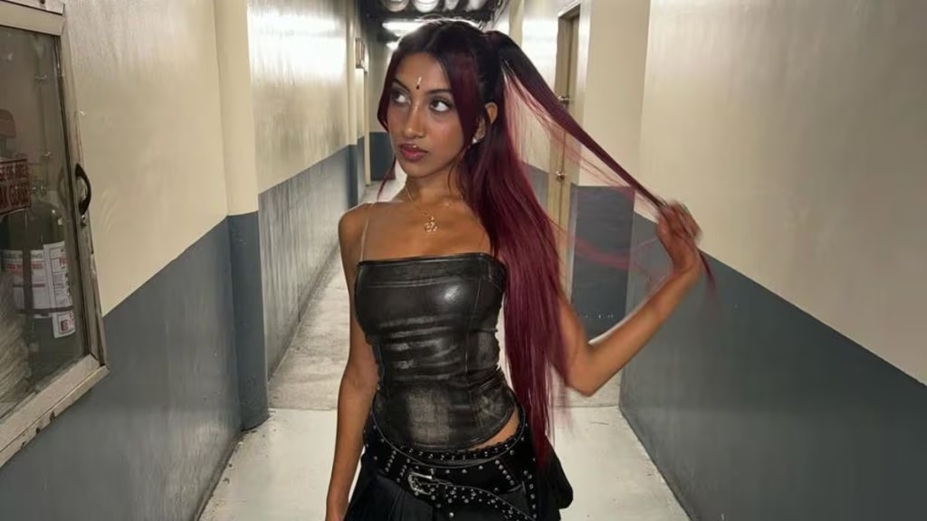
Katseye’s debut speaks soft and looks soft. The next era sharpens. “Touch” turns them into a headlining story. A major award confirms what fans already feel. The group becomes a map of possibility. The image of Lara on stage—bindi bright, nose ring steady—does specific work in people’s hearts.
Off stage, the Gap campaign draws attention for the usual internet reasons. What matters most to the people who stop in front of it is less online: a frame holding a face that once did not appear in frames like that. A designer takes a picture with her daughter. Lara writes back. The loop closes and widens at once.
On a live stream, she says a sentence about herself and makes it a joke on purpose. It is real and light at once. It travels. People write to say thank you. Another member comes out. The group holds that truth like it holds harmony: firmly and without fuss. Not every place in pop makes the same choice. This one does.
She talks about fashion with humor and precision, the tone people use for serious play. She loves black and chrome. She reaches toward Miu Miu and Chanel even when “posh” feels new on her shoulders. She buys Tabis and lets the discourse run without joining it. She dresses like a person testing borders, not defending them.
She talks about work as work. Keep making songs. Get better at making songs. Find the right space to put them in. Make room for collaborators who feel like kin. Consider solo work when it makes sense. Keep showing up. There is no mystique in that list. That is the point.
The quiet center
At the end of another long rehearsal, the others drift out. Lara sits on the studio floor. The mirror throws her back at herself. She can still hear the last chorus in her head. The bindi is a dark dot in bright light. The pendant is cool again. Her phone buzzes. A text from her sister. She smiles and types back. The night outside is still warm.
She stands, shoulders her bag, and pauses. Her hand finds the small crystal in the side pocket. She presses it once. It is a habit now—less superstition than a way to say thank you. She turns off the light and walks out.
The hallway is long and quiet. Her steps echo. Somewhere down the corridor, a speaker tests a snare. Someone else is starting a rehearsal. Someone else is running a count. The work moves forward. She is part of it. She is also herself: Tamil American, queer, a pop artist who wears what she loves and says what she means. The future will argue about the rest. She is busy making it.