


Summary
Voicemails for Isabelle is a tender, emotionally mature romantic drama directed by Leah McKendrick that uses an unconventional premise—a grieving sister leaving voicemails on a dead phone number that gets reassigned—to explore the complex coexistence of grief and romance.
Overall
-
Acting
-
Plot
-
Cinematography
Rom-coms have always relied on improbable circumstances to bring strangers together. Whether through anonymous emails, mistaken identities, or chance encounters in unlikely places, the genre has long embraced coincidence as the foundation of love. Voicemails for Isabelle introduces another unusual premise, but unlike many of its predecessors, it is less interested in the mechanics of romance than in the emotional baggage both characters carry before they ever meet. Written and directed by Leah McKendrick, the film follows Jill, an aspiring pastry chef living in San Francisco whose life is quietly falling apart after the death of her younger sister, Isabelle. Unable to let go of the conversations that once defined their relationship, she continues leaving voicemail messages on Isabelle’s old phone number. Unknown to her, that number has been reassigned to Wes, a real estate agent in Austin who unexpectedly finds himself listening to the private thoughts of a grieving stranger.
The premise immediately raises ethical questions. Wes could simply ignore the messages or inform Jill that the number has changed hands. Instead, he continues listening, gradually becoming emotionally attached to someone he has never met. This decision creates the film’s central conflict and is likely to be its most divisive element. Some viewers will find it romantic, while others may see it as an uncomfortable invasion of privacy. McKendrick wisely acknowledges this moral ambiguity rather than pretending it does not exist, allowing the audience to wrestle with the situation alongside the characters. Fortunately, the screenplay understands that the film cannot survive on its premise alone. Instead, it builds its emotional foundation around Jill’s grief, making Isabelle’s absence the true heart of the story. Although Isabelle appears only briefly, her presence is felt throughout nearly every scene. The voicemails become more than a narrative device; they represent an ongoing relationship that death has interrupted but not erased. Jill speaks into the phone not because she expects an answer but because the act itself allows her to preserve a connection that she fears losing forever.

This emotional honesty gives Voicemails for Isabelle a maturity that separates it from many contemporary streaming romances. Rather than treating grief as a temporary obstacle that disappears once romance enters the picture, the film recognizes that healing often happens alongside new relationships rather than because of them. Jill’s journey is not about replacing Isabelle with Wes. It is about learning that moving forward does not require abandoning the memories of those we love. That distinction also shapes the film’s exploration of family. Through flashbacks and conversations, the screenplay reveals how deeply Jill’s identity has been shaped by caring for her chronically ill sister. Cooking became their shared language, transforming ordinary meals into moments of comfort during years marked by hospital visits and uncertainty. As a result, Jill’s ambition to become a professional baker carries emotional significance beyond career success. Every recipe she perfects feels like another way of keeping Isabelle close. Food therefore functions as one of the film’s strongest recurring symbols. It represents love, memory, comfort, and resilience simultaneously. Whether Jill is preparing pastries under the relentless supervision of Chef Bastien or later pursuing her own business, the kitchen becomes a place where grief and hope coexist. The eventual creation of her dessert taco truck is satisfying not simply because it fulfills a professional dream but because it reflects the continuation of a bond that death could not completely erase.
Rather than treating grief as a temporary obstacle that disappears once romance enters the picture, the film recognizes that healing often happens alongside new relationships rather than because of them.
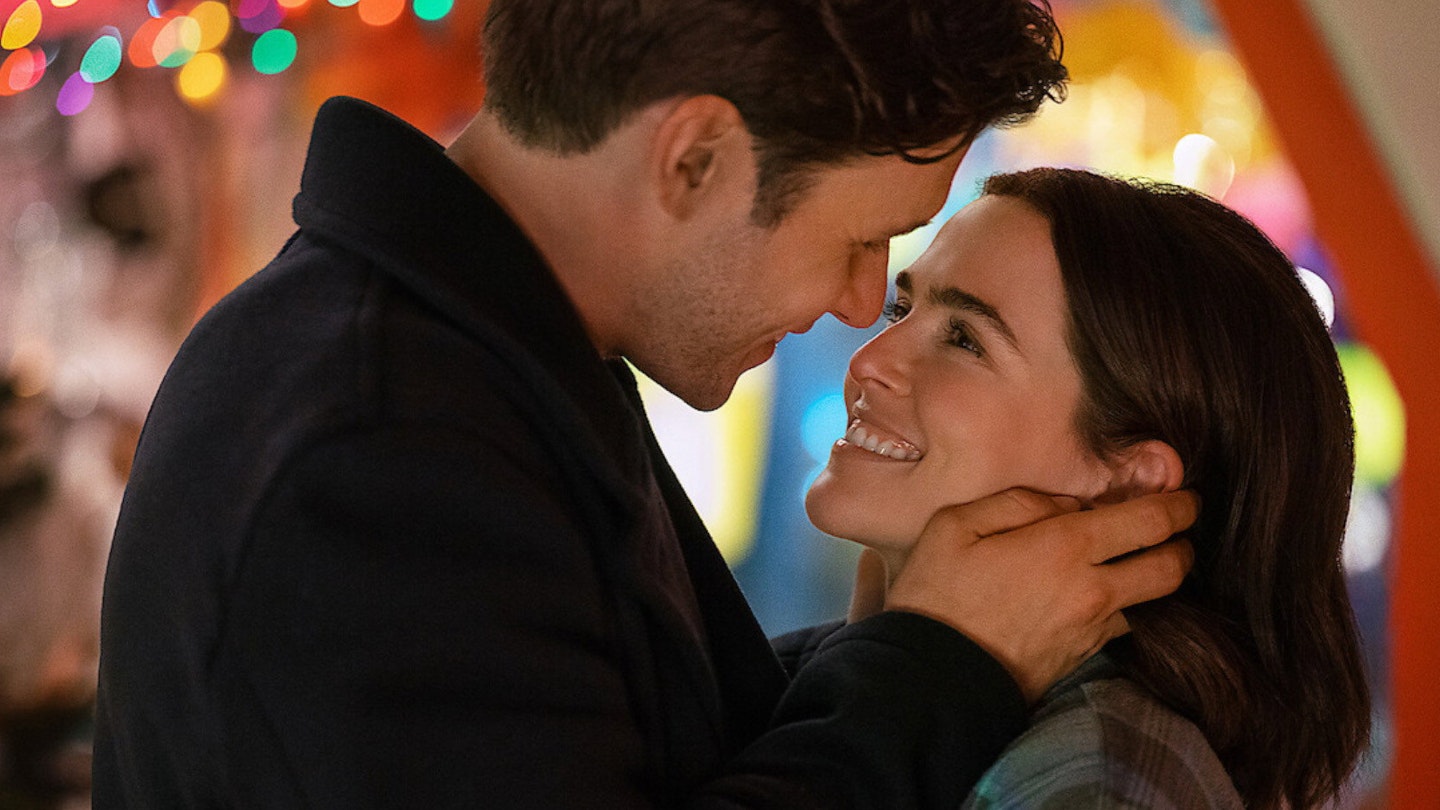
Alongside its emotional core, the film also offers a contemporary portrait of modern dating. Jill’s encounters with emotionally unavailable partners, self-proclaimed relationship experts, and disappointing workplace dynamics reflect the frustrations of navigating romance in an era dominated by social media and carefully curated personas. Tyler, the confident dating podcaster, embodies the contradiction between public expertise and private immaturity, while Arthur represents the kind of mediocrity that too often succeeds in competitive workplaces. These supporting characters help establish why Jill finds genuine kindness so refreshing when she eventually meets Wes, even if the circumstances surrounding their relationship remain far from ideal. The chemistry between Jill and Wes develops gradually, allowing the audience to enjoy their interactions before the inevitable revelation threatens everything they have built. Rather than relying on instant attraction, the screenplay gives them space to connect through shared conversations, humor, and vulnerability. Their scenes together do not feel rushed, making the romance believable despite the unusual foundation on which it rests. At the same time, the film never entirely escapes the shadow of its central deception. Every meaningful conversation between Jill and Wes carries an unspoken tension because the audience knows that Jill’s trust is based on incomplete information. This dramatic irony keeps the narrative emotionally engaging while also preventing the romance from becoming entirely uncomplicated. Even during its sweetest moments, the film quietly reminds viewers that honesty remains essential to genuine intimacy.
The screenplay also benefits from an effective balance of humor and melancholy. McKendrick understands that grief is rarely experienced as uninterrupted sadness. Instead, it exists alongside awkward moments, unexpected laughter, professional frustrations, and everyday routines. Jill’s disastrous dating experiences, workplace conflicts, and playful exchanges with friends provide welcome moments of levity without diminishing the seriousness of her emotional journey. This tonal flexibility allows the film to feel recognizably human rather than artificially sentimental. Yet the screenplay occasionally struggles to manage its many ideas. Workplace misogyny, influencer culture, professional ambition, family expectations, and contemporary dating all receive meaningful attention, but some threads disappear almost as quickly as they emerge. The film’s nearly two-hour runtime offers enough space to explore these themes individually, but not always enough discipline to integrate them into a consistently focused narrative. Nevertheless, Voicemails for Isabelle remains emotionally engaging because it continually returns to its strongest question: how do we continue speaking to someone who is no longer there? Rather than offering easy answers, the film suggests that grief is less about forgetting than learning to live with absence. It is this quiet understanding, more than the romance itself, that gives the story its lasting emotional intelligence power.
For me, Voicemails for Isabelle ultimately succeeds because it understands that grief and love are not opposing emotional states but experiences that often coexist. While its romance may divide audiences due to its ethically complicated foundation, the film’s emotional honesty remains difficult to dismiss. It approaches loss with compassion, allowing mourning to exist without easy solutions or convenient closure. More importantly, the film refuses to suggest that healing means forgetting. Isabelle’s presence continues long after her death, shaping Jill’s decisions, ambitions, and relationships without preventing her from embracing the future. That perspective gives the story an emotional maturity that elevates it beyond many contemporary romantic comedies. The film may not completely reconcile its tonal ambitions or fully resolve the moral questions raised by its premise, but its heartfelt performances, thoughtful direction, and genuine empathy ensure that its emotional impact lingers long after the credits roll. In a genre often driven by predictable formulas, Voicemails for Isabelle reminds audiences that sometimes the most meaningful love stories are not about finding someone new; but about learning how to carry those we have lost while still making room for hope.