
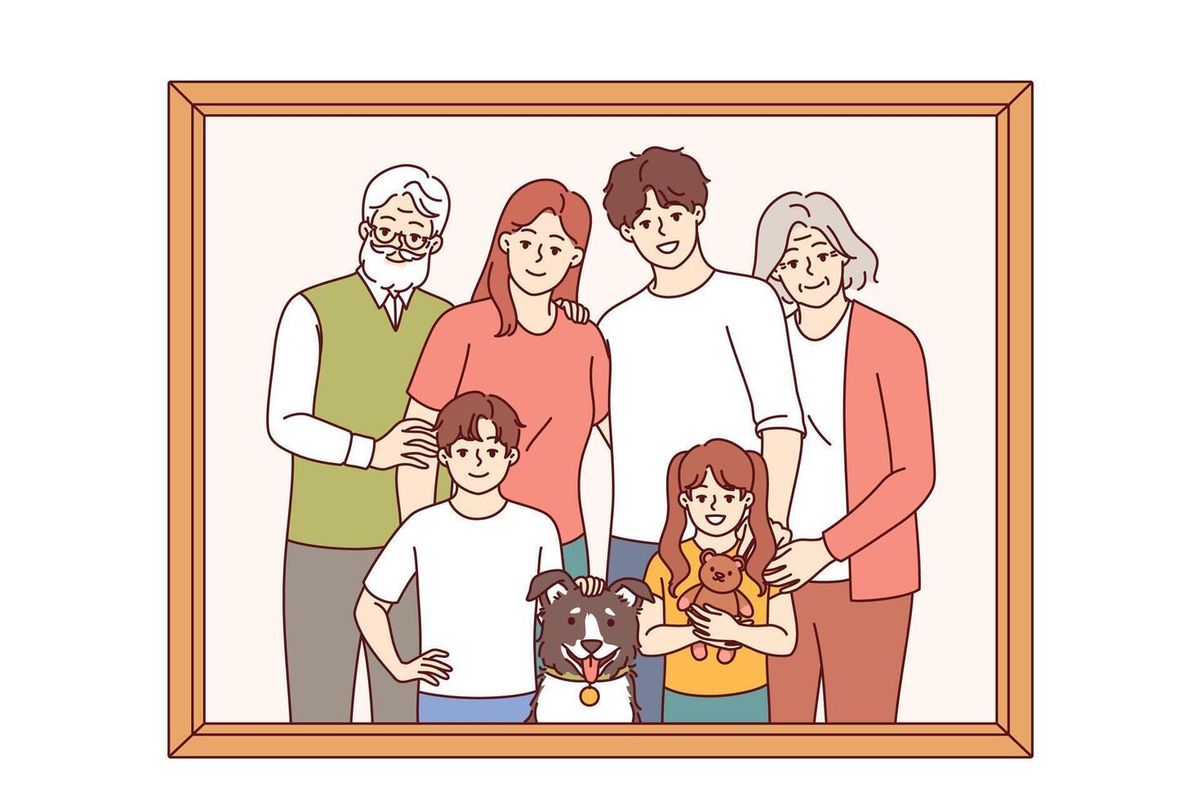

Ariyan just woke up. It’s 8 am where he is right now. He checks his phone and sees that he slept through a phone call and some texts from his mother. Fear and guilt suddenly grab him, and he begins worrying whether something bad has happened, and that he had slept through a crisis. Quickly rubbing away the sleep from his eyes, he checks the texts. His parents and sisters went out to have lunch at his favourite place. “Missing you baba, come back soon!” his mother added along with photos of them.
Getting emotional and homesick first thing in the morning wasn’t how Ariyan had planned to start his day, yet he couldn’t help but feel a twist in his stomach at how lonely he feels being far from home.
Modern technology has brought the world the closest it ever has been. Every corner of the world is now just a few taps away. We can have conversations with people living on opposite sides of the globe. Even though communication has become much easier, technology couldn’t erase the emotional distance people feel when they are an ocean apart from the people who raised them.
The Emotional Weight of Leaving Home
Distance from parents is an aspect often overlooked while making plans to move abroad, sometimes intentionally. Whenever the topic is broached, parents quickly brush it aside, encouraging their children to chase their dreams. They do not want to hold their children back, so they deal with their loneliness covertly.
And it is not just the parents who feel lonely; when their children finally move abroad to build a new life they feel it too, being in a completely unfamiliar part of the world filled with unknown strangers speaking foreign languages. The excitement of the unknown is inadvertently mixed with a little bit of guilt of leaving their aging parents behind. After all, every achievement abroad often comes with the quiet realization that the people they wish to celebrate it with most are actually thousands of miles away from them.
The Everyday Moments We Can’t Get Back
Often it’s not the major events people miss the most; rather it’s the mundane ones and routine moments. Sipping on an iced venti matcha latte at Starbucks will never hit the same as having a conversation over milk tea with your mother early in the morning. You miss having your mother around to wake you up for breakfast when you are running late. You miss your father bringing home random fruits he found in the market. You miss your parents calling you to their room to help them send a text or find the video they were just watching. Birthdays, Eid, Pohela Boishakh, aunt’s wedding, nephew’s first day at school, randomly going out with your cousins- all these are some of the sacrifices one has to make when choosing the immigrant life.
When Video Calls Aren’t Enough
Technology helps us stay connected to home, there’s no denying that. But it will never be able to replicate hugging your parents, sharing meals or the physical comfort one truly misses.

Technology connects our voices, but not our lives. Scheduled video calls reduce distance, but they never replace the presence of our parents. Conversations become scheduled instead of spontaneous as they usually are. And topics are mostly limited to how our day has been, what exams are coming up and what we had for lunch. And because of time constraints we often cannot say what is on our minds. Video calls truly are a technological marvel, but even they cannot fully imitate the marvel of living together with our loved ones.
The Silent Burden of Parents Left Behind
It is not just the children who feel isolated. Our parents who spent a huge portion of their lives raising us, planning everything around us, building a safe nest for us- suddenly find their nests empty as their hatchlings have grown wings and learned how to fly. They now have to wait days for calls from the very children they used to find at their every beck and call. And when said children do call, our parents cannot pour their heart out and say how much they miss us, or how many troubles they are facing in our absence, because they know there is only so much their children can do from the other side of the world. So they do their best to not appear vulnerable to us. They swallow all their worries, crack a smile and say that they are doing fine, even if they are not.
And when said children do call, our parents cannot pour their heart out and say how much they miss us, or how many troubles they are facing in our absence, because they know there is only so much their children can do from the other side of the world.
The Emotional Burden on Children Abroad
Our parents have each other for company, but we are the ones who are completely on our own, and are figuring out a completely different life from the one we have grown up with. We are physically disconnected from the rest of the family, so we miss the family gatherings, the emergencies and everything else. Whenever our parents don’t answer the phone, we get anxious and overthink about whether something bad happened. We live in constant fear of getting “that call”. We return to an apartment where no one asks how our day went. And whenever we fall sick, that is when we realize just how truly lonely we are, and what we have left behind.
Aside from all this, is the intense internal pressure to succeed, because most of us have gambled everything to move abroad for a new and “better” life. Most of our parents have sacrificed so much to get us to the position we are in right now that failure feels impossible to accept. This single-minded determination to succeed, no matter what, becomes one of the greatest emotional burdens we carry.
The Small Things That Matter More Than The Grand Gestures
Video calls aren’t the only means through which families remain connected over this huge distance anymore either. Meaningful habits like watching movies together online, weekly family dinners over video, filling the family group-chat with random updates, sending surprise meals, flowers, gifts through delivery apps, remembering anniversaries, are some of the ways family bonds manifest in today’s world.
Connection isn’t just about frequency; it’s about consistency. A voice note sent on a random Tuesday. A photo of what you had for dinner. Forwarding a reel your mother would laugh at. These small, unremarkable gestures are the mortar that holds relationships together across distance, not grand reunions, not expensive parcels, just the quiet proof that you are still thinking of them.
Social Media: A Blessing and a Reminder
Social media acts as a double-edged sword in this. Watching family milestones like siblings achieving something great, anniversaries, family get-togethers through social media may allow us to feel connected to our family. But this can also sucker punch us with how much we are missing out on.
We see all the things we couldn’t be a part of. Every photo reminds us that life back home continued without us. We scroll through all the family pictures and can’t help but feel homesick and wonder what we are even doing out here all alone.
Our Home Changes While We Are Away
The hardest epiphany, perhaps, is that our home waits for us, but it doesn’t stand still. Younger siblings grow up and they hardly remain the same people we left behind. We recognise their faces, but we hardly know the small experiences which have shaped them into someone we barely know now. Familiar faces and childhood friends move on with their lives; conversations rarely hit the same as it used to back then.
Parents grow older, and the signs of ageing become harder to ignore. The faces we grew up seeing grow more lines, the wrinkles become more evident with each visit home, and we realise that the very familiar home we held close to our heart is slowly slipping away and becoming more and more unfamiliar and distant.
The hardest epiphany, perhaps, is that our home waits for us, but it doesn’t stand still.
Finding a New Balance
Over time, we learn to live with these feelings. We accept that homesickness never truly disappears; we learn to live with it. We find new ways to adapt. We also realise that parents value regular communication more than expensive gifts and that absence, as de Bussy-Rabutin once wrote, is to love what wind is to fire: it extinguishes the small, and inflames the great.
Love Travels Better Than Distance
Oceans separate families physically, not emotionally. No amount of technology can replace being together, but intentional communication keeps relationships strong. Every phone call, every voice note, every shared meal over a screen becomes a reminder that love can cross continents, even if it can’t shorten the distance.
Ariyan types back “Missing you too, will call tonight”, puts his phone down, and gets up to face another day.