


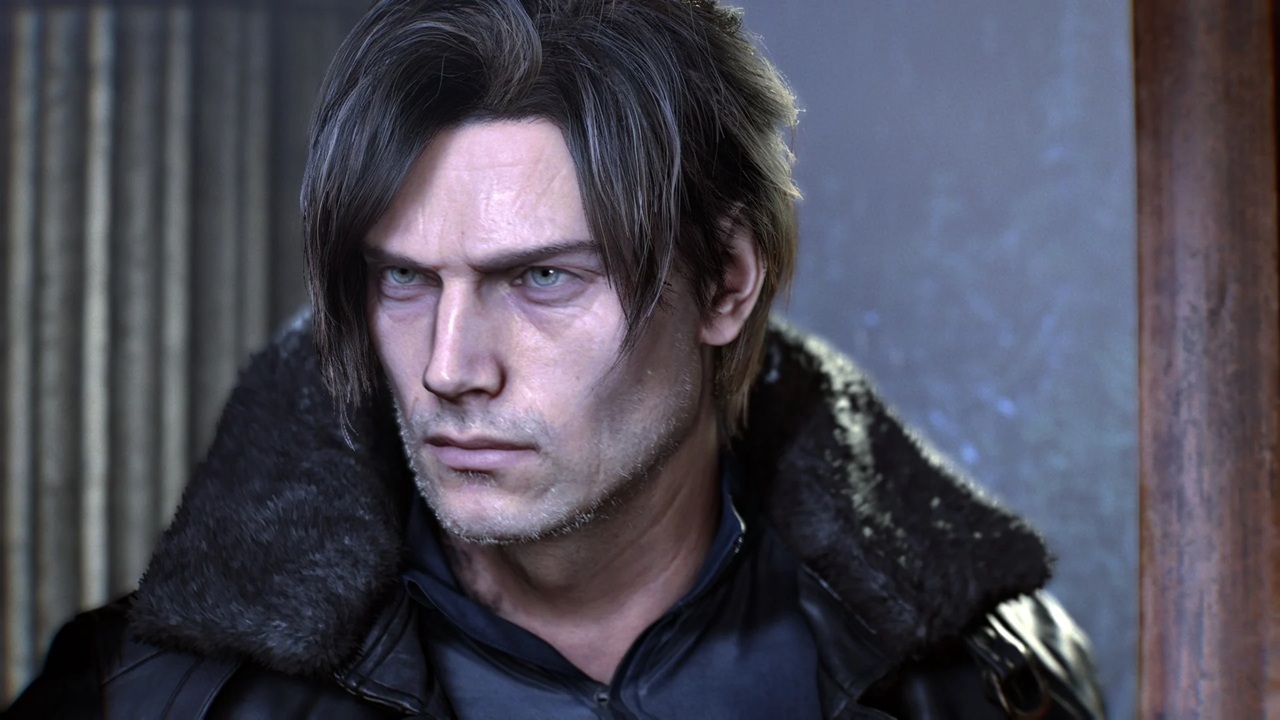

Leon Kennedy has a line in Resident Evil 4 where, standing in a weapons shop run by a mysterious merchant in rural Spain, he looks at the available arsenal and says: “I need guns. Lots of guns.” It is a reference to The Matrix. It lands because Leon delivers it with the specific register he has throughout the game: a man who is in genuine danger and is also, somehow, slightly amused by the absurdity of his own situation. That combination — the action hero competence and the self-aware humor that never tips into camp — is the central achievement of Leon Kennedy as a character, and it is the quality that has kept him the most recognizable face in the Resident Evil franchise for nearly thirty years. The character works because the game that built him understood something most action games do not: that wit, deployed correctly, makes danger feel more real rather than less.
RE2: The Rookie on His First Day
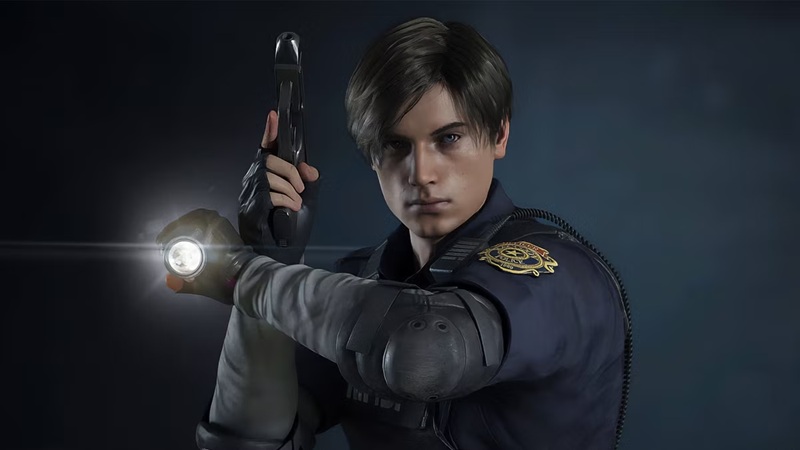
Leon S. Kennedy’s origin story is, in the context of survival horror, close to perfect. He arrives in Raccoon City for his first day as a police officer. Not a special forces veteran, not a trained monster hunter, not a character whose background has equipped him for what he is about to encounter: a rookie cop on his first day, in a city that has already ended before he had a chance to begin. The original Resident Evil 2 (1998) made this vulnerability structural: Leon is frightened, underprepared, navigating an environment designed to overwhelm him, and the horror of the game is generated partly by the specificity of his unreadiness.
The player’s identification with Leon in RE2 is not aspirational — it is empathetic. He is not the person you wish you were in this situation. He is the person you would actually be. That empathetic identification is the foundation on which everything that came after was built.
RE4: The Transformation

The gap between Resident Evil 2 and Resident Evil 4 (2005) is seven years of in-universe time and seven years of real development time, and both gaps are legible in the character. Leon in RE4 is a US government agent assigned to rescue the President’s kidnapped daughter from a Spanish village controlled by a parasitic cult. He is, by any reasonable measure, competent: physically capable, trained, experienced, and possessed of a tactical intelligence that the rookie of RE2 was not. The transformation is complete. And yet — and this is the creative achievement that elevates RE4 above its contemporaries — the competence is delivered with a tone that makes it impossible to take entirely seriously, and that seriousness avoidance is itself a form of character logic.
Leon Kennedy does not behave like a serious government agent because somewhere underneath the training is still the rookie who walked into Raccoon City on his first day and saw things that nobody was supposed to see. The humor is a coping mechanism that the game never explicitly diagnoses but that every player intuitively understands.
The Hair and the Meme
It would be dishonest to discuss Leon Kennedy’s iconicity without acknowledging its meme dimension. Leon’s hair — particularly in the RE4 era — has become one of gaming’s most referenced aesthetic details: a specific arrangement that is simultaneously practical-looking and completely implausible, the kind of hair that only exists in a medium where visual design must communicate character at a glance. The Leon Kennedy hair meme is not a diminishment of the character. It is evidence of the character’s cultural penetration: a fictional person is truly iconic when the audience has developed a parasocial relationship detailed enough to joke about their hairstyle choices. The memes are the proof of the investment, and the investment is the proof that the character works.
The Remake and the Deepening
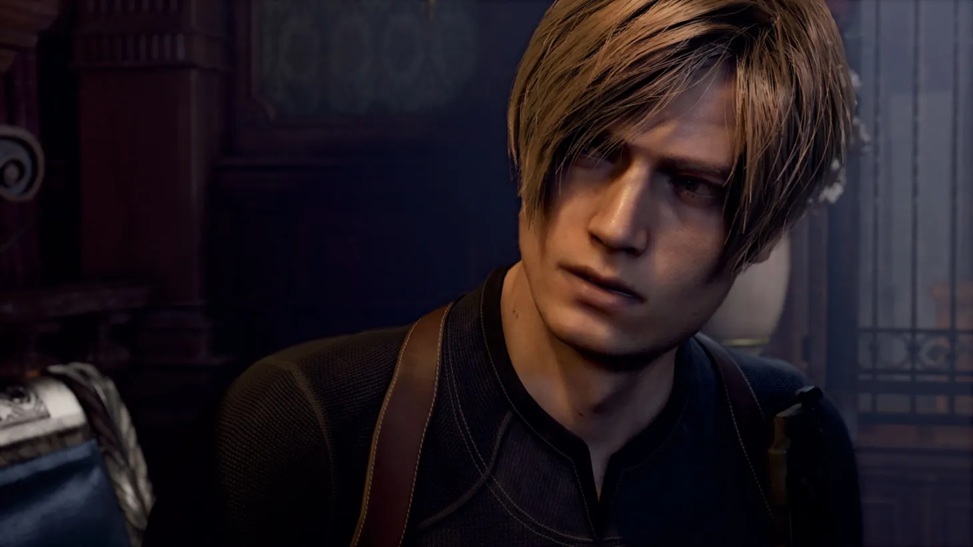
The 2023 Resident Evil 4 Remake offered the most sophisticated version of Leon Kennedy the series has produced. Retaining the humor and the physical charisma of the original, the remake added emotional texture that the 2005 version did not have the time or tonal space to develop: a Leon who carries the weight of Raccoon City as genuine trauma rather than backstory, whose relationship with Ada Wong is rendered with more ambiguity, whose protectiveness of Ashley Graham has a psychological dimension that makes it feel less formulaic.
Nick Apostolides’s vocal performance — praised across review coverage as one of the finest in the remake — found the exact register the character had always required: self-aware but not cynical, heroic but not stoic, funny without ever undercutting the genuine stakes. The remake made an already-great character better, which is the definition of a successful revisitation.
Requiem: The Veteran
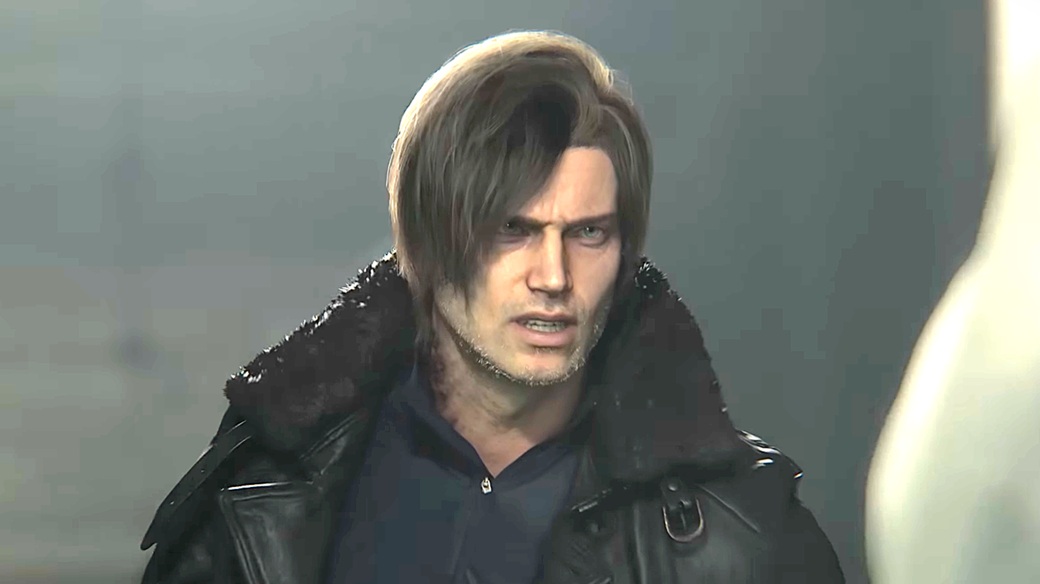
Resident Evil Requiem, released in February 2026 as the ninth mainline entry in the series, returned Leon to playable form for the first time since Resident Evil 6, and did so with a creative gamble that any other franchise would have hesitated to make: Leon is now around fifty years old, with the game set roughly thirty years after Resident Evil 2. He is grayer, more lined, gravel-voiced, visibly carrying the cumulative weight of three decades of survival. The game pairs him with Grace Ashcroft, an FBI analyst investigating strange deaths at the Wrenwood Hotel — the same place her mother died in the Raccoon City fallout — in a dual-protagonist structure that splits the tone between its two leads. Grace’s sections focus on evasion, puzzles, and resource management, while Leon’s deliver the kinetic, weapon-rich action the character has come to represent. The structural choice is itself an argument about what Leon means at this stage of the franchise: he is the part of the series that can no longer credibly be played for survival-horror dread, because the man has seen too much to be afraid the way he used to be. The horror has to come from somewhere else now. Leon’s job is to bring the bravado.
What is remarkable about the Requiem version of Leon is how completely the writing trusts the character to carry his age without softening or apologizing for it. The first time he encounters an infected, chainsaw-wielding doctor, he calmly mutters “I want to get a second opinion.” The line does the precise tonal work the character has always done, leveraging absurdity to acknowledge danger rather than dismiss it. The signature sass is intact. The hair is grayer but still doing its hair thing.
Nick Apostolides returned to the role and described playing the older Leon as “uncharted territory” because the stakes were so high — a comment that registers, in retrospect, as appropriate humility for a performance that landed cleanly. Critical and commercial reception was strong: Requiem reached an 89 on Metacritic and broke records for Capcom, with Leon’s segments widely cited as a primary reason the dual-protagonist gamble worked.
The cultural response to older Leon is perhaps the clearest evidence of how deeply the character has embedded himself in the audience’s imagination. The same fan culture that produced the cat-ear thirst traps of the RE4 remake era pivoted, almost instantly, to embracing the fifty-year-old Leon — fans dubbed him a “hot unc” almost the second he was revealed for Requiem, a reframing the character’s actor has acknowledged with good humor. Director Koshi Nakanishi has indicated in interviews that the team could bring Leon back when he is seventy, and is confident he will still be a great character. The implication is significant: Capcom has identified the same thing the audience has. The character’s appeal is not contingent on youth or on any particular era of the franchise. It is contingent on the specific tonal register he occupies, and that register travels through middle age, through gravel-voice, through retirement, and possibly through a cane.
Why He Lasts
The reason Leon Kennedy remains the face of survival horror, appearing on lists of the most iconic video game characters with the reliability of a canonical fixture, is not any single quality but their combination. He is the everyman who became the hero, which is the most resonant character arc available to genre fiction. He is funny without losing credibility, competent without losing humanity, and designed with enough aesthetic specificity — the hair, the jacket, the particular register of his one-liners — that he is instantly recognizable as himself rather than as a genre archetype. In a franchise that has cycled through dozens of protagonists, Leon Kennedy has remained the character audiences return to and the one Capcom returns to when they need to demonstrate that the series still has the thing that made it great. That trust — from the audience and the developers both — is what iconicity looks like in practice. Leon has earned it across every entry he has appeared in, and the 2023 remake confirmed he still has it.







Leave a Reply