

Summary
Resident Evil Requiem, the ninth mainline entry in the iconic horror series, weaves the dual gameplay of Grace Ashcroft and Leon S. Kennedy.
Overall
-
Plot
-
Narrative
-
Replayability
-
Visuals
Resident Evil has spent almost thirty years split between two identities. One is slow, suffocating survival horror; the other is loud action-horror. Resident Evil Requiem, the ninth mainline entry developed by video game developer Capcom, does not try to fuse those moods into a single, steady tone. It accepts the split, and turns it into the game’s structure.
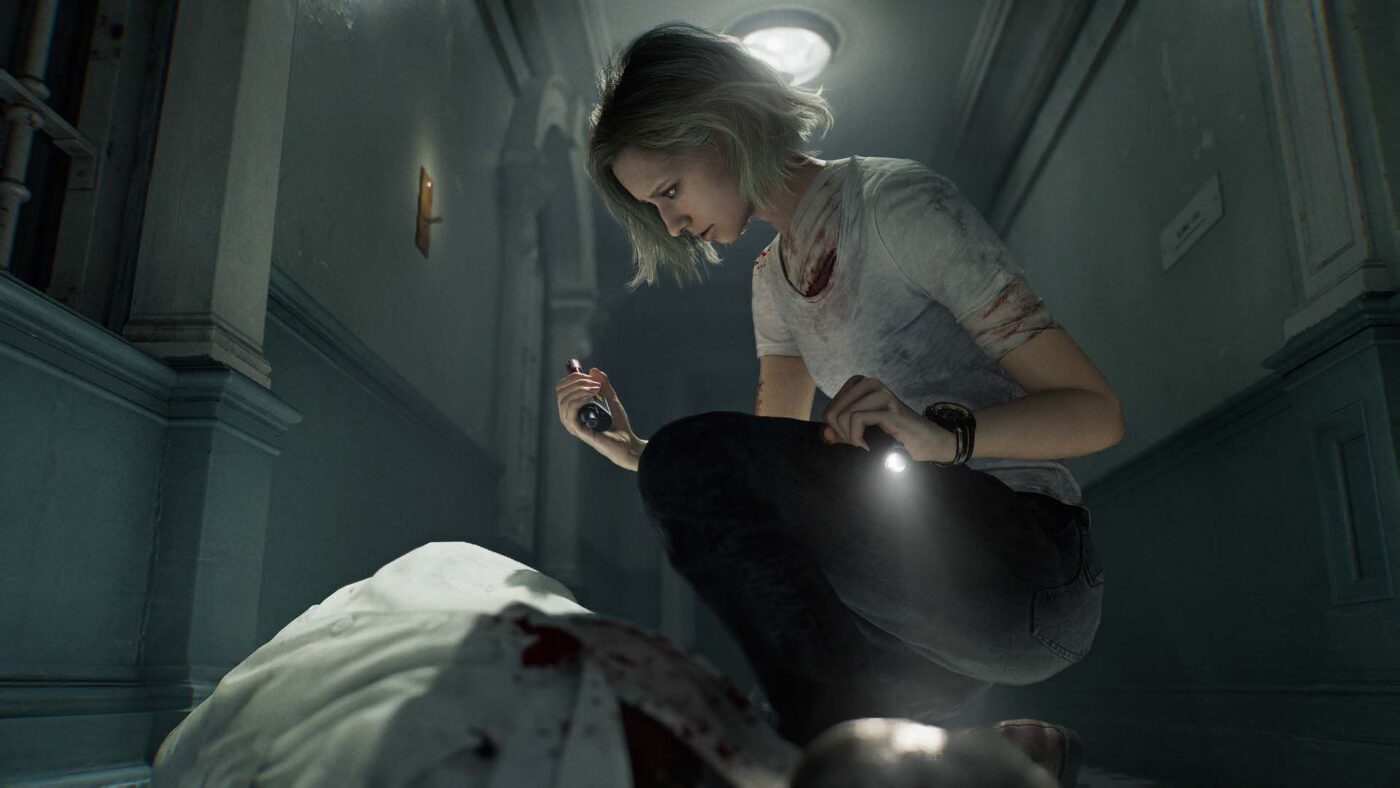
Requiem opens with Grace Ashcroft, an FBI analyst trapped inside a hospital that feels like a living machine. Grace is not a frontline operative. She has training, but she is not hardened. She can shoot, but she is not a walking arsenal, and the early chapters commit to that imbalance. Her investigation leads to Victor Gideon, the game’s main antagonist. Gideon is disfigured, theatrical, and methodical. He runs the Rhodes Hill Chronic Care Center, a facility that presents itself as an elder care home. Beneath that surface is something far worse. Gideon abducts Grace, traps her inside Rhodes Hill, and turns her into a participant in his experiments.
Grace moves with weight and caution. Repositioning in combat is a decision, not a reflex. Ammunition is limited, healing items matter, and inventory space stays tight. These constraints are familiar to long-time players, yet they feel sharper because Grace does not project confidence. She grows more capable, but the game keeps her vulnerability close.

Requiem strongly nudges players to use first-person for Grace. The reason is clear as soon as you enter the hospital’s narrow corridors. Your field of view tightens, corners feel closer, and sound becomes a threat. Rhodes Hill is Requiem’s answer to the Spencer Mansion: dense, interconnected, and designed for gradual mastery. Wards and wings connect through sub-basements, sealed corridors, and looping shortcuts. Elevators link floors that initially feel unrelated. Hidden paths slowly turn confusion into grim familiarity. The building feels less like a setting and more like an apparatus built to move Grace where Gideon wants her to go.
If Grace represents Requiem’s pure horror mode, Leon S. Kennedy embodies its action-horror half. He appears as a parallel investigator with his own mission and a long memory of Raccoon City. The game pushes players toward third-person for Leon, echoing the Resident Evil 4 remake; encounters are clearly tuned around that wider view.
If Grace represents Requiem’s pure horror mode, Leon S. Kennedy embodies its action-horror half. He appears as a parallel investigator with his own mission and a long memory of Raccoon City.
Leon moves with purpose. His recoil has weight, enemies can take punishment, and even when armed he rarely feels comfortable. He is more capable than Grace, but not untouchable. Where Grace is encouraged to avoid fights, Leon is expected to manage them. His defining tool is a hatchet with multiple roles. It works as a strong melee finisher, helps keep enemies down longer, and enables defensive parries. With precise timing, Leon can block attacks, stagger foes, and create openings for counters.
Requiem alternates between Grace and Leon, but not with strict symmetry. Early chapters belong mostly to Grace. Her slow exploration is interrupted by short bursts of Leon’s combat missions. As the story advances, Leon’s segments grow longer and take more runtime. Grace appears less often, but her chapters stay sharp.

Throughout Requiem, combat rarely feels empowering. It feels like a penalty for misjudging risk: loud, ugly, and expensive. Blood and damage linger in rooms, so each fight leaves a reminder. The hospital becomes a map of what you paid to stay alive.
Most sequences have a clear purpose. You creep through a ward you hoped to avoid, forced toward a sound you do not want to identify. You scramble through a chapel, juggling explosives and improvised weapons while the place tries to burn down around you. Even when you backtrack, the context changes. A shortcut opens. A threat appears on what used to be a safe route. A resource that once seemed useless becomes essential.
The game rarely lingers past an idea’s peak effect. When a section has delivered its tension or story beat, Requiem moves on. That editing discipline recalls Resident Evil 7 and the Resident Evil 2 remake. Both found replay value in tight runtimes and strong pacing. Requiem follows that tradition.
Resident Evil has reinvented its zombies for decades. Requiem’s approach is not to make them bigger or faster at all times. It makes them uncannily human. Many infected cling to old routines, as if their bodies remember their jobs. A maid still “cleans” a bathroom, wiping at tiles already ruined. A chef works a chopping board piled with unidentifiable meat. A lounge singer coughs through fragments of a song, the melody collapsing mid-verse. These details make the infected feel like people trapped in broken loops.
Resident Evil has reinvented its zombies for decades. Requiem’s approach is not to make them bigger or faster at all times. It makes them uncannily human.
The game also revives one of the series’ most stressful ideas: killing a zombie does not guarantee it stays dead. Some corpses return later as blisterheads–faster, more vicious mutations that punish complacency. A hallway you cleared an hour ago can quietly repopulate with upgraded threats. Backtracking becomes tense again, not because you forgot the layout, but because you cannot trust what is waiting inside it.
A few hours into Grace’s campaign, Requiem introduces its most distinctive mechanic. Grace obtains a device that lets her collect infected blood from fresh corpses and gore puddles. That blood, combined with scavenged scrap, fuels crafting and upgrades.
The system is repulsive on purpose, and it fits Grace’s role. She is an analyst trained to gather evidence, not a weapons specialist. She survives by turning the materials of horror into tools. Infected blood can be converted into ammunition, healing items, and upgrades to health and inventory space. Later, it supports specialized gear, including flashbang-like vials and powerful grenades. On higher difficulties, blood even ties into the saving system, echoing old ink-ribbon logic with a bodily twist.
The standout item is the hemolytic injector. It is a single-use syringe Grace can drive into a zombie’s spine from stealth. When it works, the infected detonates from within, erasing the body in a burst of [suspicious link removed]. The immediate payoff is obvious: one enemy removed cleanly. The longer-term payoff matters more: a corpse destroyed this way cannot rise later as a blisterhead.
That detail turns every body into a strategic choice. Each injector you craft competes with other needs. You are choosing not to make extra ammo, delaying medical supplies, or postponing permanent upgrades. In exchange, you buy safety along a route you know you will revisit.
Inventory limits sharpen that pressure. You constantly weigh what to carry: more ammo, more healing, crafting materials, or key items needed to open the next wing. Older Resident Evil games used limited space as a core tension tool. Requiem adds a cruel wrinkle: the “efficient” choice now may plant the seed of a later problem. Leaving a corpse untreated saves supplies today, but it may create a blisterhead you have to sprint past tomorrow.
Most puzzles aim for atmosphere more than difficulty. Many use ornate medical devices, mechanical locks, and macabre displays. Solutions are usually clear from nearby notes or strong visual cues. These puzzles function as breathers–short pauses between stealth and combat.
There are exceptions. A late battery-routing puzzle in the hospital’s lower levels demands close attention to a cryptic schematic, slowing the pace in a way that feels more tedious than tense. Moments like that are rare. Overall, the puzzles support the rhythm of investigation and dread without overstaying their welcome.
There are exceptions. A late battery-routing puzzle in the hospital’s lower levels demands close attention to a cryptic schematic, slowing the pace in a way that feels more tedious than tense.
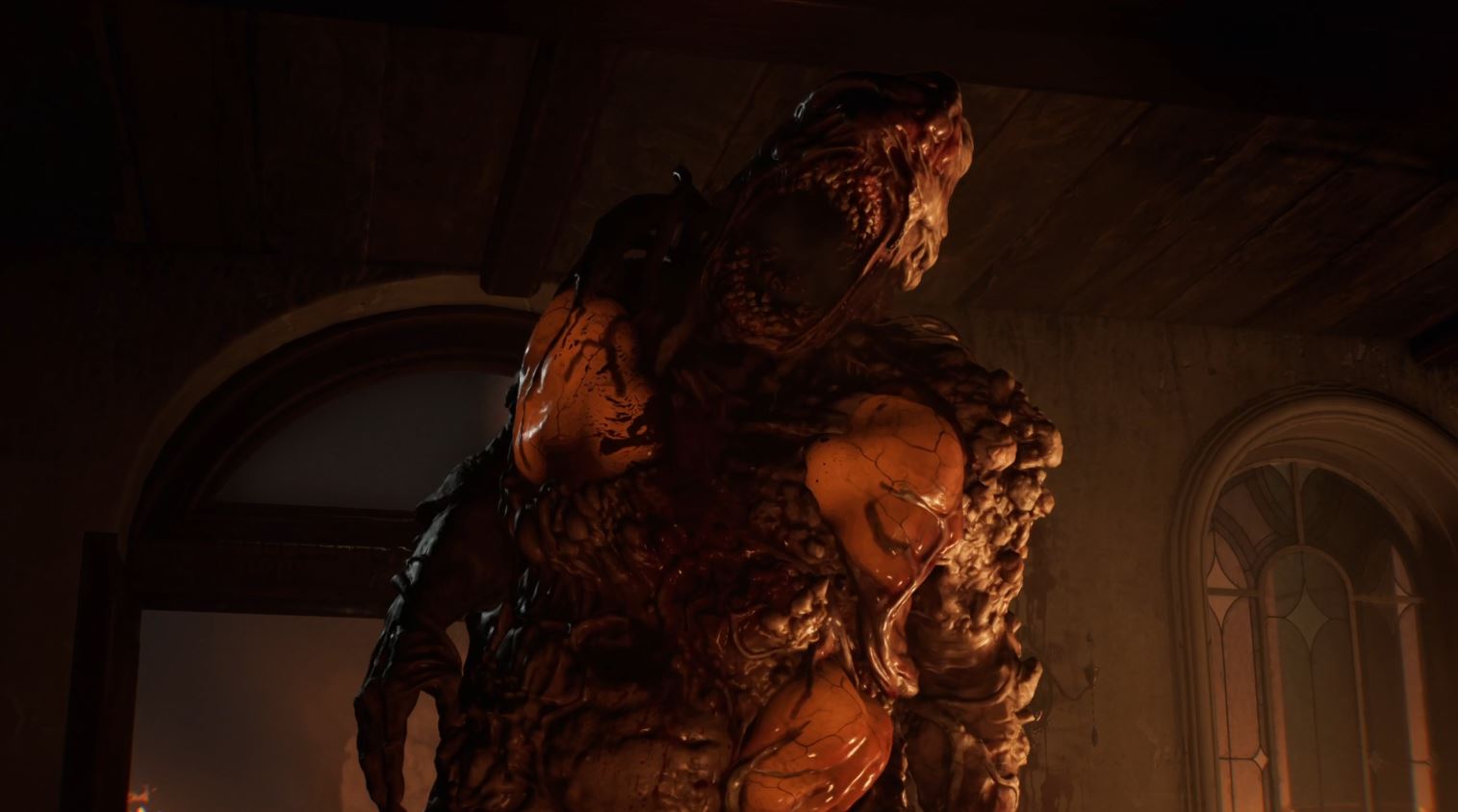
Most large set pieces and boss fights belong to Leon, and many land well. One standout takes place in a chapel. Attacking the boss’s weak points risks mutating nearby enemies into deadlier forms. The dilemma is clean: shoot aggressively and shorten the fight, but turn the arena into a nightmare; focus on the mob and stabilize the space, but burn ammunition and time.
Not every big moment is as clear. A few late-game scenarios communicate objectives poorly. Routes can be hard to read, and priorities get muddy. In those scenes, failure feels less like tension and more like trial-and-error until the intended solution clicks. Even so, the stumbles do not erase the broader impression of combat built with care.
Requiem uses nostalgia with unusual control. Recognizable locations and references appear, but they are not staged purely for applause. They serve character and worldbuilding, and they suggest a franchise interested in reckoning with itself. The tone makes room for melancholy. Reflection fits beside spectacle.
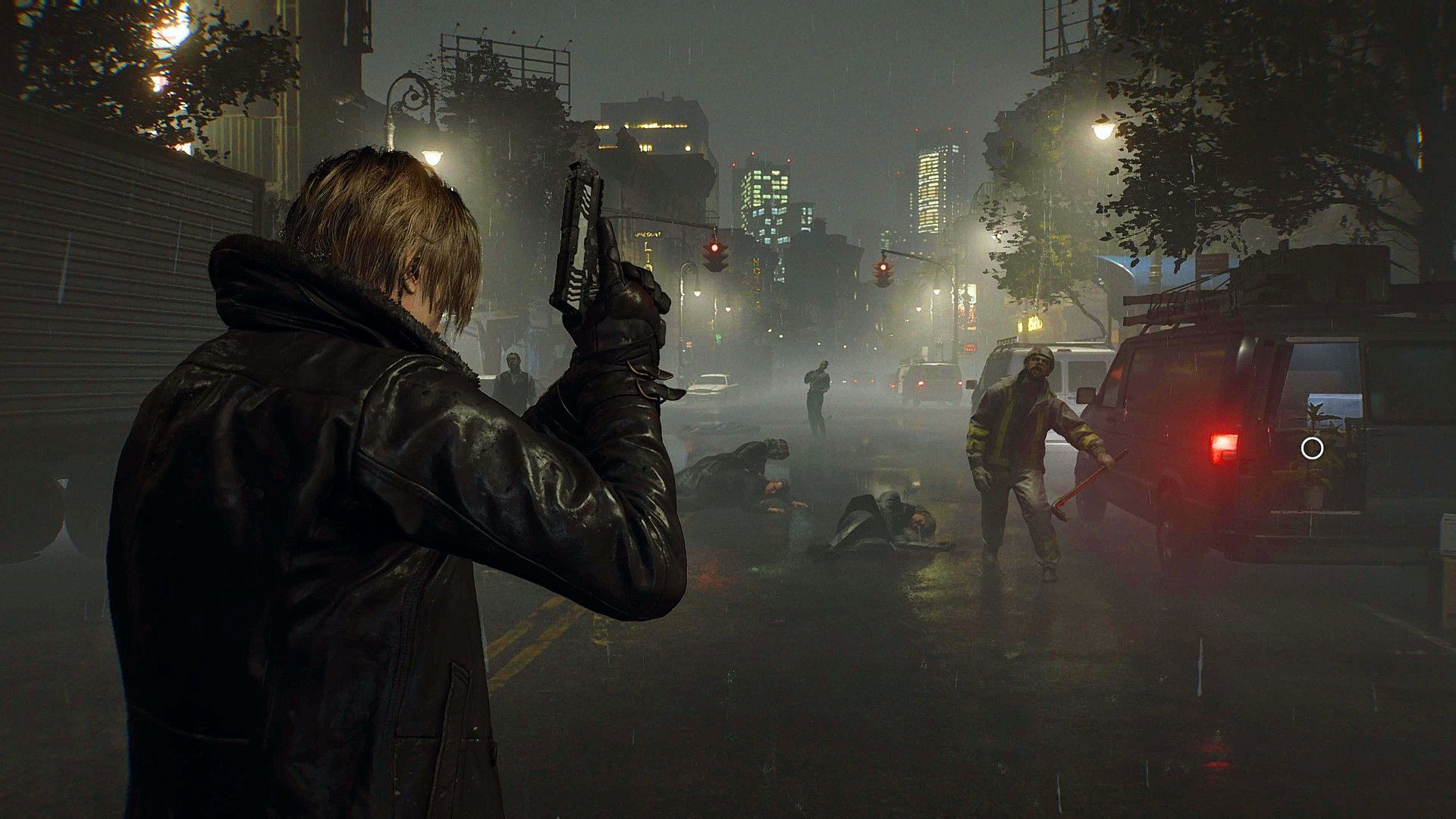
The structure feels less like perfect cross-cutting and more like two arcs that intersect. Requiem is not trying to braid the stories every hour; it wants each tone to breathe. Grace delivers claustrophobia, planning, and persistent anxiety. Leon delivers release: wider arenas, bigger threats, and the chance to push back.
That alternation prevents fatigue. The design also supports replay. Once you know puzzle solutions, enemy placements, and efficient routes, the compact length invites faster runs and higher difficulty attempts. Grace’s fear factor naturally fades with familiarity, but the systems keep pressure alive: blood collection, blisterhead prevention, hatchet durability, and upgrade choices still demand planning.
Requiem is not a radical reset for Resident Evil. Many strengths are refinements of proven ideas. Split protagonists remind of past entries. Stalker-like pressure and transforming enemies revisit earlier experiments. Returning to Raccoon City draws from established emotional ground. Even the blood crafting system, despite its bold presentation, fits the series’ long-standing fascination with body horror and bio-organic weapons.
What makes Requiem stand out is how clearly it commits to its choices. It understands what modern Resident Evil does well: tight campaigns built for replay, grounded horror anchored by vulnerable characters, and explosive action that still respects resource tension. It arranges those elements with discipline. It stays brief because brevity keeps the pace sharp, and it lets its characters feel small even when the screen fills with fire and falling debris.
The shortcomings are real. Many puzzles are more atmospheric than challenging. A few late set pieces stumble in clarity. The dual-protagonist approach can make the story feel uneven, as if one campaign eventually outweighs the other. Players who want brand-new monsters and wild mechanical departures may find Requiem more evolutionary than revolutionary.
Minute to minute, though, it delivers focus and confidence. It lets you count bullets in a hospital hallway; then asks you to fight through sparks, screams, and spinning chainsaws. It respects both halves of Resident Evil’s identity. In doing so, it feels true to the franchise’s past while still pushing forward on platforms like PlayStation 5, Xbox Series X, and Steam: a concentrated dose of survival horror and action, built on the belief that each works best when it is allowed to be itself.