
They called it the Flesh Market. Kabbo arrived late, sunglasses from the 90s, guitar case slung behind him. The quad had become a stock exchange—banners clawing for vertical space, emcees howling, the air thick with ambition and fake sandalwood.
He skirted a table where the Finance Club banged a gong for every sign-up. Three times in the minute it took him to squeeze past. Someone in a full suit shouted about “the human capital premium.” Kabbo nearly stopped to ask if that was real, then remembered he’d slept through Intro to Micro.
He cut through the Social Service gauntlet—”Change the world! Free t-shirt with every blood donation!”—ducked under blue sari fabric strung between columns. The canteen lay ahead. He could already taste the lemon danish, color of damp legal pads.
A hand clamped his shoulder.
“Monohor!” Nasal, weirdly comforting. “Don’t think you can escape the revolution.”
Kabbo squinted sideways. Shakil Bhaiya had an old-school comb-over and a grin that could sell timeshares in the afterlife. Three-piece suit the color of wet cement, shiny at the elbows. His tie—blood red, printed with tiny microphones—jerked as he spoke.
“We need originals like you, Kabbo.” Shakil gestured to the booth behind him, where two juniors handed out pamphlets with a QR code and JOIN THE VOICE OF TOMORROW in 18-point Helvetica. “The Communication Club is dying. You think we can run Model Parliament with these children?” He leaned in. “They don’t even smoke.”
“Maybe that’s progress,” Kabbo said. “Evolution.”
Shakil ignored him. “You have opinions. You have hair. I need both.” He plucked a pamphlet, paused. “Do you want to be a legend, or just a footnote?”
Kabbo glanced at the juniors. Both watched him with the wide, glassy look of people not allowed to go home until they hit quota.
“Will I have to actually run for something?” His voice pitched higher than intended. “Or just the illusion of power?”
Shakil beamed. “You have a face for billboards. I’ll make you the poster child of dissent. Show up tonight at the Executive Lounge.” He wrote on the pamphlet’s back—an address, a time, the word “Confidential.” “Bring the guitar. We’ll brainstorm campaign slogans. And I’ll introduce you to the girl from debate. She’s a shark.”
Kabbo let himself be shepherded away. He tucked the pamphlet into his guitar case, next to the broken E string and unfinished lyrics. Sun on the back of his neck. Sweat pooling between shoulder blades. The raw animal charge of the student body pressing in.
He walked off the quad, past the admin building where windows glared, down to the canteen where nobody cared if you were revolutionary, washout, or just hungry.
Better here.
***
Akib’s stomach was already a knot before he reached the debate booth. The banner was a holdover from Rafiq’s presidency, paint faded by three monsoons. The table littered with flyers and four trophies, each etched with his brother’s name, the years marching backward.
He scrawled his name on the sign-up sheet. The pen left a shaky trail of ink. He had to go over the ‘A’ twice.
Across the table, Nabil—now President—pretended not to notice. His mouth twitched. “Akib! Wow, legend’s bloodline returns.” Too loud, for the benefit of the other volunteers. One giggled. “You thinking of a comeback? Or just checking on your brother’s legacy?”
Akib smiled. “I’ll try out for novice. No pressure.”
“Right.” Nabil flipped the clipboard, thumbed the papers. “It’s just…” He leaned in. “We’re at capacity this semester. Budget, admin, all that. Maybe try another club? Something chill, like Photography? You could still hang out. Just, not officially. Policy.”
Akib smelled Nabil’s hair gel underneath the spiced air of samosas and body odor. He looked past him at the trophies. His name wasn’t on any of them. Had never been on anything except sign-up sheets, which always disappeared between audition and tryouts.
He nodded. “Makes sense.”
Nabil’s smile was thin as tracing paper. “No hard feelings, bro. Just politics.”
Akib folded the pamphlet once, then again, until the paper wouldn’t crease. He turned before the juniors could notice the tremor in his hands.
He walked the perimeter, skirted the lawn where the cheer team practiced pyramids. Only let himself breathe when he reached the canteen’s shadow. Plastic chairs mostly empty at this hour, the late-morning lull before lunch rush. He sat at a corner table, picked at the edge with his thumbnail.
Matin Mama, who ran the canteen and claimed to have catered for three prime ministers, shuffled over. He slid a glass of tea onto the table, full to the rim, sugar already sunk to the bottom in a coral drift.
“On the house,” Matin Mama said, voice gravelly from half a century of cigarettes. “You look like you need it.”
Akib sipped. Too hot. Scalded tongue. He let it burn.
On the far side of the lawn, Kabbo got ambushed by a girl in a sherwani jacket. The girl spoke, gesturing, almost poking Kabbo in the sternum. The guitar case bobbed. Kabbo’s laugh visible from forty meters, his sunglasses reflecting sky like two perfect moons.
Akib wondered what it would be like to be that immune. To have failures shrugged off, rebranded as performance art. He drank the rest of the tea in three gulps, the aftertaste clinging.
He tried to imagine his brother in this moment. Rafiq would have turned rejection into a campaign, or at least a meme. Akib could barely feel his own face. He texted the only group chat that still included him, a dying string of half-memes and YouTube links. Waited for the dopamine ping.
Nothing.
He set the phone down, watched traffic creep along Kemal Ataturk Avenue. Time passed. Everything passed.
***
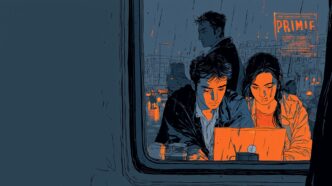
Kabbo found the “Executive Lounge” as promised: windowless, thick with ceiling-fan chop and the resinous smell of old whiteboard markers. Two battered sofas, a table layered in coffee rings. Shakil perched on one armrest, tie loosened, shoes off, radiating the frantic calm of someone who craved chaos.
And Rayaan. Dark three-piece suit despite the heat, shirt so crisp it could draw blood, hair parted to the micron. A badge hung from his lanyard: “RAYAAN (Fresher) – Chief of Staff?” The question mark handwritten, spidery and exact.
Kabbo dropped the guitar case with a clunk, collapsed onto the sofa. Arms sprawled. Deliberate. Rayaan watched, unblinking, the way a CCTV camera might.
Shakil cleared his throat. “Let’s get started, gentlemen. Monohor, you’re my rebel energy. Rayaan, you’re my structure. Best of both worlds.”
Rayaan nodded. Polite, not warm. “Thank you, Shakil Bhaiya. I’ve prepared a baseline agenda.” He slid a stapled document onto the table. Color-coded. Watermarked with the club logo. Kabbo noticed his own name spelled wrong—Manohar—and let it slide.
Introductions. Rayaan went first: Model United Nations, International Mathematics Olympiad, founder of something called “Youth Congress For Change.” Each item delivered with the faintest bow, like a manager at a five-star hotel. Kabbo’s turn: he mumbled something about open mics, said he had a minor in Creative Writing.
Shakil explained their first project: organizing ten years of archived banners and props, now a fire hazard in an abandoned supply closet. “We need a full inventory. Audit the assets. Prepare a disposal plan.” He looked at Kabbo. “You in?”
Kabbo shrugged. “How hard can it be?”
Rayaan flicked his pen, a click so sharp it almost stung. “Actually, Shakil Bhaiya, I’ve already started the Excel. I cross-referenced the inventory log with last semester’s event photos, mapped the missing banners by year. I’ve also created a Google Form for the disposal plan, with a scoring matrix for sentimental and branding value.” He slid another sheet across the table—landscape, with bubble charts.
Shakil grinned. “See? Rayaan is a machine. Monohor, can you help with the creative sorting?”
A thin, bitter fizz in Kabbo’s chest. He hadn’t even gotten his pitch in before the new kid automated it. “I’ll do the heavy lifting. Or maybe write haikus about the banners as we throw them out.”
Rayaan smiled. It didn’t reach his eyes. “Stick to what you’re good at. You’re the club’s soul, I’m just the skeleton.” He tapped his pen in rhythm, then addressed Shakil. “For the next agenda item—”
The rest of the hour blurred into Rayaan’s initiatives: a new sub-branding campaign, an alumni outreach plan, a digital archive for the club’s memes. Shakil nodded along, occasionally tossing Kabbo a lifeline. Less and less to hang on to.
By the time the meeting adjourned, Kabbo’s ideas amounted to a single line in the minutes: “Possible Open Mic Night in Canteen (Monohor to propose format).” The rest was Rayaan, Rayaan, Rayaan.
Kabbo waited for a slap, or at least a pointed “step up.” Shakil just burst out laughing, loud enough to slap the tiles. He clamped a hand on Kabbo’s shoulder, squeezed it like a lemon. “That boy is a machine,” Shakil said, jerking his chin at the door where Rayaan had vanished. “Machines run the world. Nobody comes to see the machine. They come for the show. You?” The grin was all canine. “You’re the fucking show.”
Kabbo tried to lean back. Shakil’s grip held him in orbit.
“I can teach a monkey to use Excel. I can’t teach a robot to have soul. But you—” He jabbed two fingers at Kabbo’s solar plexus, just missing bone. “You got the thing. The mess. The thing that makes people leave their aircon and come sweat in a room just to see what happens next.”
Kabbo’s mouth went dry. He wanted to say, “I’m not an act,” or maybe, “I don’t even care about this club, I just needed the free pizza.” He didn’t. Because there was a hot coil of pride deep in his stomach.
Shakil’s tone dropped. “Listen, Monohor. If you want—really want—I’ll make you my protégé. You’ll jump the whole chain. Not in the org chart. In the real chart. The one nobody prints.” He paused, searching Kabbo’s face. “But you gotta drop the busker act. No more guitar at random events. It looks childish. If you want to be a leader, you have to look like one.”
Kabbo tried to picture himself in Rayaan’s armor: the suit, the posture, the way he’d let a threat or a number hang in the air. He almost laughed. Instead, he looked down at the battered guitar case, stickers peeling at the corners.
He nodded.
He wanted the legacy more than the music. Or maybe that was the same thing, just louder.
Shakil released his grip. Blood rushed back into Kabbo’s arm. “Good man,” Shakil said, then softer, “Now go make some noise Rayaan can’t spreadsheet out of existence.”
***
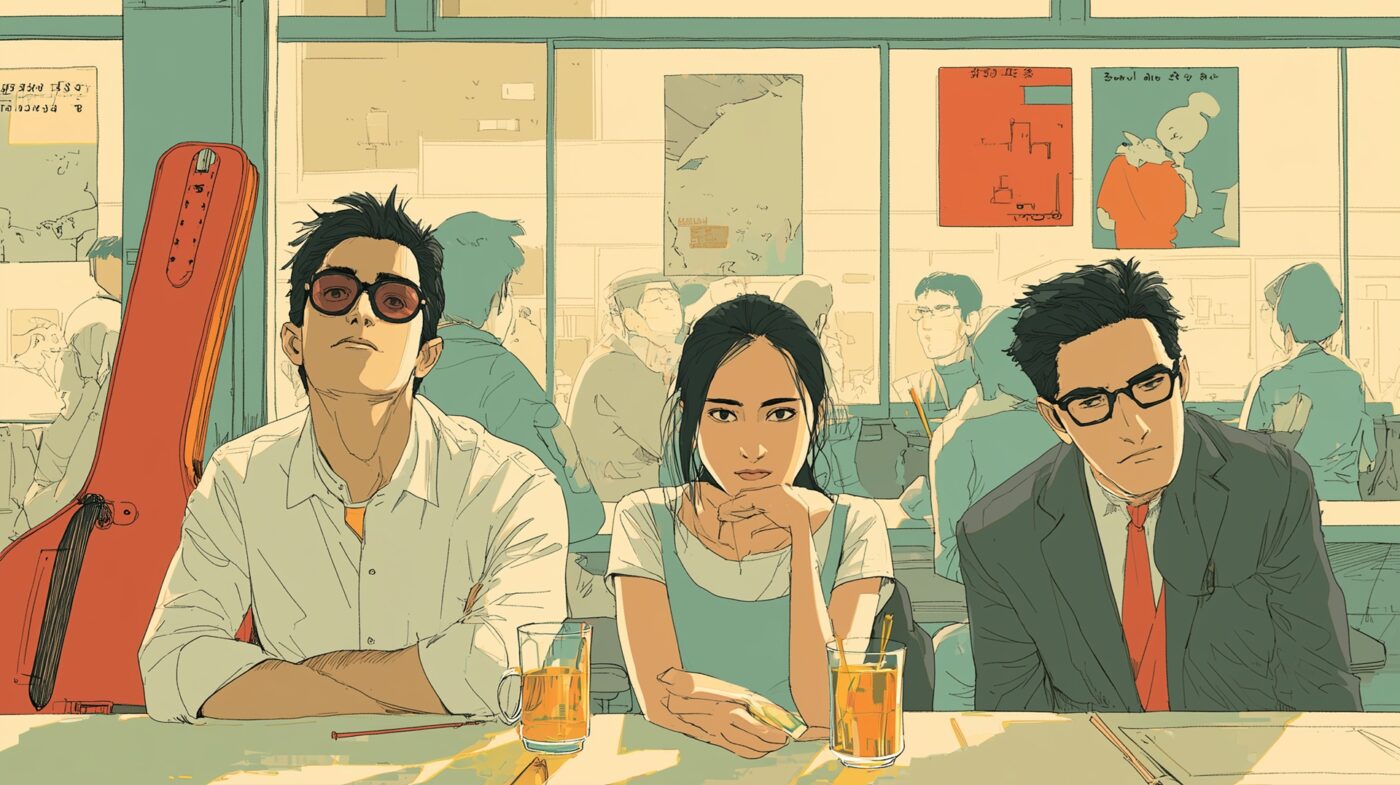
Akib found Dhara by the window, sunlight carving the laminate table into gold and black stripes. She hadn’t touched her lunch. Her phone screen glowed with a Wikipedia spiral about colonial education, blue links rabbit-holing deeper. He slid into the chair opposite, careful not to scrape the legs. He felt raw, edgeless, like a paper cut waiting for salt.
Dhara finally looked up. Her mouth twitched. “You get in?”
He shook his head. “Waitlist. Maybe if someone dies.”
She tapped her spoon against the table, a tiny metallic heartbeat. “They’ll never let you back. The whole circuit is run by Nabil’s cousin-syndicate. Even the faculty’s on board.”
“Yeah.” He tried to laugh. It made his teeth ache. “Guess I’ll join Yoga Club. Or Photography, like he suggested.”
Dhara made a face. “You know what that is? Just rich kids taking photos of poor kids. For portfolios. Reverse missionary work.”
Akib smirked, first genuine flicker since the quad. “So what’s your plan? Gonna protest by not joining anything?”
“I’m already a protest. Every club is a colonial hangover. You think Student Politics would exist if the Brits hadn’t invented rowing teams and secret societies? We could all just… opt out.”
She was always like this: sharp, honest. He liked her best when she was carving up the world, one sarcastic slice at a time. “So we’re the rejects. The opt-outs.”
“I prefer ‘refuseniks.’ Has a better ring.”
Kabbo stormed in, hair wild, sunglasses perched on top of his head like crown jewels. He dropped his guitar case, let it topple with a thud, spun a plastic chair around to straddle it backwards. Grinning so wide, Akib felt it like a challenge.
“Ladies and gentlemen. You’re looking at the new Director of Creative Programs, Communications Club.” Kabbo snatched a fried singara from Dhara’s tray, bit into it, flakes scattering. “I’m basically running the place. Shakil Bhaiya gave me the keys, metaphorically and literally. There’s a lounge. It has a fridge.”
Dhara raised an eyebrow. “So you’re management now? How capitalist of you.”
Kabbo waved her off, mouth full. “Nah. Cultural disruptor. I’m bringing Dadaism to the club infrastructure. We’re launching a meme archive, Dhara. Academic memes, too, not just horny ones. We’re changing the game.”
Akib tried to care. The knot in his gut just got tighter. “You know he’s using you, right? Shakil’s entire strategy is to rope in first-years who aren’t afraid to embarrass themselves at events. Numbers game. You’re just fresh meat for the next MUN.”
Kabbo licked oil off his finger. “Maybe. But at least I get a title. What do you get, Akib? Another ghosted email from Nabil? At least the Communications Club makes you feel something.”
Akib stared at the table. Blood in his face, hot and sudden. “You don’t need to be their dancing bear, man. They just want you for your noise.”
Kabbo shrugged, leaned in, voice dropping to a whisper. “Maybe. But I’d rather be noise than static. You get me?”
Dhara cut in, tone surgical. “The real question is, do you even want to belong to any club that would have you?”
Kabbo grinned, food flecked in his teeth. “That’s the point. I don’t want to belong. I want to take over.”
Silence spread between them, heavy as wet blankets. Akib saw his own reflection in the window behind Dhara’s head, cut up by sunstripes: hunched, splotched, forgettable.
He tried to rally. “Fine. But when the club implodes, don’t say I didn’t warn you.”
Kabbo winked, already scrolling through his phone. Probably drafting the first salvo of meme warfare. “Wouldn’t dream of it.”
Dhara finished her tea in one go, left the dregs spinning in the glass. “Well, boys. Looks like we’ve assembled the entire Resistance. Should we start the revolution now, or wait until they ban the canteen samosas for ‘health and safety’?”
Kabbo raised his glass, still half-full of Sprite, over the table. “To the Resistance.”
Akib clinked his own, barely above a whisper. “To the rejects.”
They drank. It tasted like nothing. It went down easy.
***