
Summary
Street Fighter is a colourful, action-packed adaptation that embraces the video game’s exaggerated characters, signature moves, and fantastical world. With energetic performances, striking visuals, and entertaining fight choreography, the film captures the spirit of the franchise. However, an overcrowded cast, underdeveloped characters, and competing plotlines prevent its story from reaching its full potential. A faithful and enjoyable adaptation, but one that lacks a clear dramatic centre.
Overall
-
Plot
-
Cinematography
-
Cast
-
Acting
Adapting Street Fighter for the screen is a difficult task. The games feature some of the most recognizable characters in video game history, but their stories are not as simple as their fighting game mechanics. The series brings together martial artists, soldiers, criminals, mystics, monsters, and larger-than-life villains. Each fighter has a distinct look, personality, and combat style. Making them work together in a movie, however, requires more than colorful costumes and familiar moves.
Director Kitao Sakurai understands that the film needs to honor the games. He does not try to make the characters overly realistic or remove the stranger elements of the world. Fireballs, spinning attacks, Psycho Power, the Dark Hadou, and green-skinned fighters all belong here. That approach gives the film a strong visual identity and makes it feel closer to the games than many earlier adaptations.
The story is less successful. The film introduces a large cast and several competing plotlines, but many characters receive too little time to make an impression. The World Warrior Tournament, which should hold the story together, often feels like a side plot. The main characters are pulled in too many directions, and the film struggles to give each conflict the attention it needs.
The result is entertaining in places and occasionally exciting, but uneven overall. Street Fighter has the costumes, energy, and special moves. What it lacks is a clear dramatic center.
The film opens in 1993 with an animated prologue about the first World Warrior Tournament. Ryu, played by Andrew Koji, faces Sagat in a fierce fight that establishes his skill and determination. However, the victory brings new danger. Ryu’s connection to the Dark Hadou grows stronger, and he becomes afraid of the darkness inside him.
Soon after the tournament, Ryu’s master, Gouken, dies under mysterious circumstances. His death changes Ryu’s life and strains his relationship with his adopted brother, Ken Masters. The brothers respond to their grief in very different ways. Ryu withdraws from the world and tries to control his inner power, while Ken seeks attention and becomes a popular fighter.
The animated opening is one of the film’s strongest sequences. Its colorful 2D style recalls Street Fighter II: The Animated Movie and the animated television series Street Fighter II V from the 1990s. The animation gives the martial-arts mythology a sense of history. Ryu and Sagat seem like legendary figures, and the supernatural elements feel at home in the film’s heightened world.
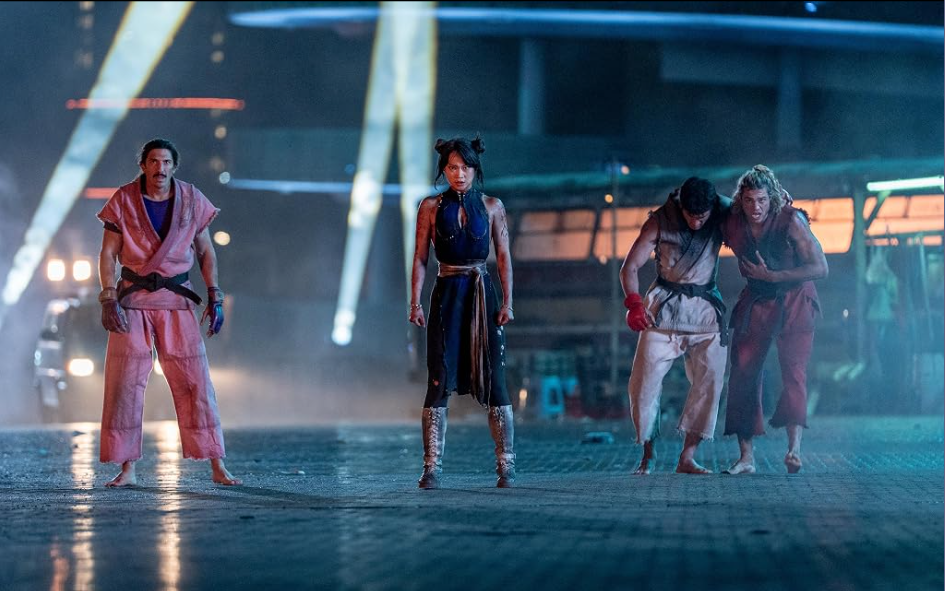
After the prologue, the story shifts to live action. Ryu lives quietly, prepares food in a small kitchen, and avoids other people. His isolation shows how deeply Gouken’s death affected him and how much he fears the Dark Hadou. Koji gives Ryu a serious, controlled presence. He conveys the character’s sadness and discipline, even when the script does not give him enough time to explore either quality in depth.
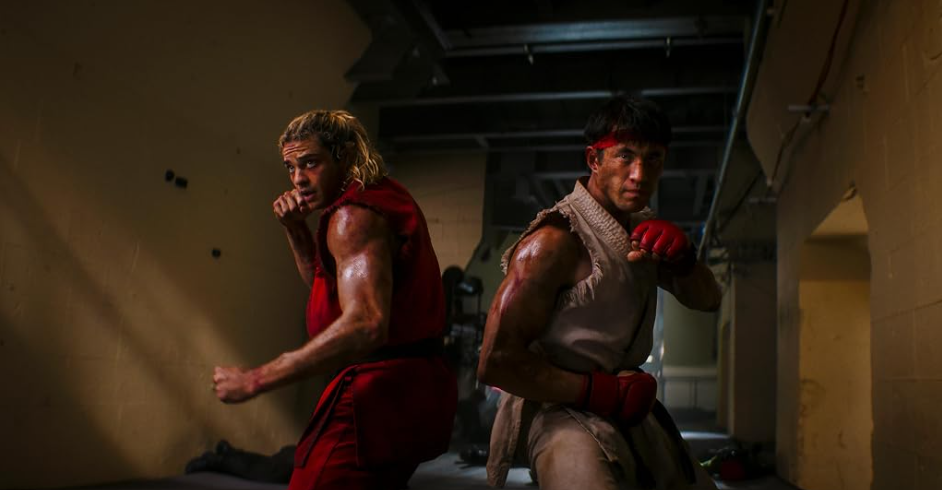
Ken, played by Noah Centineo, has chosen a different path. He is a known fighter and a minor celebrity, but his confidence often outruns his judgment. He appears on television, enjoys the attention, and tries to seem more mature than he is. Centineo brings an easy, comic energy to the role. Ken is not cruel or selfish, but he is impulsive and often fails to understand his own problems.
The contrast between Ryu and Ken gives the story an emotional foundation. Both have suffered the same loss, but each has responded in his own way. Ryu fears what he might become, while Ken fears losing his place in the world. Their relationship is one of the film’s more meaningful elements, although it is sometimes pushed aside by new characters, jokes, and villainous subplots.
Chun-Li, played by Callina Liang, brings the brothers back together. She is working undercover for the United States government and investigating M. Bison and his tournament. She suspects that Bison is using the competition to find powerful fighters, manipulate them, and expand his Shadaloo criminal network.
Chun-Li’s opposition to Bison is personal as well as professional. Her mission connects to her past and to the violence he has brought into her life. Liang gives the character a strong sense of purpose. Chun-Li is focused, intelligent, and physically capable. She also provides the film with direction during some of its more confusing stretches.
The premise is promising. The World Warrior Tournament gives the characters a reason to meet, compete, and form alliances. It also creates an opportunity to explore the rivalries that have made the games so popular. Ryu wants to understand his power. Ken hopes to restore his reputation. Chun-Li wants to stop Bison before his plans can grow larger.
However, the tournament does not receive enough attention. Several fights pass quickly or happen offscreen. Some fighters disappear for long stretches, while important events are explained rather than shown. The tournament should provide the film’s structure, yet it often feels like only one storyline among many.
The film also introduces Akuma, played by Roman Reigns. Akuma is connected to the Dark Hadou and believes Ken may have an important role in the future of that power. His arrival adds a supernatural threat, but it also creates another major conflict alongside Bison’s plans.
Bison and Akuma are both significant villains, but the film never fully settles on how their stories should fit together. Bison represents manipulation, ambition, and political power. Akuma represents physical strength and spiritual corruption. Either villain could carry a film on his own. Together, they compete for attention, leaving the story without a single, strong center.
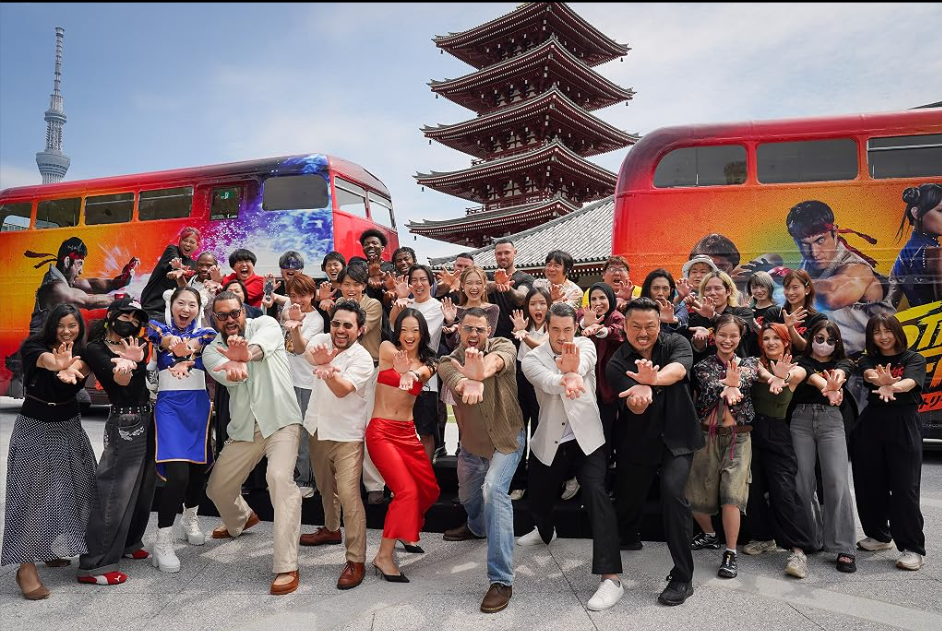
One of the film’s defining features is the size of its cast. It introduces many characters from the games, including Guile, Cammy, Dhalsim, Balrog, Vega, Zangief, E. Honda, and Dan Hibiki. For longtime fans, each appearance may be a pleasure. The characters have familiar costumes, fighting styles, and personalities, and the film does not try to make their designs look ordinary.
Cody Rhodes is a natural fit for Guile. He gives the character a direct, serious manner while recognizing the humor in Guile’s extreme appearance. The blond flat-top looks as exaggerated as it should, and Rhodes plays the role without embarrassment. His performance understands that the character works best when the film accepts his visual absurdity rather than trying to explain it away.
Vidyut Jammwal brings calm and discipline to Dhalsim. His performance suggests that Dhalsim could have served as an important guide for Ryu and the other fighters. Mel Jarnson gives Cammy strength and physical confidence, though the film provides too little time to develop her story or explore her connection to the larger conflict.
Curtis “50 Cent” Jackson suits the broad style of Balrog, while Orville Peck embraces Vega’s dramatic appearance. Olivier Richters is convincing as Zangief, and Hirooki Goto brings the physical presence needed for E. Honda. These performances are not necessarily weak. The larger problem is that many of the characters appear as memorable images rather than fully developed people.
Dan Hibiki, played by Andrew Schulz, receives more screen time than several other fighters. He is meant to be ridiculous, and the film uses him for comic relief. Some of his jokes work, especially when he is paired with Ken’s overconfidence. However, the movie also uses Dan to fill quiet moments that could have been spent developing the central characters or clarifying the tournament’s stakes.
The crowded cast affects Chun-Li in particular. Her investigation should give the film a clear purpose, but her mission is repeatedly interrupted by another character introduction or joke. Ryu’s story also loses focus. His struggle with the Dark Hadou should be the emotional heart of the film, yet he spends too much time away from the action or waiting for the next major event to move the plot forward.
The visual style is one of the film’s greatest strengths. Cinematographer Ken Seng gives the movie a bright, artificial look that suits the games. The settings include colorful arenas, smoky rooms, busy streets, and exaggerated city spaces. They create a world where fighters from different countries can meet without anyone questioning their unusual costumes or abilities.
The production design also makes good use of the 1993 setting. Older technology, arcade culture, and period clothing add a sense of nostalgia. Some details work well, while others create a broad impression of the 1990s rather than a precise picture of the year. Still, the film’s retro atmosphere supports its playful tone.
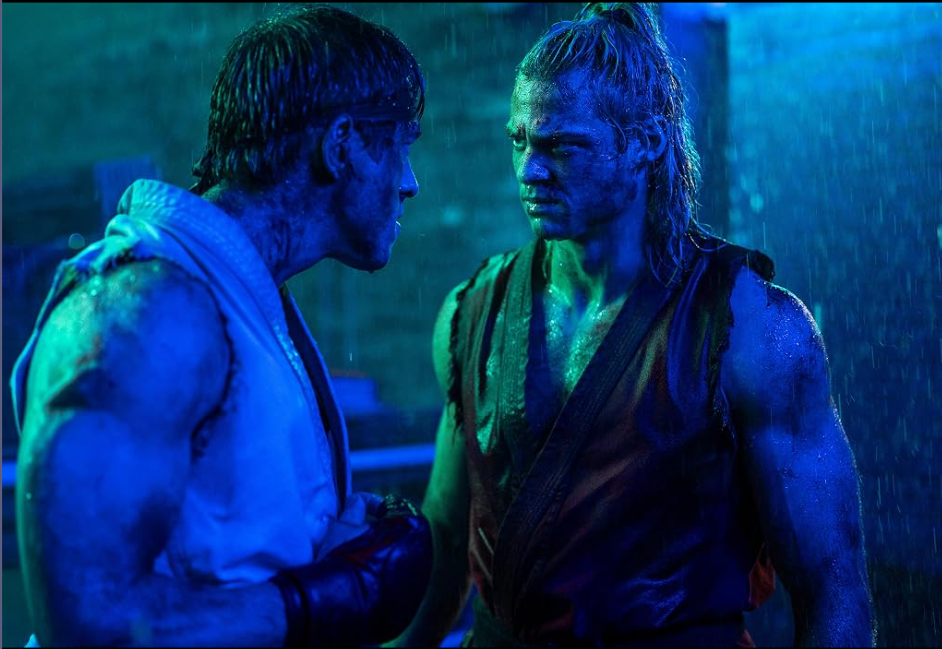
The costume design shows the same commitment to the games. They are not always naturalistic, but realism is not necessarily the right goal. Street Fighter depends on strong silhouettes and memorable details. The film understands that Guile needs his impossible hairstyle and that Blanka should look like Blanka. It treats these qualities as essential parts of the characters rather than problems to be corrected.
The action is generally entertaining. Fighters use their signature moves, and the stunt choreography often reflects the rhythm of the games. The best fights do more than collect special attacks. They also reveal how the characters think and react under pressure.
The strongest example is a hotel-room fight between Ryu and Ken. Ken attacks with confidence and frustration, while Ryu remains calm and defensive. Furniture breaks and walls are damaged as the room slowly falls apart. The scene is funny because Ken keeps losing control, but it also carries emotional weight. Their physical fight reflects the growing distance between them.
Other action scenes are less memorable. Some rely too heavily on quick film editing or familiar poses. At times, the movie seems more interested in showing that a move has been included than in building a distinctive fight around it. Even so, the choreography is more imaginative than the story structure.
The music has a similar mix of success and distraction. Several songs add energy and support the film’s playful tone. The use of 4 Non Blondes’ “What’s Up?” is especially memorable. It works both as a joke and as a comment on the film’s many confusing developments. Other songs seem chosen mainly to create a general retro mood. The soundtrack sometimes reminds the audience that the film is imitating nostalgia rather than recreating its period in detail.
Despite its problems, Street Fighter works best when it focuses on personal conflict. Ryu is trying to learn whether he can control his power. Ken wants to recover a reputation built on confidence and performance. Chun-Li hopes to complete a mission tied to her past. These ideas give the film real emotional potential.
The trouble is that the story does not stay with these characters for long. Serious moments are often followed by a new character entrance, a joke, or a sudden change in direction. The characters have strong feelings, but the plot moves too quickly for those feelings to develop fully.
Ryu’s struggle is especially important. He is not simply afraid of losing a fight; he is afraid of losing himself. The Dark Hadou represents anger, violence, and the possibility that strength can come from a destructive place. Koji gives the role the seriousness it needs, but the script treats Ryu’s inner conflict as something to postpone rather than explore.
Ken’s journey is lighter, but it still matters. He believes confidence can hide his failures. His friendship with Dan and his relationship with Ryu reveal someone who wants approval but does not know how to ask for it. Centineo keeps Ken likable and gives the film much of its humor and warmth.
Chun-Li’s story could connect these personal struggles to the wider conflict. She understands the danger Bison poses and knows the tournament is more than a competition. Liang gives her real strength, but the film does not give her enough room to become the central force she could have been.
Street Fighter is a colorful, committed adaptation that understands the importance of honoring its source material. It does not apologize for the franchise’s strange elements. The fireballs, costumes, dramatic villains, exaggerated hairstyles, and supernatural powers are all treated as essential parts of the world.
The film also benefits from several strong performances. Centineo’s Ken brings consistent energy, and Rhodes makes Guile memorable. Liang gives Chun-Li purpose, while Koji brings quiet seriousness to Ryu. David Dastmalchian and Roman Reigns offer different kinds of villainy.
The main weakness is the crowded storytelling. Too many characters receive too little development, and too many plotlines compete for attention. The tournament is not explored as fully as it should be. Meanwhile, the conflict involving Bison, Akuma, the Dark Hadou, and the relationship between Ryu and Ken becomes increasingly difficult to balance.
The film ends with unresolved ideas and a clear suggestion that another chapter will follow. That fits the ongoing nature of the games, but a first film still needs to stand on its own. Street Fighter offers many enjoyable moments without bringing its different stories together.
At its best, it shows how much fun a faithful adaptation can be. It trusts the characters, designs, and fantastical world of the games. At its weakest, it feels like a series of introductions waiting for a stronger story to connect them.
Street Fighter has the energy and appearance of the games. It offers memorable fighters, bright locations, and exciting special moves. What it still needs is the balance and focus to turn those familiar elements into a satisfying movie.