Shaque: Trust No One Review
Summary
Shaque: Trust No One is a watchable Netflix missing-child psychological thriller elevated by an atmospheric Shimla setting and strong, committed performances, particularly from Parineeti Chopra and Jennifer Winget. However, the series suffers from bloated storytelling, overused dramatic tropes, and an excessive reliance on superficial twists that dilute its central emotional core regarding motherhood and grief.
Overall
-
Performance
-
Atmosphere and Setting
-
Plot and Pacing
-
Depth and Focus
A newborn disappears from a hospital room. Nearly a decade later, her mother still believes the child is alive. Every year, on the girl’s birthday, anonymous photographs arrive at the family home, showing a child growing older, keeping hope alive while grief turns into painful mystery.
This is the unsettling premise of Netflix’s seven-episode series Shaque: Trust No One. Is Anvita (Parineeti Chopra) following the only real clue left by her missing daughter, or have years of trauma changed the way she sees the world? Are the photographs proof that the child survived, or part of a cruel plan to keep the family trapped in the past?
The series is most effective when it explores these questions. It understands the space between hope and obsession. Anvita’s refusal to accept her loss gives her strength while also isolating her from the people around her. However, the thriller often strays from its strongest ideas, introducing more suspects, secrets, family conflicts and revelations until the central mystery itself feels crowded.
Directed by Rensil D’Silva and created by D’Silva and Siddharth P. Malhotra, Shaque has an atmospheric setting, a committed lead performance and enough twists to hold attention. Yet the storytelling is often obvious and overextended where instead of allowing suspense to build, we are pointed at clues that signal the importance of every suspicious glance.
The result is a watchable thriller that isn’t quite absorbing.
Anvita’s daughter, Apeksha, disappears from Royal Shimla Hospital shortly after birth. The family receives no clear explanation and no answer that can offer closure. For Anvita, the past never ends. Each birthday photograph brings her missing child back to the centre of her life.

The photographs are among the show’s strongest ideas, creating a painful uncertainty offering hope without proof. If Apeksha is dead, someone is using the images to torment her family. If she lives, someone has watched her grow while keeping her apart from her parents. Either way, the photographs prevent Anvita from moving forward.
Her husband, Alok (Tahir Raj Bhasin), responds to the tragedy differently. He wants to support Anvita, but years of uncertainty have damaged their marriage. He has watched her grief take over their lives and fears that her search is destroying what remains of their family. His position is understandable, although the series does not explore his conflict in enough depth.
Madhu (Soni Razdan), Alok’s mother, is more direct. She believes Anvita has allowed the missing child to control the entire household but while her frustration adds tension, she is often written as just a familiar disapproving mother-in-law rather than as someone dealing with complicated grief of her own.
Anvita’s close friend, Shreya (Harleen Sethi), and Inspector Khurana (Anup Soni) are more willing to believe that Apeksha may still be alive, their support giving Anvita the courage to continue searching. At the same time, their guarded behaviour creates new suspicions.
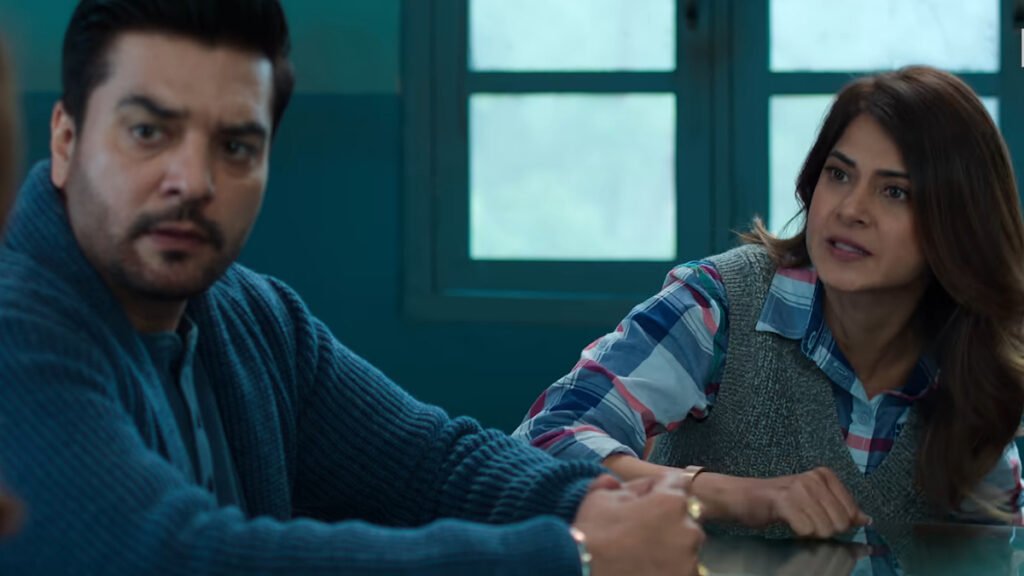
The mystery becomes more complicated when a woman named Sakshi (Jennifer Winget) arrives in Shimla with her young daughter. Anvita becomes convinced that the girl is Apeksha, creating the series’ most interesting emotional conflict. If Anvita is right, Sakshi may be raising a stolen child without knowing it. If she is wrong, an innocent woman and her daughter are being drawn into the life of a grieving mother whose certainty may be turning dangerous.
This uncertainty lies at the heart of Shaque.
The series asks whether grief can sharpen a person’s instincts or distort their sense of reality. Anvita is not a simple victim. She can be loving, determined and courageous, but she can also be intrusive and unpredictable. Her belief gives her a reason to keep going, yet it prevents her from accepting any possibility that challenges her version of the truth.
Parineeti Chopra brings the emotional intensity the role requires with Anvita having spent years being told to move on while feeling that doing so would mean abandoning her daughter. Chopra captures the exhaustion behind her anger and the fear behind her determination and even when Anvita seems unstable, the performance helps us understand why she refuses to stop searching.
The performance also gives weight to the series’ themes of motherhood and loss. Anvita has lost more than a child; she lost the future she imagined. Her identity has been shaped by the disappearance, and the show makes clear how difficult it is for her to exist outside that tragedy.
The writing, however, gives Anvita little life beyond her grief. We learn about her through arguments, suspicion, memories and breakdowns, but we get little sense of who she was before Apeksha disappeared. Her work, friendships and ambitions remain largely unexplored. As a result, she sometimes feels less like a fully formed person and more like the centre of a mystery.
The show also leans heavily on heightened moments to suggest that Anvita may not see the world clearly. Visions, sudden confrontations and dramatic music create tension, but they often explain the uncertainty instead of allowing it to grow naturally. A more confident thriller would let viewers study Anvita’s behaviour and decide for themselves what to believe.
Instead, Shaque often tells us when to feel suspicious or afraid. A pause lasts too long, the camera lingers on a face, or a routine conversation is staged as though it contains a confession. The show wants every character to seem capable of betrayal, but suspicion begins to feel like a device rather than a genuine emotional experience.
Shimla adds to the show’s atmosphere. Snow-covered landscapes, winding roads and fog create a sense of isolation. The town looks beautiful but closed off: a place where people know one another while still guarding their secrets. Cinematographer Jishnu Bhattacharjee uses the location to create a muted, occasionally haunting visual world. The series resembles a restrained gothic mystery, especially when Anvita revisits old memories or thinks she sees her daughter in a crowd.
The visual style is polished, and the background score generally supports the tension without overwhelming it. The music works best when the danger is uncertain, reminding us that the threat may not come from an obvious criminal, but from the pressure of not knowing what is real.
The strong atmosphere cannot hide the weaknesses in the storytelling. Several plotlines compete for attention. Alongside the missing-child investigation, the series also explores marital resentment, suspected infidelity, hospital secrets, illegal surrogacy, family politics and crime. It introduces tarot cards, visions and references to a tribal community, further hinting at supernatural or mystical forces.
These ideas are not necessarily weak on their own but the problem is that many are not connected closely enough to the central story. The tribal-community subplot, in particular, feels detached, as though it has been added simply to create another source of mystery. References to witchcraft and supernatural forces mostly add atmosphere rather than deepen the characters or investigation.
The police inquiry is often uneven, too. Inspector Khurana is dealing with a cold case involving a stolen newborn, missing hospital footage, anonymous photographs and a possible lead in the same town. Yet important evidence often appears only because a character suddenly chooses to reveal it. The investigation rarely feels like a careful process of gathering and connecting clues.
DNA testing becomes another way to delay answers. In a story about disputed identity, DNA evidence should be one of the most important tools available. The series repeatedly raises the possibility of testing, but obstacles appear whenever the truth seems close and while delays are common in thrillers, here they stand out because the plot keeps returning to the same question.
The pacing is lively, if not smooth. Each episode ends with a new revelation or suspicion, making it easy to continue watching. The story moves from one possible suspect to another, and characters are repeatedly recast as allies, victims or potential criminals. This creates momentum, but rarely genuine suspense.
Trust and betrayal run through the series. Anvita does not know whether to trust her husband, her friend, the police or even her own mind. Her marriage to Alok has been damaged by their different responses to the disappearance. He wants to accept what may be true; she keeps searching for the possibility that could save them.
Sakshi’s arrival adds another layer. Her relationship with Anvita is shaped by fear and uncertainty, but the two women are also connected by motherhood. Both believe they are protecting their children and feel threatened by the other. Their conflict works because the emotional cost remains serious, no matter who is right.
Jennifer Winget brings restraint to Sakshi. She does not make the character obviously innocent or suspicious and her discomfort feels genuine, with her reactions suggesting that she may have secrets without necessarily being responsible for the larger crime. Her scenes with Chopra are among the series’ strongest. Both actors understand the pain and confusion at the centre of the situation.
Anup Soni gives Inspector Khurana a calm presence. He avoids the exaggerated behaviour often associated with television detectives and plays the officer as someone who listens before reaching a conclusion. Dealing with a serious illness too, he too is a victim of time, although the theme is less explored in his case.
Tahir Raj Bhasin makes Alok’s exhaustion believable, playing a husband caught between compassion and frustration, although the writing gives him a mysterious quality without always explaining it. Soni Razdan brings dignity to Madhu, even if the role relies on familiar family-drama patterns. Harleen Sethi is effective as Shreya, especially when the character’s guarded manner begins to suggest complications.
The series’ greatest weakness is its dependence on twists. A good twist changes how viewers understand what came before but in Shaque, many revelations simply shift suspicion from one character to another. The show repeatedly promises an answer that will transform the mystery, but often delivers another question instead.
This makes the story busy but doesn’t necessarily make it richer. The characters are constantly hiding something, but not every secret carries the same emotional weight. Some revelations deepen the tragedy; others merely keep the plot moving. At times, the series seems more interested in surprising viewers than in exploring the consequences of its ideas.
At its best, Shaque: Trust No One is about the damage caused by uncertainty. It understands that not knowing whether a child is alive or dead can be more painful than receiving a clear answer. It also shows how hope can become a burden when it keeps someone from living in the present.
The series works when it stays close to Anvita’s emotional struggle. Her search is not simply an investigation; it is the structure holding her life together. She must decide whether to trust her instincts, listen to the people around her, or accept that the truth may differ from what she wants.
Unfortunately, the thriller often buries this story beneath subplots and dramatic devices. The mystery has enough energy to remain engaging, but it lacks the precision needed to become genuinely gripping. The final revelations have some impact, yet many feel signposted because the show has made its intentions so clear.
Shaque: Trust No One has a strong premise, a striking location and a committed performance from Parineeti Chopra. Jennifer Winget and Anup Soni bring welcome restraint, while the visual design creates an effective atmosphere of isolation and doubt. The series also raises meaningful questions about motherhood, grief, trust and the danger of refusing to accept uncertainty.
But it does not trust these ideas enough. It keeps adding twists when the emotional conflict is already powerful. A sharper, more intimate drama is hidden within the series: a mother trying to separate instinct from obsession, a family divided by grief and a child’s absence shaping an entire community.
Instead, Shaque often chooses noise over patience and suspicion over emotional depth. It remains a reasonably engaging psychological thriller, but its many secrets never come together with the force its premise deserves.