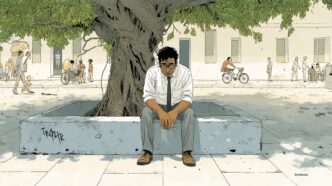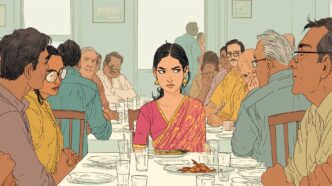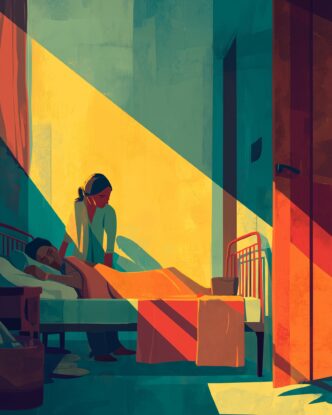


At six in the morning, Kubra eased herself out of bed, careful not to disturb the man sleeping beside her. She watched him for a moment, a familiar heaviness sinking into her heart. She had once loved him fiercely, the kind of love that had no end. But now? Now her love was twisted into something sharp, something bitter. She turned away, whispering curses under her breath, words too quiet for him to hear.
She moved quietly to the kitchen, her thoughts slipping to her daughter, Raisa, who’d be leaving soon. Breakfast had to be ready by seven. Roti—she had made it every single morning, every single day for years. She wondered, not for the first time, how many rotis she’d pressed and flattened, baked and flipped. Hundreds, maybe thousands. It felt endless. Her hands, worn and tired, moved automatically, the dough taking shape in her fingers. Her shoulders ached, a familiar dull pain creeping in, but she ignored it. The rotis had to be made.
Kubra despised making rotis.
If it were just her, she wouldn’t have cared about breakfast at all. But she couldn’t deny Raisa- the girl would not eat anything but rotis.
Raisa- her daughter- was what kept her going, though sometimes it felt like a shackle. If it weren’t for her, she’d have left this life, left him, a long time ago.
“Raisa! Raisa! Time to get up!” Kubra’s voice carried through the house, though she knew it wouldn’t rouse her daughter. With her hands still covered in dough, she walked to Raisa’s room, gently coaxing her awake. Satisfied, she returned to the kitchen, putting the finishing touches on breakfast. She arranged everything on the table and went to get ready herself.
Her husband had demanded she accompany Raisa to school; the streets weren’t safe this early, he’d insisted. “Then why don’t you take her?” she’d argued, “I still have to get your lunch ready.” But he’d brushed her off with that familiar indifference. It was her duty, after all. He knew she’d never compromise her children’s safety, and he counted on it. It was just one more way he controlled her.
Raisa needed extra help with her studies, tutors they couldn’t really afford. Kubra had pleaded, but he refused. “Then you help her,” she’d snapped. Begrudgingly, he tried. But one day was enough—Raisa came back to her, tear-streaked and shaken. The shouting, the scolding, it had been too much. After that, Kubra scraped together her own small savings for a tutor, finding a way to make it work.
In Raisa, she saw the girl she once was—clever, vibrant, full of hope. She had been confident and proud, aware of the glances that followed her, the quiet admiration that had always trailed behind. She had believed herself destined for something more.
But then she’d married him, the choice not forced but quietly made by others, the way choices were for girls like her. She had protested silently, swallowed her dreams, and said her vows. At first, she gave him all her heart, but he didn’t know how to love her back. He was a man moulded by his mother, a woman who had never taught him to see her as a partner, let alone as an equal.
The first blow came when she was carrying Raisa, and though it tore at her, she’d gone to her own mother for comfort. But her mother had only warned her to stay silent. “Never speak of this,” she’d whispered, “not to anyone.”
Now, as she walked her daughter to school, the cold air bit at her skin, and she wrapped her scarf a little tighter. The weather was shifting, winter creeping in. It reminded her of another cold day, the day she’d fallen ill. Feverish and weak, she’d been unable to move, let alone cook. Her husband hadn’t lifted a finger. He hadn’t cooked, hadn’t brought anything from the market. Raisa had gone hungry. She’d heard him call for Raisa, instructing her to make rice, her small hands too young for such a task.
Lying in bed, too ill to move, Kubra had shed silent tears. The very things she’d always tried to shield Raisa from were unfolding before her, all because she’d been too weak to stand. And so, through the fever and pain, she’d forced herself up, returned to the kitchen, and cooked for her family once more. Her husband had eaten in silence as if nothing had happened.
She had nothing but hatred left for him. He was the bitterness she tasted in every meal, the shadow that darkened her every morning. Yet she stayed, shackled by duty and love for Raisa. She was alive, but just barely. And as she walked, watching strangers with carefree smiles and laughter in their voices, she wondered if happiness had ever truly belonged to her at all.
***
As Raisa walked into school, a familiar sense of relief washed over her. It was one of the few places she felt a hint of freedom, away from the watchful eyes of her mother. She knew her mother meant well, but all she saw was a controlling presence in her life. Her friends had freedom—weekend outings, birthdays at restaurants, even silly sleepovers. But for Raisa, it was always study, study, study. Her mother had once told her, “You don’t want a life like mine,” and Raisa understood the message behind it, but she wanted to shape her own life, follow her own dreams, and not live out her mother’s regrets.
Then, there was Syam.
Syam was tall, and fair, with a warm smile that made Raisa’s heart flutter. The first time they’d spoken, it had felt like the world opened up for her. He liked her, and that was everything. Her father had given her a small button phone to call home in emergencies, but for the past month, it had become her lifeline to Syam. They texted whenever they could, little messages that felt like freedom. Syam made the arguments at home and her mother’s constant demands fade into the background. He was her escape.
Raisa was head over heels, wrapped in the thrill of first love. She’d have given anything to keep that happiness, to chase the world that Syam seemed to offer—a world filled with possibilities and dreams that were all her own. They would sneak out of class, find quiet corners where the world fell away, and, at night, they’d exchange whispered texts, sharing secrets and laughter until they fell asleep.
With Syam, Raisa felt truly alive.
***
Kubra’s suspicion had taken root the moment Raisa’s grades began to drop, and her late-night glow from the small button phone became impossible to ignore. One night, Kubra watched Raisa shift nervously under her sheets as the screen light flickered off.
“Raisa…” she called softly.
“What were you doing?” Kubra asked.
“Listening to the radio,” Raisa mumbled, trying to sound casual. But Kubra’s patience had run thin; she knew what she’d seen. Still, she forced herself to sigh and leave, hoping Raisa might just go to sleep.
When she returned half an hour later, she found Raisa asleep, her phone still in hand. Gently, she pried it loose, her heart sinking as she read through a string of messages exchanged with a boy Kubra had never heard of. So this was why her daughter’s focus had shifted, her goals slipping further each day. Kubra felt the weight of betrayal crash over her, intensifying a bitterness she’d buried long ago.
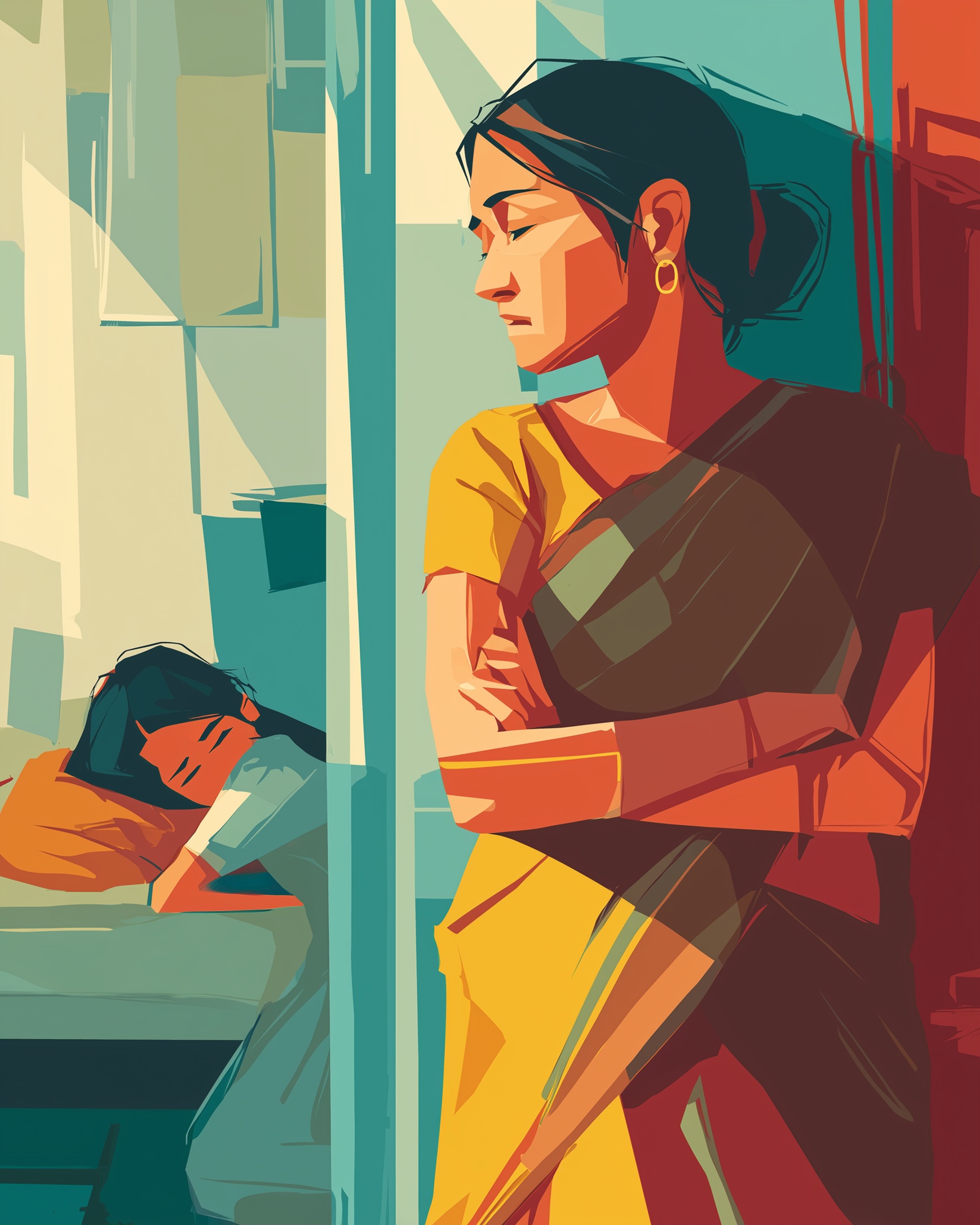
The next morning, everything was calm. Raisa woke to find her phone where she’d left it, and though Kubra was silent and distant, she assumed it was one of her mother’s usual moods.
But Kubra bided her time. When the weekend came and her husband left the house, she went to Raisa’s room, voice barely restrained. She didn’t even give Raisa a moment to fully wake.
“You’ve been texting that boy every night. Who is he?” she demanded.
Raisa’s face paled, her eyes wide with fear. She froze, clutching her blankets.
Kubra’s patience cracked. She grabbed Raisa’s arm, pulling her out of bed. “Is this why your grades are falling?” Her voice rose, a storm of hurt and frustration. “After all I’ve done to make sure you have a future, this is what you do? Do you want to end up like me?”
Raisa’s silence was answer enough. Kubra’s anger surged, and she left the room only to return with a thick stick, striking Raisa’s hand. The skin reddened, deepening to purple and bruising as yellowed patches emerged. Raisa did not scream; she bore the pain, her face streaked with tears, a silent defiance etched in her gaze.
“Stop talking to him. Do you hear me?” Kubra’s voice trembled, a mixture of rage and desperation.
“No,” Raisa mumbled, her voice barely a whisper but resolute.
Kubra seized her daughter’s wrist, disbelief flaring in her eyes. “No? Why?”
Raisa looked at her mother, incredulous and broken. “Because I love him.”
Kubra let out a sharp, bitter laugh. “Love? After everything I’ve taught you? Love isn’t real, Raisa. They can’t love. Men don’t love,” she spat, her voice heavy with years of resentment.
She held up the phone, her fingers trembling. “You’re not getting this back,” she declared, and stormed out, her heart as fractured as her daughter’s.
***
Raisa’s desperate words echoed down the hall as she followed her mother. “You can’t do this to me,” she cried. “All my friends have their own smartphones, and all I get is this tiny button phone. You can’t keep controlling me!”
Kubra froze, stunned by the sudden force in her daughter’s voice.
“What did you say?” Kubra asked, her voice low and shaky.
Raisa’s defiance hardened. “You can’t control me anymore!”
“I’m doing this for you!” Kubra retorted, her frustration boiling over. “So your life doesn’t—”
“It’s your fault your life turned out like this! I don’t need you to worry about mine!” Raisa’s words stung, each one piercing deeper than the last.
Kubra’s voice trembled with a mixture of anger and heartbreak. “I’ve devoted my whole life to you… my whole life!”
“And you expect me to devote mine to you?” Raisa snapped back, her face tear-streaked but resolute.
Kubra felt her resolve crumbling. “You think that boy loves you? Are you really willing to throw everything away for him?”
“Yes, I am,” Raisa answered, her voice firm. “At least he’s not a control freak.”
Kubra’s breath caught in her throat, her heart breaking. She felt defeated, like the one purpose that had kept her going all these years was slipping through her fingers. Tears filled her eyes, but she said nothing more. Instead, she turned and walked to her room, feeling the full weight of the distance growing between her and her daughter.
Raisa stormed back to her own room, sobbing, her world a whirlwind of emotions.
Meanwhile, Kubra moved with a hollow resolve. She quietly packed a bag with her clothes, each fold of fabric mirroring the layers of resentment and sorrow she had been carrying. She couldn’t take it anymore; she felt empty, spent, like she was just going through the motions. With a heart numb to pain, she readied herself to leave, feeling as if her last reason to keep fighting had faded away.
***
Kubra sat at the bus stop, her small bag clutched tightly in her lap, her fingers numb from the cold morning air. Two buses had already passed, their doors sliding shut with quiet finality as she sat motionless, unable to rise and board. The streets were just beginning to stir, but Kubra’s mind was a storm, racing between memories of the past and fears for the future.
She thought of Raisa—her beautiful, spirited daughter, whom she had poured every ounce of her life into. Kubra remembered the sleepless nights spent beside her bed when she had a fever, the countless hours cooking and cleaning, making sure everything was in place so her daughter could have a chance at a better life. Every sacrifice, and every hardship had been for Raisa, her only reason to keep going.
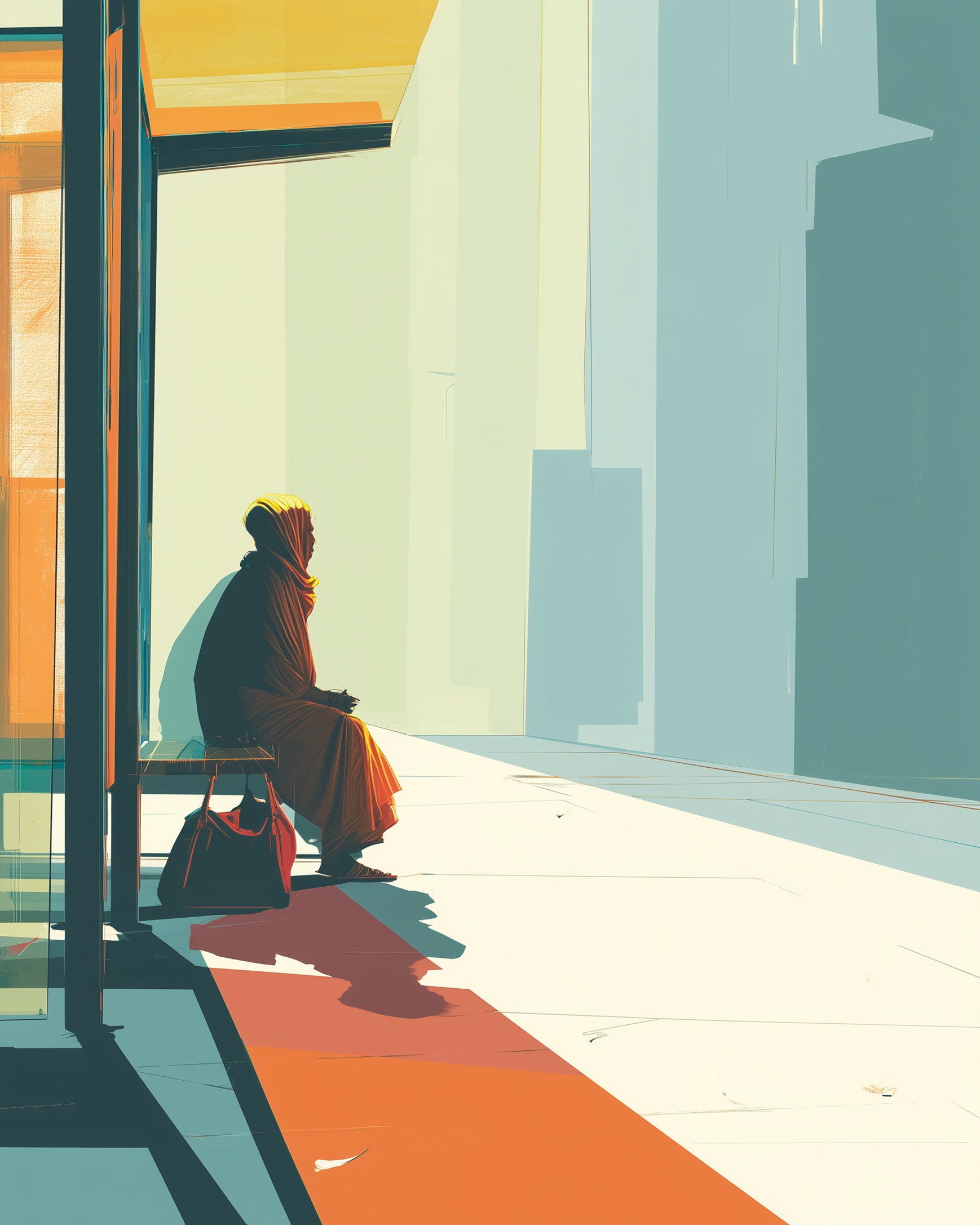
Yet here she was, contemplating an escape, feeling like a stranger to her own child. What if leaving would make things worse? What if Raisa ended up making choices that would lead her down the very path Kubra had fought so hard to protect her from? The thought twisted inside her, an ache of uncertainty and fear. Her life felt as if it had crumbled into ruins long ago, but Raisa—Raisa could still be saved.
But how?
Kubra sighed deeply, wiping her eyes with the back of her hand. She could still feel the sting of Raisa’s words, their forceful defiance, and yet, behind it all, she glimpsed the same headstrong spirit she once had herself. Raisa didn’t need controlling; she needed guidance, a way to find her own path without stumbling into the mistakes Kubra knew all too well. Her heart heavy, Kubra stood as another bus approached. She let it pass, her feet rooted to the spot.
Maybe, just maybe, there was still time to turn back. Time to rebuild, to listen, and perhaps, to understand.
***
The house was silent as Kubra walked back in. The familiar creaks of the floor and the faint hum of night sounds settled around her, but she felt like a ghost moving through the shadows. Her gaze drifted to Raisa’s closed door. A soft glow spilt from the crack at the bottom—a sliver of light against the dark, suggesting her daughter had left a lamp on, perhaps fallen asleep waiting for her mother to come back. Kubra felt a brief tug of tenderness, but it was distant, as though the warmth of that feeling couldn’t quite reach her.
In the kitchen, Kubra began to knead the dough, her hands moving in a practised rhythm. Round and round, she shaped each roti, pressing and smoothing. Her mind was blank, emptied by exhaustion, stripped of feeling. There were no more words left to argue, no more dreams left to shatter. The woman she had been—full of hopes, fierce, wanting the best for herself and her daughter—felt so far away. All that remained was this task, the familiar, repetitive motion that filled her days, holding her together in a fragile loop.