
When Ridi was six, she learned that love could hurt.
She learned it from the sharp words that flew across her home like broken glass, from the bruises her mother covered with long sleeves, from the way her father’s presence turned the house into a battlefield. By thirteen, she stopped hoping for kindness. By sixteen, she promised herself: “I will never depend on a man.”
At twenty-four, Ridi had built walls so high that even the sun struggled to touch her. She spoke little. She trusted no one. She carried her scars in silence, burying herself in work and solitude. Her coworkers knew her as the woman who answered questions with clipped politeness.
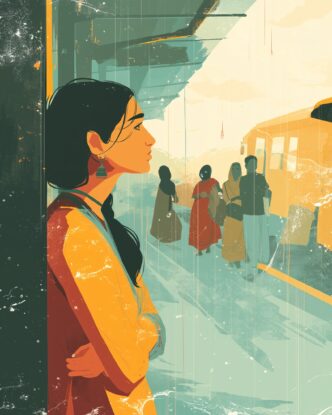
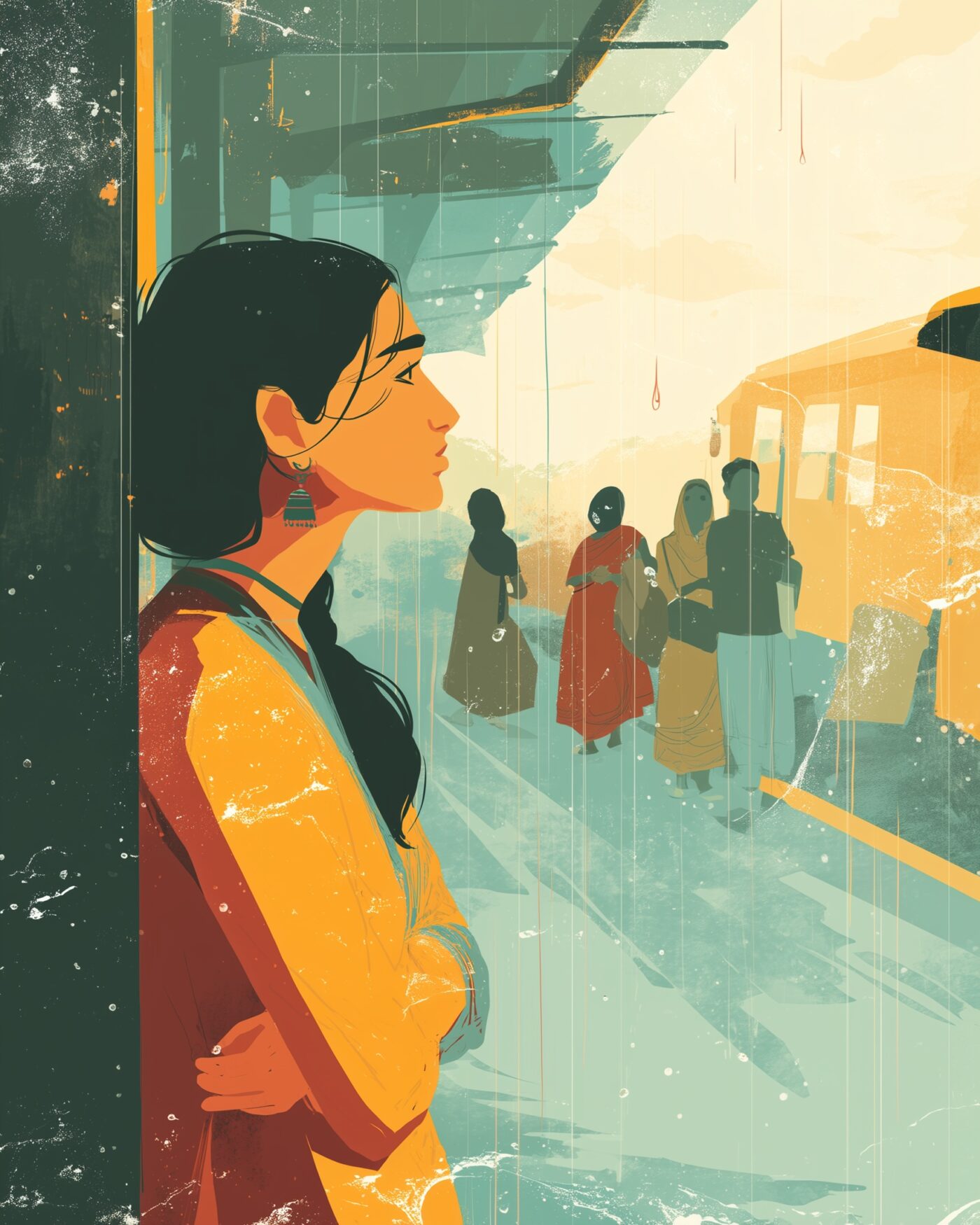
But on rainy evenings, she’d linger at bus stops just to watch mothers laugh with their children, her chest aching for something she couldn’t name.
Then she met Dhrubo.
And her world began to change.
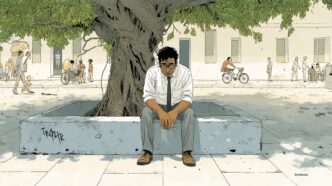
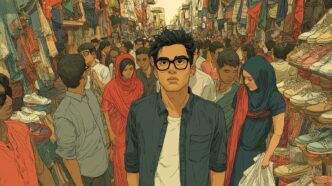
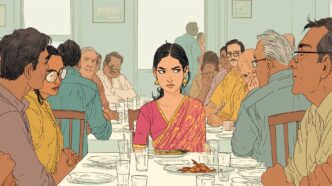
The first time Ridi saw Dhrubo, he was standing with his colleagues, having a soft smile on his face. She didn’t think much of him—just another new hire in a blue sweater. But unlike others, he never demanded attention. He listened more than he spoke, always noticing the small things no one else did: the way she tapped her pen three times before writing, how she avoided eye contact during meetings, the faint tremor in her hands when someone raised their voice.
“Your coffee is too strong”, he commented one day as she sipped from her chipped mug.
Ridi blinked. No one paid attention to details like that.
“It keeps me awake”, she said flatly.
“You could try adding honey”, he suggested, placing a small honey packet on her desk before walking away.
She stared at it for a long time.
For years, she had trained herself to expect indifference. But here was a man who noticed the most insignificant parts of her life—a man who made her feel “seen” without making her feel vulnerable.
Dhrubo didn’t try to fix her. He didn’t ask her to open up. He didn’t tell her to “just move on”.
Instead, he learned to speak to her in silence.
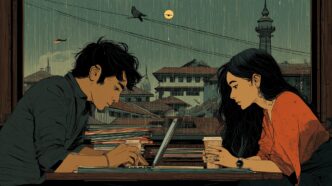
When she stiffened at loud noises, he’d wordlessly close the window. When she doodled spirals in her notebook during stressful meetings, he slid a blank sheet toward her, a tacit invitation to breathe. One evening, as they walked home from work, Ridi hesitated before speaking.
“I don’t think I believe in love”, she admitted.
Dhrubo chuckled softly. “That’s okay. Love isn’t something you believe in.”
She looked up at him, confused.
He smiled. “It’s something you feel when you’re safe enough to.”

Her heart clenched. “Safe!” The word felt foreign. Unreal.
“Then maybe I’ll never feel it”, she whispered.
Dhrubo didn’t argue. He simply shrugged. “Then I’ll just stay here until you do.”
And somehow, that was enough.
Healing wasn’t a straight path.
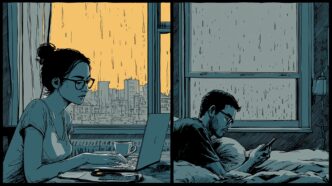
Some days, she still carried the weight of her past like a second skin. Some nights, old ghosts whispered that she would never be whole. But Dhrubo never let her drown.
He filled their home with books she’d never been allowed to read as a child—fantasy novels with dragon-riding heroines, poetry collections that made her cry. He bought her a painting set, even though she hadn’t touched a brush in years. “For the girl who loved colors”, he said, remembering her offhand comment about childhood art classes she’d quit after her father mocked her work.
One Sunday, he took her to the seashore. As waves crashed around them, she confessed she’d never learned to swim. “Too late now”, she said, turning away.
“Nonsense”, he replied, rolling up his jeans. “The water’s gentle today. I’ll teach you.”
She hesitated, then let him guide her into the surf. When a wave knocked her over, she emerged sputtering—and realized she was laughing. “Laughing!” The sound startled her. Dhrubo grinned like he’d uncovered buried treasure.
That night, she painted for the first time in decades: bold strokes of blue and gold, a woman dancing in the waves.
With Dhrubo’s encouragement, Ridi began reclaiming fragments of the life she’d lost.
She bought herself a fluffy gown at twenty-eight because her childhood self had been told “you are too chubby to wear fluffy dresses.” She binge-watched cartoons Dhrubo had loved as a boy, giggling at silly jokes over shared bowls of popcorn. She even signed up for ballet classes, and guitar lessons—something she’d dreamed of as a child but never dared pursue.
“You’re staring,” she said during her first recital, face flushed as she adjusted her tutu.
Dhrubo wiped his eyes. “You look alive!”
But her boldest act began with a stranger. One morning, she noticed a teenage girl on the bus, nervously adjusting her headscarf. On impulse, Ridi whispered, “That color looks beautiful on you.” The girl’s startled smile lit up the carriage—and something shifted in Ridi’s chest.
Soon, it became a ritual:
“Your laugh is contagious.”
“What stunning earrings!”
“You have the kindest eyes.”
Each compliment felt like planting flowers in war-torn soil.
Her transformation rippled outward.
With Dhrubo by her side, Ridi rebuilt herself.
She started focusing on her academics, and research, something she never thought she was capable of. She started public speaking, sharing her journey with others. She wrote articles on healing, growth, and love—things she once thought were myths.
Her voice, once small and hesitant, became bold and fearless.
Then came the biggest step.
Dhrubo watched as she paced their apartment, holding an acceptance letter.
“It’s a risk”, she murmured. “Starting a mental health initiative—who will listen to me?”
Dhrubo smiled. “Every woman who was ever told to stay silent. Every girl who thinks she’s alone.”
She took a deep breath.
She was ready.
At work, she started mentoring shy interns, recognizing her younger self in their hunched shoulders. She launched Project Shosti, a mental health initiative for trauma survivors, funding it through art auctions featuring her paintings.
The night before her first major speech, panic clawed at her throat. “What if I freeze?”
Dhrubo pressed his forehead to hers. “Then I’ll heckle you with terrible jokes until you laugh.” He smirked. “For you, I’ll be in the front row.”
She smiled. He always was.
On stage, she clutched the mic and began: “My name is Ridi Ahmed. For years, I thought love was a lie told by people who hadn’t met pain. But here’s the truth—healing isn’t about forgetting. It’s about gathering your broken pieces and building something new. If you’re listening to me today, I want you to know one thing—you are not your past.”
The applause shook the walls.
And in the front row, Dhrubo, smiling, eyes shining with pride.
Years later, as Ridi rocked her newborn daughter, she whispered promises into the dark:
“You’ll never flinch at slamming doors.
You’ll know your worth before anyone tells you.
You’ll love fearlessly.”
Dhrubo watched them, eyes shining. “She already has the best parts of you.”
Ridi looked at him, warmth spreading through her chest. “Because I had the best man beside me.”
Ridi smiled, thinking of the women who’d joined Project Shosti, the strangers who’d hugged her after speeches, the girl on the bus who’d later emailed: “Your words made me feel seen.”
She’d spent years believing herself irreparably broken. But here, now—with her daughter’s heartbeat against hers, with Dhrubo’s hand warm in her own—she understood:
“The deepest wounds often birth the brightest light.”