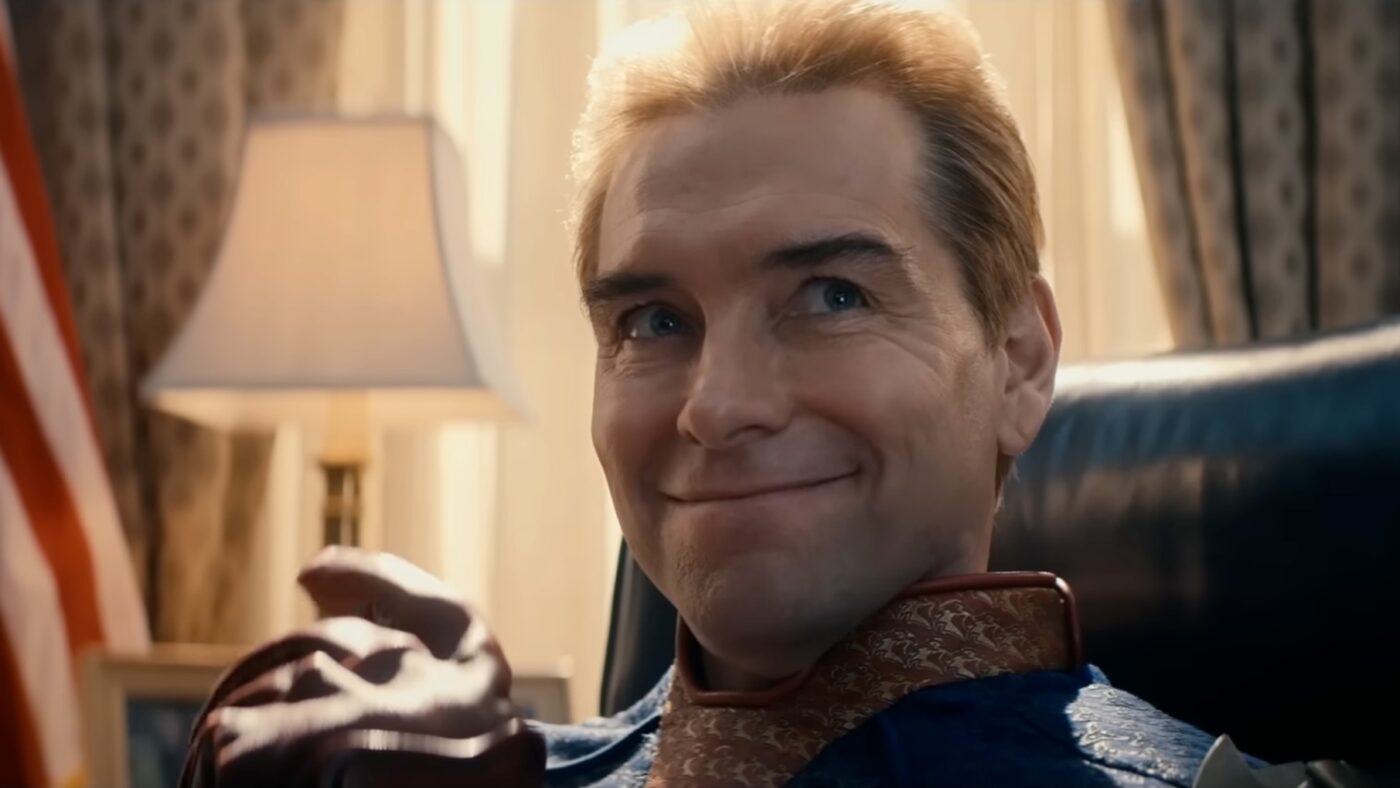

There is a scene in Season 2 of The Boys in which Homelander stands alone in a room and drinks breast milk from a bottle, his face cycling through something that is not quite comfort and not quite grief and not quite rage but contains elements of all three. It lasts approximately twenty seconds. Anthony Starr does not speak. Nothing in the scene is explained, because the show trusts the audience to read the performance, and the performance is sufficiently precise that they can. The scene became one of the most-discussed images in the show’s run — not because of what it depicts, but because of what it reveals about a character who has spent every other moment of his screen time carefully managing what he shows. The capacity to generate that revelation in twenty seconds of silence, with no dialogue support, is the specific gift that Starr brings to The Boys, and it is the gift that makes him not merely important to the show but structurally necessary to it.
What Homelander Is Supposed to Be
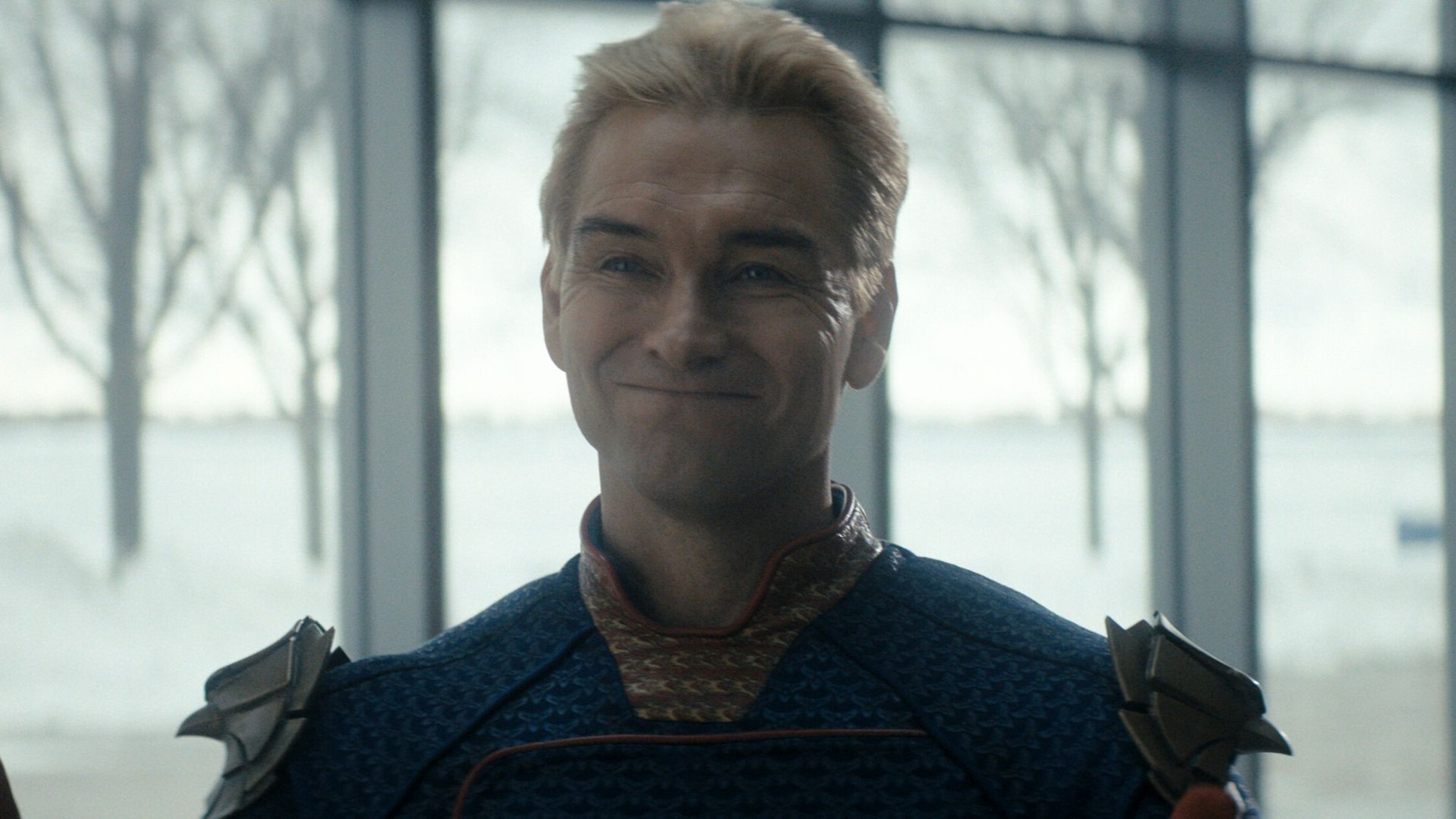
The character of Homelander is, at its conceptual core, a specific satirical argument: that the visual grammar of the superhero — the cape, the patriotic imagery, the public performance of selfless heroism — is a costume that can be worn by any psychology underneath, including the most damaged one imaginable. Homelander has the Superman suit and the Superman PR machine, and underneath them he has the inner life of a man who has never experienced a genuine human relationship, who was raised in a lab, who understands emotions as things other people have that he is required to simulate, and who has the physical power to vaporize anyone who threatens him.
The concept is strong. The concept is also extremely vulnerable to the performance: it requires a performer who can maintain two simultaneous registers — the public-facing charm and the private damage — in the same frame, who can make the charm legible enough to explain how Homelander functions as a public figure while making the damage visible enough to generate the dread that the character demands. Starr manages this. Most actors of his profile would not.
The Technique: Two Registers at Once
The specific technical achievement of Starr’s Homelander is the simultaneous performance — the ability to be, in the same moment, both the performance and the performer of the performance. Watch any of the scenes in which Homelander is speaking to a crowd, or a reporter, or a Vought executive: there is always a layer of watching underneath the presentation, a quality of Homelander monitoring the reception of what he is doing and calibrating in real time. Starr builds this into the physicality of the performance rather than the dialogue. It lives in how Homelander’s eyes move after a line lands, in the precise duration of a smile before it becomes something else, in the specific way his posture adjusts when he senses a room shifting against him.
These are choices made at the granular level of professional acting technique, and they are choices that require an actor who understands his character’s psychology completely enough to embody it at the level of reflex.
The Violence and the Vulnerability
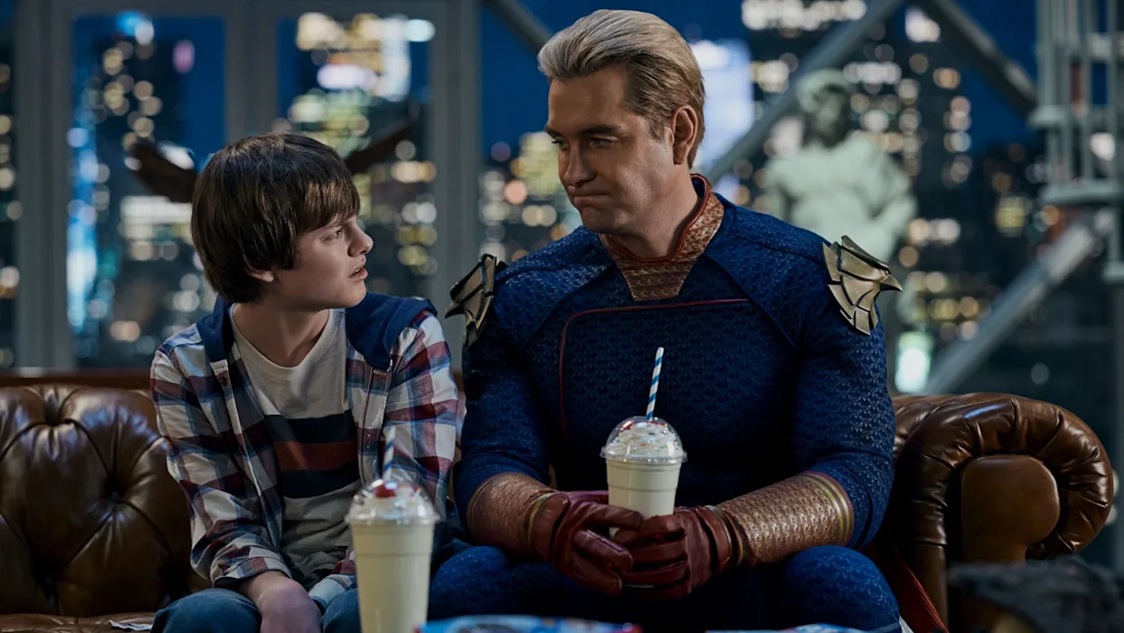
The boys has two Homerlanders, and Starr plays both with equal conviction. There is the Homelander who commits acts of graphic violence — the laser attacks, the crowd incidents, the moments of absolute power exercised without accountability — and there is the Homelander who sits in an empty room and is recognizably lonely, who wants approval with an intensity that reads as pathological, who cries in ways that feel genuine rather than manipulative even when everything about the character suggests the opposite. What makes these two registers coexist without contradiction is Starr’s clarity about the connection between them: the violence and the vulnerability are not opposites in Homelander’s psychology, they are expressions of the same wound. The man who will laser someone for disapproving of him and the man who drinks milk alone in a room are the same person, and Starr never lets the audience forget it.
The Show Without Him
The degree to which The Boys depends on Starr’s performance became clearest in the reception to Gen V, the spinoff series that deliberately moved the central narrative away from Homelander. Gen V is a good show — it has energy and ideas and a cast that carries its own weight — but it did not penetrate the cultural conversation the way The Boys does, and the difference is not primarily the writing quality or the budget. It is the absence of the performance around which the franchise’s emotional and satirical logic is organized. Homelander is the point of the universe.
The show uses him to demonstrate what happens when power is absolutely unchecked, and that demonstration requires an actor who can make you simultaneously understand why the public loves this person and why they should fear him. Remove that performance and you remove the argument.
What Comes After
Season 5 of The Boys, currently airing as the show’s final season, represents the conclusion of Antony Starr’s primary engagement with the character. Whatever follows for Homelander — in the show’s final episodes, in whatever spinoff material the franchise produces — the version of the character that audiences know, that critics have debated, that memes have disseminated into mainstream culture, is Starr’s creation. He did not write Homelander. He did not design the concept. But the concept as it actually exists in the world — as a cultural object that has penetrated beyond the show’s direct audience into broader conversations about power, celebrity, and the aesthetics of authority — is inseparable from his performance of it. A different actor playing the same role would have produced a different character. The character that exists is the one that Starr made. That, in the end, is the definitive argument for why Anthony Starr is instrumental to The Boys’ popularity: not that the show needed a good actor in the role, but that it needed this actor’s specific intelligence about this specific role, and it found him.