

Another nepo project or a classic Mohit Suri success?
Summary
Mohit Suri’s Saiyaara, starring debutants Ahaan Panday and Aneet Padda, delivers a sincere romance of first love, music, and heartbreak. Despite familiar tropes and flaws, its emotional performances, natural chemistry, and musical depth leave lasting impact.
Overall
-
Plot
-
Music
-
Acting
-
Cinematography
-
Pacing
Sometimes, a film quietly slips onto the landscape with little fanfare or expectation. Saiyaara, directed by Mohit Suri and featuring the debuts of Ahaan Panday and Aneet Padda, is exactly that. There was skepticism leading into its release: a largely new cast, modest promotion, and an age-old romantic plot. And yet, the film manages to carve out its own place, resonating with viewers through sincerity and the searching vulnerability of young love.
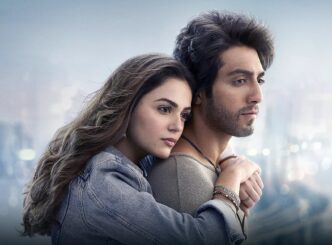
This earnest romantic drama opens in a space that feels lived-in but not tired. Krish Kapoor, portrayed by Ahaan Panday, is a musician driven by ambition and struggling with his own restlessness. He meets Vaani Batra, a shy, interior journalist who, underneath her quiet demeanor, carries the scars of deep betrayal by her long-time fiancé. Their paths cross by coincidence involving Vaani’s lost diary, which fuels Krish’s artistic rebirth. He takes her words and transforms them into music. An initially transactional exchange becomes something more profound: understanding, comfort, and love.
Saiyaara’s plot opens in a space that feels lived-in but not tired.
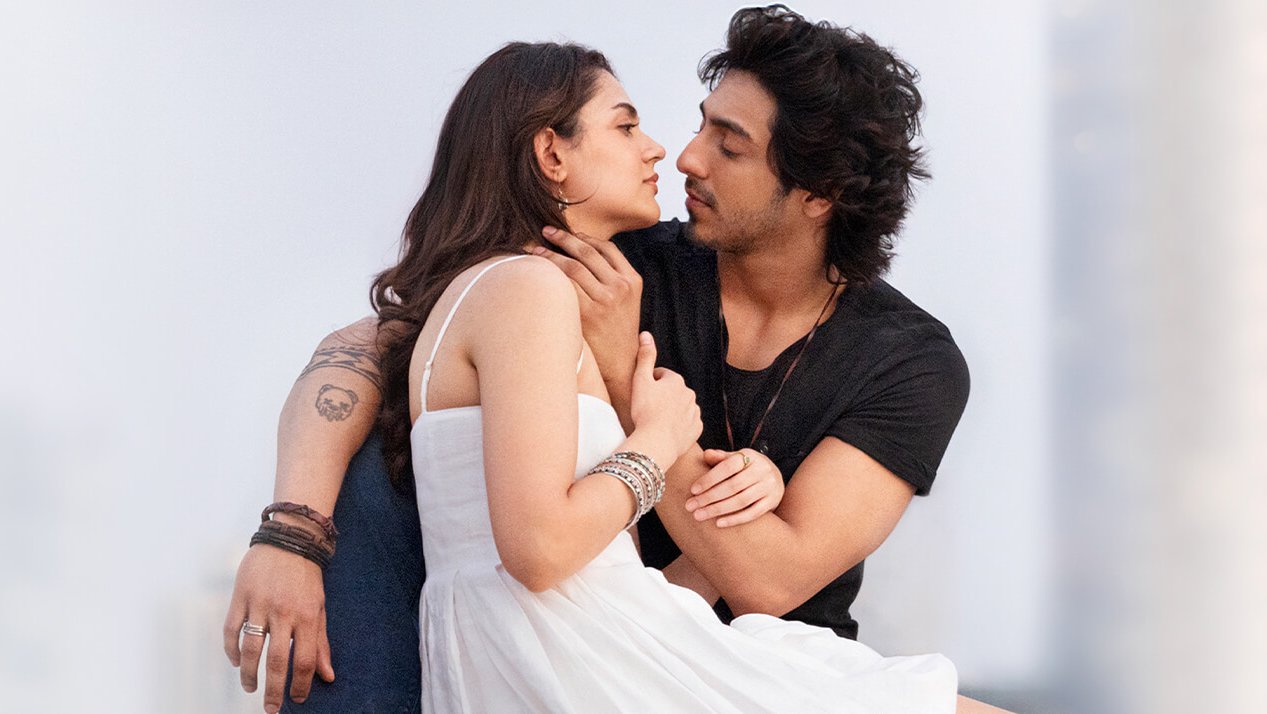
It’s a premise that cannot avoid the echoes of past Bollywood romances. However, it doesn’t chase big twists or gimmicks. Instead, it trusts the audience to care about small, sincere moments – glances exchanged in song-filled cafés, hands briefly touched while drafting lyrics, the hesitancy of a love that knows its own fragility. The chemistry between Panday and Padda is commendably natural here. Both find a convincing middle ground, ensuring that the film’s softer notes land as powerfully as its grander setpieces.
Director Mohit Suri is no stranger to this terrain. His previous works – Aashiqui 2, Half Girlfriend, and Ek Villain have always been about love’s contradictions: reckless longing offset by crushing self-doubt. With Saiyaara, he doesn’t reinvent his style. Rather, he distills it. The pacing is slower, measured. Suri’s casting choices are deliberate, prioritizing authenticity over celebrity. It’s a familiar move, but in this context, it feels like a breath of fresh air. There is a sense that the innocence, awkwardness, and hopefulness of first love are best served not by practiced stars but by actors willing to let their guards down.
Visually, Saiyaara maintains a sense of restraint rarely seen in contemporary Bollywood romances. Cinematographer Vikas Sivaraman uses his lens to illuminate character just as much as landscape. Whether framing the urban blues of Mumbai or the softer interiors, the photography never feels intrusive or showy. The film’s visual aesthetic matches its emotional aims. Small details like how sunlight slants across a window, or how a guitar is cradled like a shield, gives even well-worn romantic beats a new warmth. The choreography is minimal, the lighting soft, the camera work unhurried. Scenes that could slip into melodrama keep their feet on the ground, drawing the audience inward.

The music, curated over half a decade, becomes more than an accessory. Composers like Tanishk Bagchi and Arslan Nizami assemble an album that doesn’t just complement the story but provides its language. Songs like Saiyaara and Tum Ho Toh feel less like Bollywood diversions and more like honest attempts to sketch the characters’ inner landscapes. Additionally, the combination of industry stalwarts like Mithoon and up-and-comers like Faheem Abdullah creates a vibrant, if slightly repetitive, musical palette. Each track is still purposeful, lending gravity to its corresponding scene. There are quieter scores that let the actors’ faces do the work, but also lush orchestral moments that don’t overdo it. The lyrics, courtesy of Irshad Kamil, Mithoon, and others, are sometimes simplistic. But their sincerity cannot be doubted. The film’s best stretches occur when the music and the visuals move together, letting wordless feeling take the reins.
Yet for all its gentle craftsmanship, Saiyaara can’t outrun its own limitations. A central twist – Vaani’s diagnosis with Alzheimer’s – strains credulity. It’s a rare affliction in someone her age, and the film’s depiction of her subsequent decline feels more a device for wringing out tears than a believable portrayal of illness. The script, penned by Sankalp Sadanah, often chooses emotional impact over narrative innovation. Vaani’s lapses in memory surface when convenient for the script rather than building to a nuanced picture of her condition. Moreover, Vaani’s abandonment at the altar, arrives with little practical explanation. Why the hastily arranged, witness-free registry wedding? What is Mahesh’s family’s perspective on his last-minute betrayal? And why is Vaani, described as resilient and educated, so passively accepting of her fate? These are not small quibbles; they hobble the film’s claim to realism. Meanwhile, other subplots serve more as checkmarks against genre convention than as living parts of the film’s world. The climax, in particular, uses typical plot devices, sacrificing emotional payoff for repetitive drama.
Vaani’s lapses in memory surface when convenient for the script rather than building to a nuanced picture of her condition.
The supporting cast, while competent, rarely gets the space to register beyond established caricatures. Friends quarrel on cue; parents hover with concern or disapproval; antagonists arrive mostly to stir the plot. Varun Badola, in particular, is underused. For a film that aims to ground its drama in lived experience, the secondary characters lack dimension. Nonetheless, their presence helps thicken the film’s world, even if only at the edges.

Pacing, too, is a double-edged sword. The film opens with focus; the first act lets us get to know Krish and Vaani in meaningful silence, letting their anxieties and ambitions breathe. But by the second half, the narrative can’t resist familiar patterns. Breakups, reconciliations, and a parade of misunderstandings take up precious screen time, while quieter character beats get lost in the churn of incident. Dialogues swing from poignant to mundane, where earlier there were glimpses of real conversation. While the editing by Devendra Murdeshwar and Rohit Ajit Makwana keeps most scenes tight, it doesn’t prevent the final act from dragging, losing some of the tautness established in the first half.
Still, much of what keeps Saiyaara afloat are its two leads. Panday, bearing both the advantages and the scrutiny of Bollywood lineage, doesn’t coast on his family name. He brings Krish’s self-importance and vulnerability into real conflict, creating a protagonist with rough edges. He veers into brooding a bit too often, a classic mistake for romantic heroes. Padda, meanwhile, quietly anchors much of the narrative. Her Vaani is neither a martyr nor a cipher; rather, she finds pockets of complexity and grace even when the script offers her little room to move. Her debut is marked by unusual confidence and depth for a newcomer. Her portrayal of Vaani has generated a wave of praise on social media and among critics. Overall, their connection – shy, tentative, but believable – does much to lift even the heavier-handed moments.
All things considered, Saiyaara will not go down as a revolutionary film. Those drawn to the arc of passionate, sometimes irrational love will find the film delivering exactly what it promises: sincerity over sophistication. Others may see its jumble of coincidence, sentimentality, and formula as evidence of creative drift. But to its credit, Saiyaara never feels cynical or manipulative. It is a modest addition to the Bollywood romance tradition. In an era increasingly skeptical of the transformative power of romance on screen, Saiyaara stands as a gentle reminder: even old stories, told with care, can still fill a space in the world.