




Summary
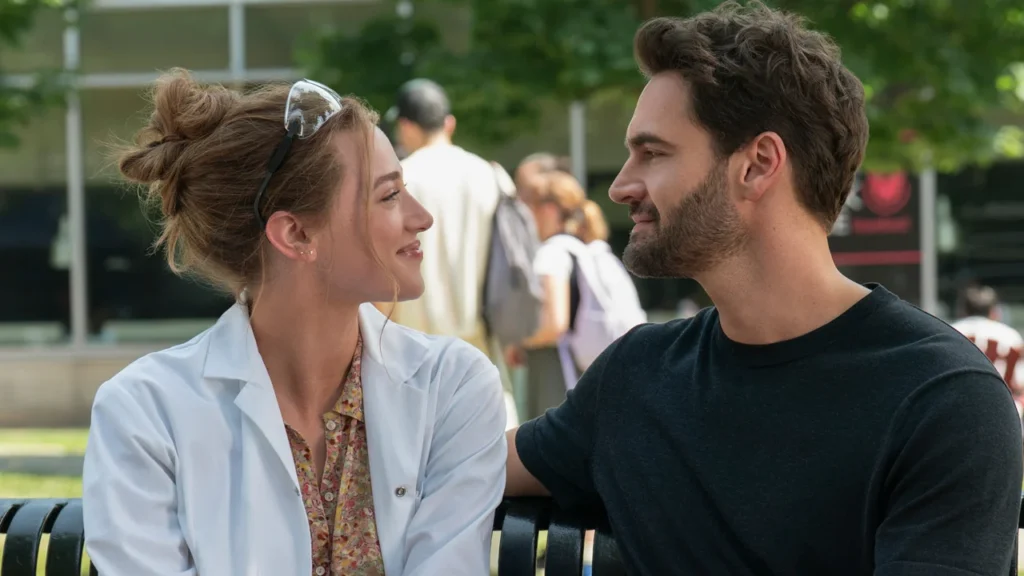
The Love Hypothesis is a charming, if formulaic, romantic comedy starring Lili Reinhart as Olive Smith, a Stanford PhD student whose impulsive decision to fake-date an intimidating professor (played by Tom Bateman) leads to unexpected emotional complications.
Overall
-
Plot
-
Acting
-
Cinematography
-
Soundtrack
Romantic comedies often return to familiar ideas: fake dating, academic rivals, misunderstandings, and unexpected attraction. The Love Hypothesis uses all of them. It embraces awkwardness, longing, friendship, and the possibility that two lonely people can find comfort in each other.
The story is light, but it also touches on grief, ambition, loneliness, and the challenges women face in academic workplaces. It follows Olive Smith, a Stanford PhD student researching pancreatic cancer. She is intelligent, hardworking, and serious about her scientific career. But she is also nervous in social situations and often struggles to say what she really wants. Her work gives her a sense of order. Her personal life, by contrast, is full of uncertainty.
Olive’s first scene quickly shows both sides of her personality. Before a graduate school interview at Stanford, she hides in a laboratory bathroom after her expired contact lenses leave her nearly unable to see. The moment is funny, but it also reveals how much Olive fears losing control. She wants to appear capable and confident in a place where she feels she must constantly prove herself.
Reinhart handles Olive’s anxiety with care. She does not play the character as a joke. Olive’s embarrassment feels genuine, and her worry comes from a familiar fear of failure. She is awkward, but she is not foolish. She is uncertain, but she is also determined. Reinhart brings these qualities together, making Olive both funny and believable.
Olive’s research is connected to her mother’s death from pancreatic cancer. That loss shaped her goals and gave her work a personal purpose. Olive does not simply want a successful career. She hopes her research can prevent other families from experiencing the same pain. Olive has also learned to put other people’s needs before her own. She often tries to make life easier for those around her, even when doing so creates trouble. This habit drives the story when her best friend, Anh Pham, begins to develop feelings for Jeremy, Olive’s former crush.


Anh believes Olive may still want Jeremy, so she hesitates to pursue him. Olive wants her friend to be happy and decides to convince Anh that she has moved on. In an impulsive moment, she claims to be dating someone and kisses the nearest available man. That man happens to be Adam Carlsen, one of Stanford’s most intimidating professors.
Students call Adam “Dr. Evil.” He is strict, serious, and seemingly unconcerned with whether people like him. His reputation makes him a natural opposite to Olive’s nervous openness. He is controlled where she is anxious, quiet where she tends to talk too much, and feared where she is often underestimated.
Tom Bateman gives Adam the reserved, imposing presence the role requires. He can seem distant without saying much. Adam belongs to a familiar rom-com trope: the difficult man whose cold exterior hides a more vulnerable person. The film expects viewers to believe that Olive will eventually discover the tenderness beneath his severity.
Adam has his own reason for agreeing to the fake relationship. Stanford administrators suspect that he may leave for Harvard after receiving an offer from a colleague. He believes that appearing to be in a serious relationship will make him seem more committed to Stanford and perhaps improve his professional situation.
This is one of the film’s weakest ideas. Olive’s reason is easy to understand: she wants to protect her friendship and give Anh permission to follow her feelings. Adam’s reasoning is less convincing. The idea that a romantic relationship could sway university administrators or restore his research funding feels too convenient.
Olive’s reason is easy to understand: she wants to protect her friendship and give Anh permission to follow her feelings. Adam’s reasoning is less convincing.
Romantic comedies often ask viewers to accept unlikely situations. The problem is not simply that this arrangement is unrealistic. It is that the film does not make it entertaining enough to overcome its weak logic. Olive and Adam discuss the rules of their fake relationship, but those rules do not lead to the playful complications the story needs.
Even so, the setup creates a few enjoyable moments. Olive and Adam must act affectionate in public, explain how their relationship began, and behave as though the arrangement is natural. Olive is especially funny when she tries too hard to seem relaxed. Her efforts to appear normal only make her more obviously nervous.

Reinhart is at her best in these scenes. Olive’s panic is active: she speaks too quickly, smiles too brightly, and makes choices that deepen the confusion. Reinhart understands the comedy of someone trying to control a situation that has already slipped away. The humor comes from Olive’s personality rather than exaggerated behavior.
The romance works best when the film focuses on what Olive and Adam share. Both are more comfortable with work than emotional openness. Adam hides behind his reputation and authority. Olive hides behind helpfulness and constant effort. He pushes people away before they can disappoint him, while she tries to become so useful that no one will have a reason to leave.
Their work also gives their relationship a stronger foundation. Olive and Adam are researchers who care deeply about difficult projects. They understand the long hours, pressure, and uncertainty of academic life. They may differ in personality and approach, but they recognize the commitment behind each other’s work.
The romance is otherwise understated – Adam remembers a detail about Olive, defends her when someone underestimates her, or shows concern without making a grand speech. Olive begins to see that his harsh reputation does not tell the whole story. Adam, in turn, realizes that Olive is not fragile simply because she is anxious.
Bateman is effective as Adam begins to let down his guard. His performance suggests that Adam does not know how to communicate outside the language of work and authority. He is not necessarily cruel; he is emotionally inexperienced. But the script gives him less history than it gives Olive. His past remains unclear, so his quick shift from feared professor to romantic partner can feel abrupt. This imbalance affects the couple’s chemistry. Reinhart gives Olive a clear emotional life. Adam is more mysterious, but not always in an interesting way. At times, he feels less like a complete person and more like a token brooding romantic hero.
He is not necessarily cruel; he is emotionally inexperienced. But the script gives him less history than it gives Olive.
Olive’s friendship with Anh provides another emotional center. Anh is confident and direct in ways Olive is not. She understands what she wants and is willing to say so. Rachel Marsh brings significant brightness to the role, making Anh feel like more than a device meant to push the plot forward. Their friendship feels convincing because they genuinely care about each other. Olive lies to Anh because she wants her to be happy, but the lie still causes hurt. Anh is not just an obstacle between Olive and Adam. She is a person who expects honesty from her closest friend, giving the deception real emotional consequences.


Malcolm, played by Jaboukie Young-White, adds comic energy as Olive’s housemate. His reactions to Adam’s reputation provide some amusing moments, although the character is limited to the common trope of the supportive, funny gay best friend. Jeremy mainly serves as the reason Olive begins the fake relationship.
The film also attempts to address sexism and power in academic institutions. Olive’s career depends partly on older, more powerful people who control funding and professional opportunities. The story shows how mentorship can become manipulation when one person has authority over another.
Dr. Tom Benton represents the clearest threat. At first, he seems to offer Olive support and professional recognition. His behavior gradually becomes more disturbing. The film is right to show how vulnerable young researchers can be. However, Benton becomes an obvious villain very quickly. As a result, a wider institutional problem is reduced to the actions of one bad man.
The academic setting has a related weakness. Laboratories, research projects, grant discussions, and scientific language give the film a distinctive look. But the movie does not often show the daily reality of research. We see Olive’s ambition more often than the exhausting process behind it. A richer view of academic life might include failed experiments, financial pressure, competition between researchers, and the struggle to make important work visible. Instead, science sometimes feels like decoration. The characters talk about hypotheses and variables, but the screenplay does not always follow the careful logic those ideas suggest. The contrast is noticeable, and it can raise questions in the minds of viewers.
A richer view of academic life might include failed experiments, financial pressure, competition between researchers, and the struggle to make important work visible. Instead, science sometimes feels like decoration.
The pacing becomes less effective in the final third. The opening takes time to establish Olive’s friendships, career goals, and fake relationship with Adam. Later, the story rushes through the professional conflict, romantic misunderstanding, and emotional resolution. These events arrive so close together that some feel compressed.
The film wants viewers to understand Adam’s emotional change, but it does not provide enough scenes to show how it happens. He changes because the story needs him to, even when the character development has not fully caught up. More time with Adam could have made the romance feel richer and more convincing.

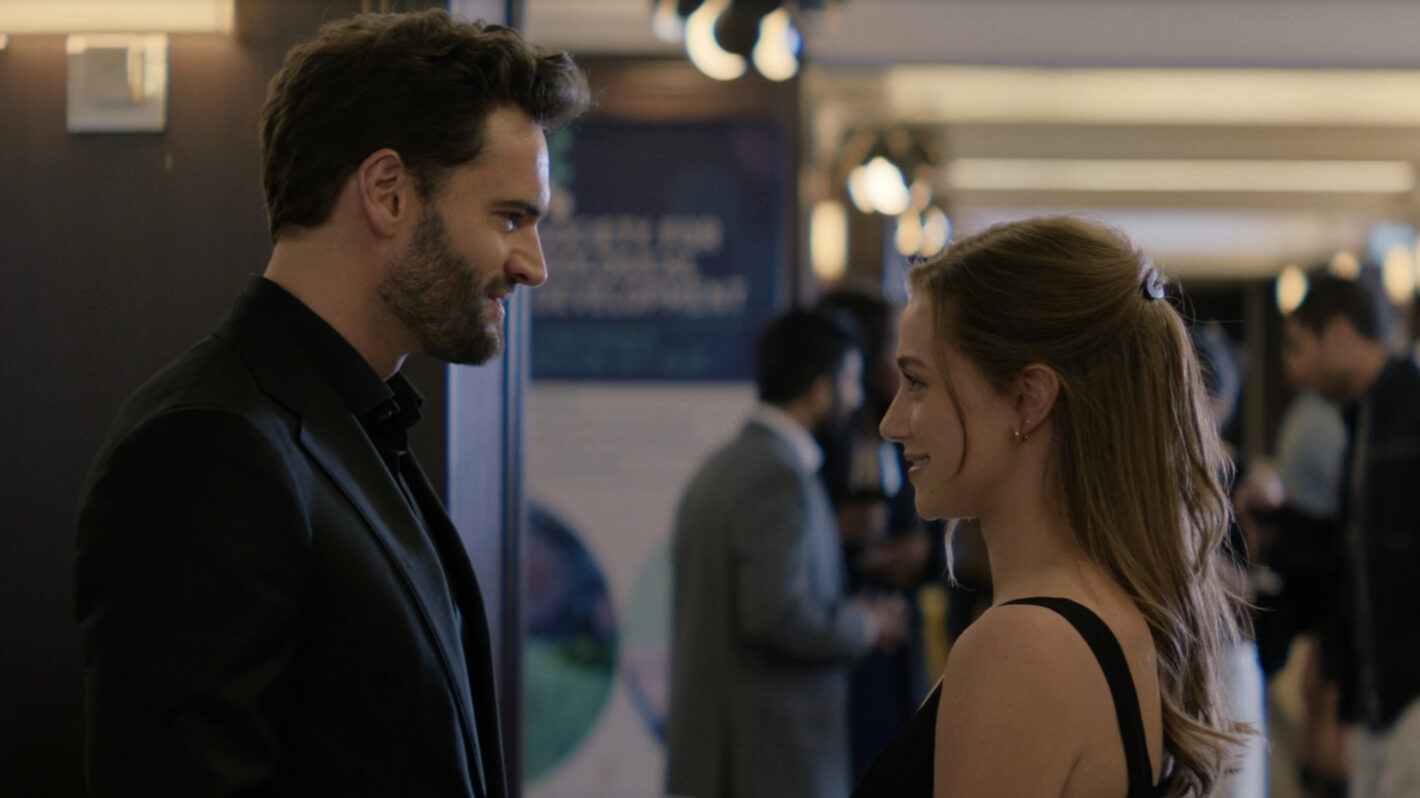
The cinematography and visual style are pleasant, if not especially distinctive. Laboratories, university buildings, offices, and city locations give the story a clean, polished look. These settings support the film’s tone, but they rarely feel as specific or memorable as its characters. The academic world is attractive, though somewhat basic.
The film score also supports the movie’s emotional tone. It highlights romantic tension, awkwardness, and vulnerability without drowning out the dialogue. At times, the score underlines feelings the actors have already conveyed.
At its best, The Love Hypothesis is about two intelligent people learning that emotions cannot be solved like a research problem. Olive wants to measure and control every risk. Adam has built a life around avoiding emotional exposure. Their relationship becomes meaningful when they realize that love cannot be managed through rules or professional logic. The film also suggests that ambition and romance do not have to compete. Olive does not need to choose between being a serious scientist and wanting a personal life. Her research is not something she must abandon to find happiness. That idea gives her romantic journey more meaning and keeps her from being defined only by her relationship.
In the end, The Love Hypothesis is a pleasant romantic comedy with clear limitations. Its fake-dating premise is thin, its academic setting is underdeveloped, and its final act moves too quickly. Olive and Adam have some engaging moments, but their chemistry does not support the film’s biggest romantic scenes. It may not be a romance for the ages, but it understands why romantic comedies continue to matter. Audiences do not always need a completely new story. They need familiar emotions presented with enough sincerity to feel meaningful again. Thanks largely to Lili Reinhart, The Love Hypothesis does just that.