




Summary
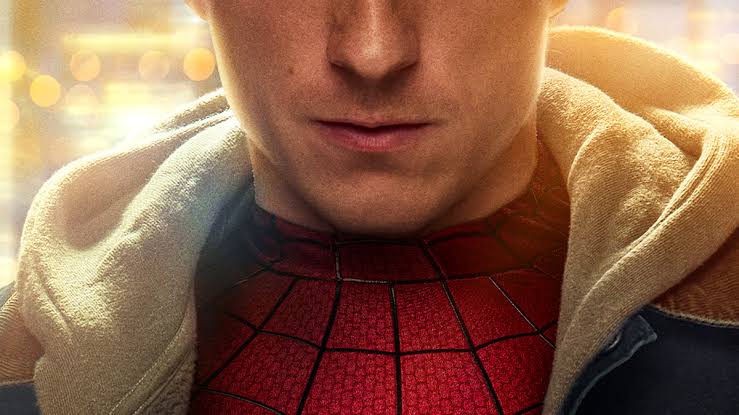
Spider-Man: Brand New Day brings Tom Holland’s Peter Parker back to his grounded, melancholic roots, exploring the heavy emotional weight of living in a New York that remembers Spider-Man but has completely forgotten the person beneath the mask.
Overall
-
Cinematography
-
Plot
-
Acting
There are few characters in American popular culture whose loneliness has been documented as thoroughly as Spider-Man’s. For more than sixty years, Peter Parker has been the superhero who gets the girl only after he experiences debilitating loss, saves the city, misses dinner, and swings between skyscrapers while worrying about rent. His particular genius as a character has always been the contradiction: the more extraordinary his life becomes, the more stubbornly ordinary his problems remain.
The recent films had periodically forgotten this. Spider-Man: Brand New Day aims to remind us of it.
Not completely, and not without the familiar complications of a modern Marvel production, but often enough to make the film feel unexpectedly intimate. Peter Parker is now living in a New York that knows Spider-Man almost too well while having completely forgotten the person underneath the mask. Four years after the events of No Way Home, MJ and Ned have continued with their lives. Peter has not. He has chosen to stay out of theirs, leaving him with the peculiar burden of being everywhere and belonging nowhere.
It is a good place to begin a Spider-Man movie, albeit a surprisingly melancholy one.
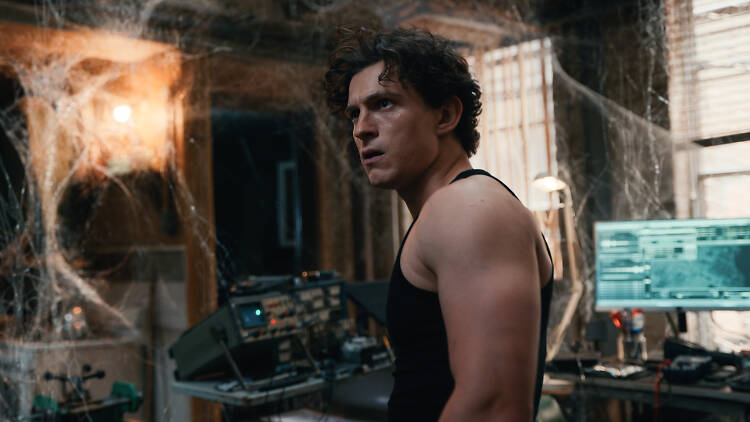
Tom Holland’s Peter has grown older without becoming particularly wiser about loneliness. He is no longer the excitable teenager who once treated every appearance of Tony Stark as a minor religious event. He is a professional now, moving through the city with the weary competence of someone who has turned a childhood fantasy into a full-time occupation.
The film even makes his age part of the joke: before one fight, Peter has to stretch. The gag came partly from Holland’s own physical exhaustion during production, but it works because it captures something larger about the character. Spider-Man’s body has always been a fantasy of limitless movement. This Peter’s body, like the rest of his life, has begun to acquire history. He can still leap off a building. He just needs to warm up first.
Spider-Man’s body has always been a fantasy of limitless movement. This Peter’s body, like the rest of his life, has begun to acquire history.
That small joke is one of the film’s better examples of what Destin Daniel Cretton is trying to do. He has inherited one of the most recognizable characters in cinema and made him feel, for stretches at a time, like a young man who has actually lived through the things that happened to him.
Cretton is an interesting director for this particular moment in Peter Parker’s life. Before Shang-Chi, before the Marvel machinery, he made Short Term 12, a small and remarkably tender film about teenagers living in a group home and the adults trying to care for them. Cretton had worked in such a home himself, and his filmmaking has long been interested in young people carrying experiences they do not yet have the vocabulary to understand.
The scale here is absurdly different. Short Term 12 had a residential treatment facility and damaged teenagers. Brand New Day has New York, the Hulk, the Punisher, ninjas, mutant telepathy, and a production budget large enough to make an ordinary apartment look like a historical reconstruction of an ordinary apartment. Yet there is a continuity in Cretton’s attention. He keeps returning to people who have been hurt and are trying to figure out what their hurt has turned them into.

Peter is one of them.
So is Jean Grey.
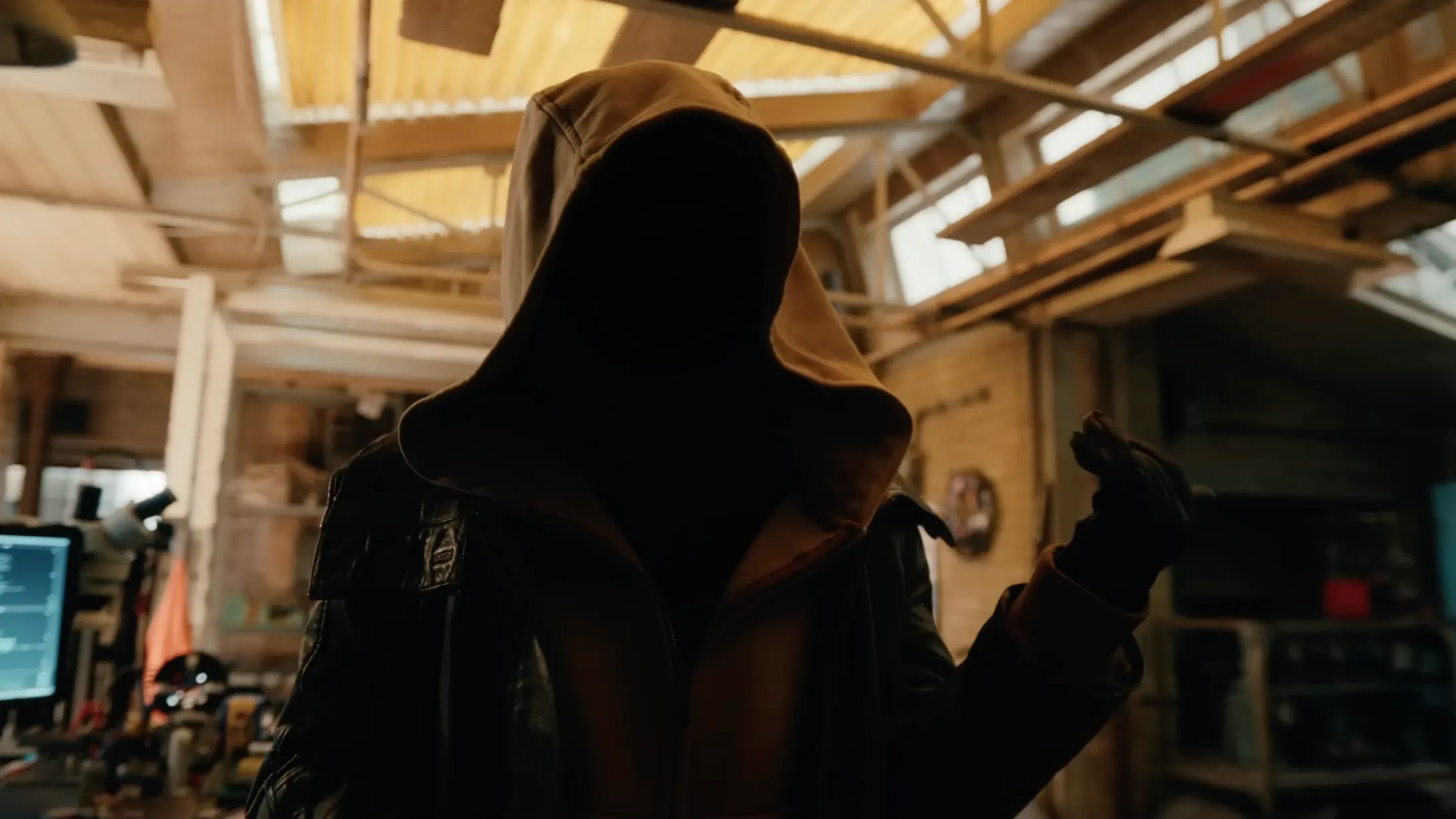
Sadie Sink’s entrance into the movie is initially designed as a mystery. She is an almost ghostly presence moving from body to body, turning strangers into temporary vessels for her consciousness. The idea could easily have become another piece of Marvel’s increasingly familiar digital spectacle. Instead, Cretton gives the body-swapping a physical vocabulary.
The actors change their posture, rhythm, and movement when Jean takes over. The effect is not merely that somebody’s face has become Sadie Sink’s. The body itself seems to receive a new set of instructions. There is something almost choreographic about it, which makes sense: the production worked deliberately on movement and performance so that the possession would read through the actors rather than simply through effects.
It is one of the film’s freshest ideas.
And when Jean is finally revealed to be Jean Grey, the reveal is less interesting for its franchise implications than for what it does to the movie we have already been watching.
This is not the Jean Grey we have been trained to expect. She does not arrive with the X-Men, Xavier’s school, or a mythology explaining what she is destined to become. She is not yet the Phoenix, not yet the great tragic figure of mutant cinema. She is a young woman whose powers have become inseparable from grief, and whose desperation to understand what happened to her sister has made her dangerous.

That makes her a surprisingly intricate character for a Spider-Man film.
Peter and Jean are both dealing with the aftermath of losing people, but the movie avoids turning their similarities into a neat psychological diagram. Instead, they gradually recognize something in one another. Peter has spent years keeping himself out of other people’s lives. Jean’s abilities make other people’s lives almost impossible to keep out of.
The difference gives their scenes an uneasy intimacy.
Jean can enter someone’s mind and colonise it completely. Peter has voluntarily disappeared from the minds of the people he loves in order to protect them.
One of the film’s most affecting sequences comes when Peter allows Jean access to his memories of Aunt May. It is a scene that could have been treated as another exposition dump about the MCU’s past. Instead, it becomes something much simpler: one grieving person showing another his own loss to make them feel seen.
That is where Sink is particularly good. She plays Jean not as a sinister supervillain suddenly converted into a good person, but as someone who has been frightened by the scale of what she can do and how that has made her a perpetual target. Her performance has some of the raw intensity audiences know from Stranger Things, but Cretton gives it a less theatrical direction. Jean is frightening because she is overwhelmed.
She plays Jean not as a sinister supervillain suddenly converted into a good person, but as someone who has been frightened by the scale of what she can do and how that has made her a perpetual target.
The film should have spent more time with her. Her arc begins to feel a bit generic due to the lack of contemplation and time given to her internal struggles. This is one of Brand New Day‘s recurring frustrations. It keeps discovering characters who deserve a smaller movie and then remembering that it has a larger one to make.
Peter’s deteriorating relationship with his own powers is another example. His body begins behaving unpredictably, and the film introduces Bruce Banner as the person who might understand what it means to live with a body that does not always obey the person inside it. There is a good idea here about identity and control, particularly because Peter has spent so much of his life treating his powers as an uncomplicated responsibility.


But the film does not linger on it long enough.
Bruce becomes partly a character and partly a plot mechanism. The Hulk becomes partly a character and partly an event.
Frank Castle has a similar problem, although Jon Bernthal is so naturally funny as Punisher that he can survive being dropped into almost any room. His presence creates a nice tonal friction with Peter. Frank belongs to the darker, uglier end of the superhero spectrum; Peter is still fundamentally a neighborhood kid with a conscience. Their interaction works because the movie does not pretend they are secretly the same kind of hero.
Peter wants to save people.
Frank wants to make sure the people who hurt them regret it.
The film understands this distinction even when it has too many things happening around them. What it also understands particularly well is movement.
The action in Brand New Day is one of the strongest reasons to see the movie on a large screen. Cretton and supervising stunt coordinator Peng Zhang give the fights a physical intelligence that much contemporary superhero action has gradually abandoned. Zhang worked with Cretton on Shang-Chi and trained under the late Brad Allan, a longtime collaborator of Jackie Chan. Chan himself visited the set, although Cretton has clarified that the Jackie Chan stunt team did not, in fact, work on the movie as some early reports suggested.
The distinction is worth making because the influence is visible without needing the celebrity association. These fights have movement and weight. A punch travels through a body rather than simply producing an impact. A kick changes the position of the person receiving it. Peter uses his webs as part of his physical vocabulary instead of merely firing them whenever the screenplay needs something to happen. The camera generally knows where the bodies are.
This sounds basic. It is not.
A lot of modern superhero action is essentially an argument between visual effects departments. People are thrown into walls, walls collapse, cameras shake, rubble flies, and the viewer is expected to understand that something exciting has happened. Brand New Day is more interested in choreography. The characters occupy space.
The fight with the Hand is the clearest example. Peter is not simply more powerful than the people attacking him. He is using the environment, the webbing, and his own momentum to turn a disadvantage into a performance. There is a physical wit to it.
Spider-Man should be funny when he fights. That has always been part of the character’s secret.
This is where the movie occasionally comes closest to the spirit of Sam Raimi’s Spider-Man films. Not in costume or tone, and certainly not because Holland is playing Peter as Tobey Maguire did. But Raimi understood that Spider-Man should look like he is having the strangest, most exhilarating day of his life. There was an almost romantic relationship between Spider-Man and gravity in those films. He fell, swung, missed, recovered, slammed into something, found another webline, and kept going. The city became a playground as much as a battlefield.
There was an almost romantic relationship between Spider-Man and gravity in those films. He fell, swung, missed, recovered, slammed into something, found another webline, and kept going.
Cretton’s version is less operatic and more grounded, but the principle survives. His Spider-Man is fun to watch.
That may sound like an embarrassingly modest compliment for a $200-million superhero film. It is actually one of the most important ones.
“Street-level Spider-Man” has become a phrase that can mean almost anything, usually something involving fewer cosmic threats and more miserable lighting. Cretton gives it a better definition. Street-level does not mean small. It means physical. It means the city matters. It means Spider-Man has to exist among people rather than above them.
The film’s New York is consequently more convincing when it is not doing anything. There are people on sidewalks. Cars move behind fights. Apartments feel occupied. The city seems to have lives occurring independently of the plot. That culminates in the film’s final attention to ordinary New Yorkers, people who are barely characters at all. They sit on stoops. They play chess. They watch the city continue. They do not matter to the mechanics of the story.
They matter to Spider-Man.
This is another Raimi-like instinct, and perhaps the most important one. Spider-Man’s relationship with New York has never simply been geographical. The city is the reason his heroism feels personal. He is not saving an abstract population. He is saving the people whose windows he can see. Cretton seems to understand that the more powerful Spider-Man becomes, the more important it is to keep him close to those people.
Which brings us back to MJ.


Zendaya’s performance is built around a strange absence. She is not waiting for Peter. She does not remember the relationship that has defined so much of his recent life. She has continued forward because, from her perspective, there is no reason not to.
Peter is the only person in the room who knows what has been lost.
The real-life fact that Holland and Zendaya are married adds an unavoidable layer of cultural strangeness to these scenes, but the movie is smart not to exploit it. The characters do not wink at the audience. The awkwardness belongs to Peter alone.
When Jean enters MJ’s consciousness, that awkwardness becomes something almost surreal. Zendaya has to play MJ while also playing a version of MJ being occupied by somebody else. Peter watches the person he loves become even more inaccessible.
The scene is creepy without needing to be gruesome, and exciting without destroying its sadness.
More importantly, it brings the film back to its central preoccupation: who are we when other people no longer remember the person we were with them?
Peter has spent a considerable amount of time thinking that his sacrifice was necessary. Brand New Day gradually asks whether necessary and painless were ever the same thing.
This is where the title begins to feel less like Marvel branding and more like a joke. Peter has technically been given a new life. He has a new routine, new enemies, and new responsibilities. But emotionally, he is still living in the aftermath of the last film.
The new day has not actually started.
And then Marvel announces the X-Men.
At D23, shortly after the release of Brand New Day, Marvel unveiled the cast of its new X-Men film. Sadie sink will continue as Jean Grey, joined by Kit Connor as Cyclops, Samara Weaving as Emma Frost, Christopher Abbott as Professor X, Maya Boyd as Storm, Inde Navarrette as Rogue, and Adam Driver as Mister Sinister. The film is scheduled for May 2028.
The timing is revealing. Audiences have barely met Jean before Marvel places her inside the architecture of the next major franchise. She has hardly had time to exist as a character before becoming the face of another movie’s future. This is where Brand New Day accidentally becomes a useful snapshot of the contemporary MCU.
The early Marvel films had a peculiar luxury. They could allow audiences to discover actors and characters together. Robert Downey Jr. was already famous, as were Scarlett Johansson and Samuel L. Jackson, but several of the younger or less culturally fixed performers became profoundly associated with their Marvel roles. Chris Evans became inseparable from Captain America. Chris Hemsworth became Thor. Tom Hiddleston became Loki.
The early Marvel films had a peculiar luxury. They could allow audiences to discover actors and characters together.
The character changed the meaning of the actor.
Marvel now has a different kind of problem. It has accumulated so much cultural power that it can recruit actors who already arrive with enormous identities attached to them.
Sadie Sink comes from Stranger Things. Kit Connor comes from Heartstopper. Adam Driver brings Star Wars and a substantial career outside franchise cinema. Samara Weaving arrives with her own cult-film and horror associations.
The old Marvel star system often made the actor’s superhero role into the largest thing audiences knew about them. The new system can make the superhero character borrow from what audiences already know about the actor.
In addition to the celebrity lore, the introduction of popular actors from award-winning television shows in major supporting roles has become an intentional staple ever since Matthew Macfadyen as Mr. Paradox. Brand New Day alone has three major roles that occupy this intentional casting choice.
It is not necessarily better or worse. It is simply different, and the difference tells us something about Hollywood now. Marvel no longer needs to introduce its stars to the culture. It can import cultural familiarity into characters who might otherwise require years to establish.
Jean Grey is an especially interesting example because Brand New Day briefly resists that process. The movie gives her a layer of mystery, a missing sister, grief, and confusion about where she goes from here before it gives her an X-Men team. Then D23 arrives and reminds us that she already has a future waiting for her without giving the audience much room to grow to care for her.
Marvel has become extraordinarily effective at making the future as visible as possible.
The modern MCU exists in a strange relationship with time. A movie can be watched as a movie, but it can also be watched as evidence. Who appeared? Who survived? Who has been cast? Which character is being introduced? What does this mean for Avengers? What does it mean for the X-Men? What does it mean for the next phase?
There are times in Brand New Day when you can almost feel the machinery thinking ahead. And yet the movie itself is at its best when it stops thinking ahead.

:max_bytes(150000):strip_icc():focal(999x0:1001x2)/tom-holland-spider-man-brand-new-day-080426-6d11117458a44fa9a906e16bba67f9c8.jpg)
When Peter fights.
When Jean remembers her sister.
When MJ is forced to reject a man she does not even recognize.
When Bruce Banner talks to Peter about what it means to live inside a body that can become something else.
When Frank Castle looks like he has been forced to engage in the wrong friendly banter.
When Spider-Man swings through New York and the city remains a city rather than turning into a computer-generated obstacle course.
These moments belong to this film.
The rest can belong to the future.
That tension is what keeps Brand New Day from being great while also making it more interesting than its reputation as another piece of Marvel machinery might suggest. It is overstuffed, sometimes awkwardly paced, and occasionally distracted by its own obligations. The film has enough material for three movies and the confidence of none of them. Some of its best ideas are introduced and then hurried away from before they have fully developed.
The film has enough material for three movies and the confidence of none of them.
But its central understanding of Peter Parker is unusually strong. He is not interesting because he can defeat increasingly powerful enemies. He is interesting because he is the person who keeps trying to have an ordinary emotional life while the universe refuses to let him.
That is why the Tobey Maguire comparison matters. Raimi’s best Spider-Man films understood that the superhero existed in the same world as laundry, rent, family dinners, romantic embarrassment, and people arguing on the sidewalk. Cretton understands it too.
His Spider-Man is spectacular without becoming weightless.
His fights have contact.
His city has people.
His grief has somewhere to go.
And Peter, after all these years, is allowed to be lonely without the movie treating loneliness as his permanent condition.
The film is called Brand New Day, but it is not really about beginning again. It is about the possibility of doing so. Peter has spent years believing that responsibility requires disappearance. Jean has spent her life discovering that power can make intimacy dangerous. Neither idea survives the movie intact. Perhaps that is why the best moments feel so old-fashioned.
A superhero sees a person in trouble and helps.
A boy misses his best friend and has to come to terms with the fact that their shared dream will forever be unattainable for him.
A girl seeks justice for her sister while struggling to deal with her grief.
A city keeps moving while Spider-Man swings, but Peter stands still.
The machinery of the MCU will continue around him, of course. Jean has already been handed another movie. The X-Men have already been cast. Marvel already knows what comes next.
Peter does not.
For once, that is the more interesting future.