

Summary
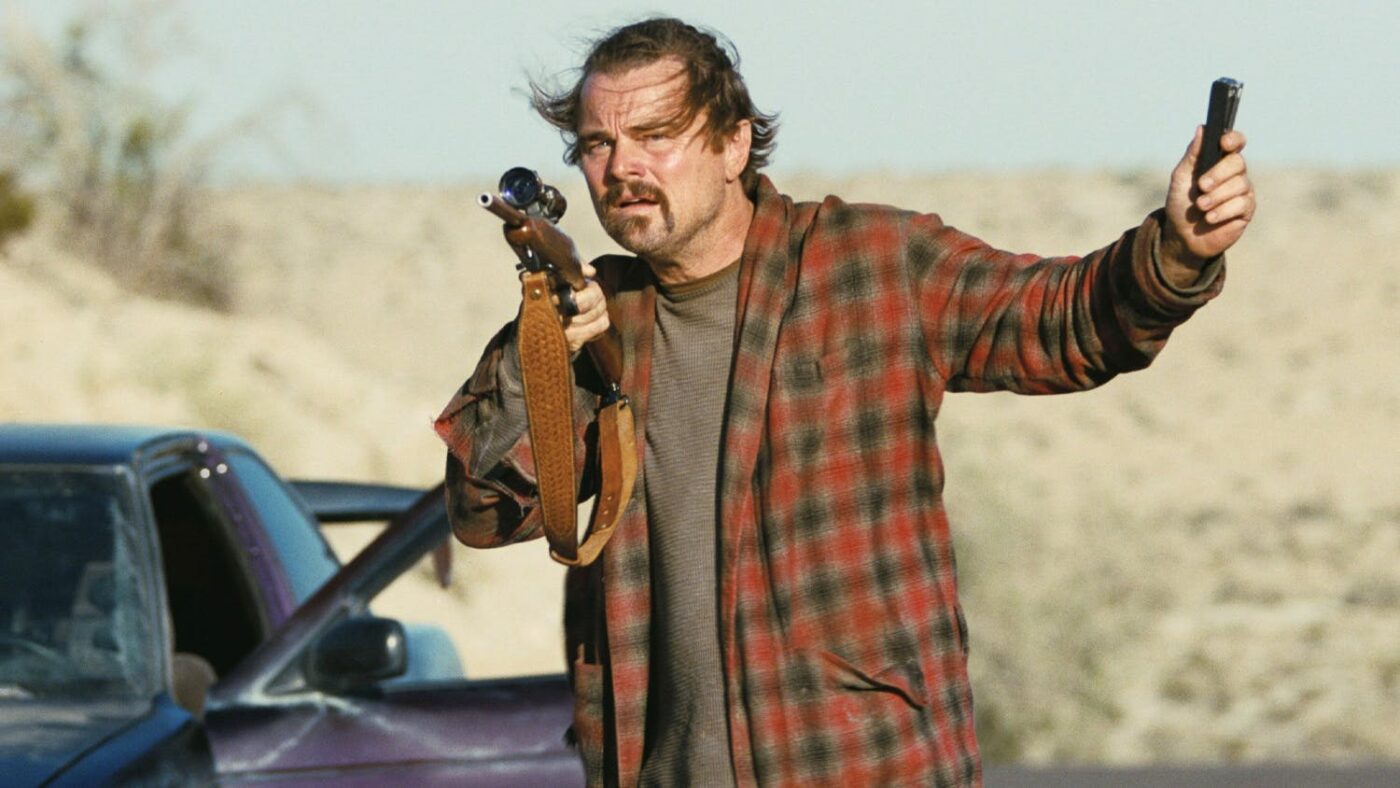
One Battle After Another is Paul Thomas Anderson’s bold adaptation of Vineland, blending political cinema with emotional depth. Anchored by Leonardo DiCaprio’s powerful performance, the film critiques authoritarianism and surveillance culture through striking visuals, intense action, and a compelling father-daughter narrative, making it one of Anderson’s most urgent works.
Overall
-
Plot
-
Acting
-
Cinematography
Paul Thomas Anderson’s One Battle After Another arrives with the weight of extraordinary anticipation. By the time many viewers encountered it during its later festival screenings, social media had already framed it as a seismic cultural event. Words like “revolutionary” and “radical,” and claims that it is “the best film of the decade” circulated so widely that it became difficult to approach the film without a pre-constructed narrative. This disparity between expectation and experience has shaped its early reception. It also raises questions about whether audiences are responding to the film itself or to a broader hunger for political representation in a cinematic landscape that rarely engages with contemporary authoritarianism in earnest.
Despite these distractions, what emerges after reflection is a film whose ambitions become clearer with time. Anderson’s adaptation of Thomas Pynchon’s Vineland transposes the novel’s critique of the Reagan era into an America marked by renewed populism, surveillance culture, and moral spectacle. The parallels to more recent political climates are unmistakable. Reagan’s crusade for “law and order,” framed through the War on Drugs, finds a modern echo in the weaponized rhetoric directed at migrants, dissenters, and the press during more recent administrations. Anderson presents a country where exclusion and paranoia function as national habits, reinforced by media that shape fear into entertainment and ideology, echoing cycles of moral panic.
Anderson’s adaptation of Thomas Pynchon’s Vineland transposes the novel’s critique of the Reagan era into an America marked by renewed populism, surveillance culture, and moral spectacle.
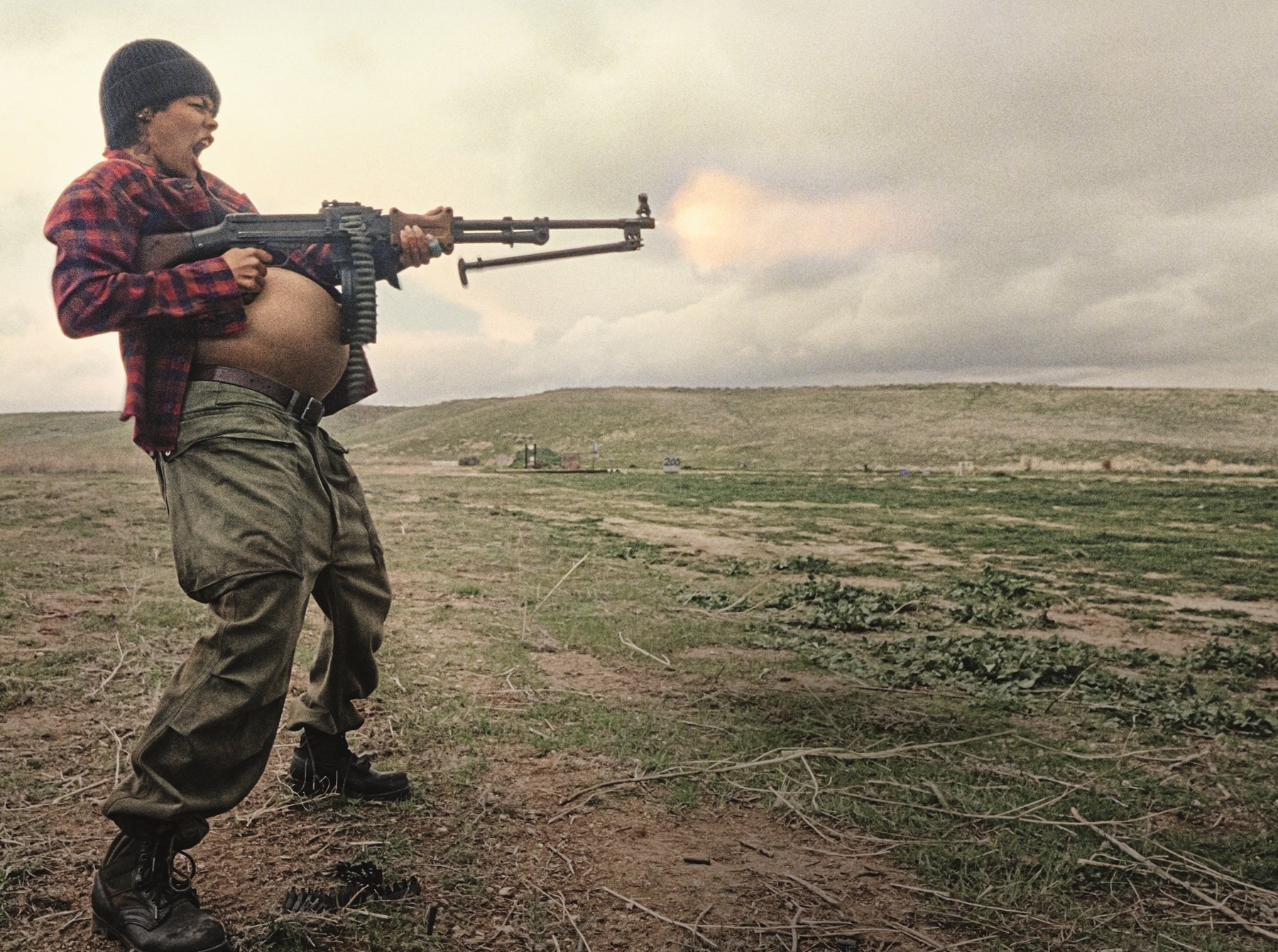
Within this landscape, the film’s first act presents a deliberately chaotic world. The tonal shifts are abrupt, drifting between comic excess and sensory overload. The momentum feels restless, and the characters initially operate as heightened impressions rather than fully realized individuals. Perfidia, portrayed with striking physical and emotional force by Teyana Taylor, enters the film with considerable presence, yet her motivations remain largely withheld. Her relationship with Colonel Lockjaw, played by Sean Penn, oscillates between intimacy, strategy, and psychological entanglement. The film offers no simple explanation for her choices, including her moments of apparent loyalty and her later betrayal of her comrades. This refusal to categorize her actions lends her character an unsettling tension, although it also leaves certain emotional threads underdeveloped.

As the narrative progresses, the film undergoes a significant transformation. The second half adopts a more disciplined structure, grounding its escalating conflicts in human stakes rather than stylized disorder. This shift brings the focus to Bob Ferguson, played by Leonardo DiCaprio, and his teenage daughter Willa, portrayed by Chase Infiniti. Their fragile, often strained relationship becomes the emotional center of the film. Through their interactions, Anderson restores the clarity that the early sections seem determined to resist. The action remains intense, yet it now carries consequence. Scenes that could have functioned merely as spectacle gain poignancy because the characters’ vulnerabilities shape every decision they make.
The chase sequence near the film’s climax exemplifies Anderson’s command of cinematic momentum. It serves as both an adrenaline-driven set piece and an emotional crescendo. The combination of movement, editing, and Jonny Greenwood’s score creates an experience that heightens the story’s urgency without sacrificing its emotional grounding. The sequence stands as one of the strongest demonstrations of Anderson’s technical control.
The combination of movement, editing, and Jonny Greenwood’s score creates an experience that heightens the story’s urgency without sacrificing its emotional grounding.
The supporting cast deepens the film’s thematic concerns. Penn’s Colonel Lockjaw embodies the allure and brutality of authoritarian power. He carries himself with the self-assurance of someone who believes he is upholding national order, yet subtle hesitations suggest internal fractures. Benicio del Toro’s Sensei Sergio St. Carlos offers a contrasting presence, bringing calm and a sense of moral grounding that feels increasingly rare as the story advances. These performances enrich the film’s meditation on how individuals respond to political and personal pressures, echoing cinematic explorations of institutional power seen in works like Inherent Vice.
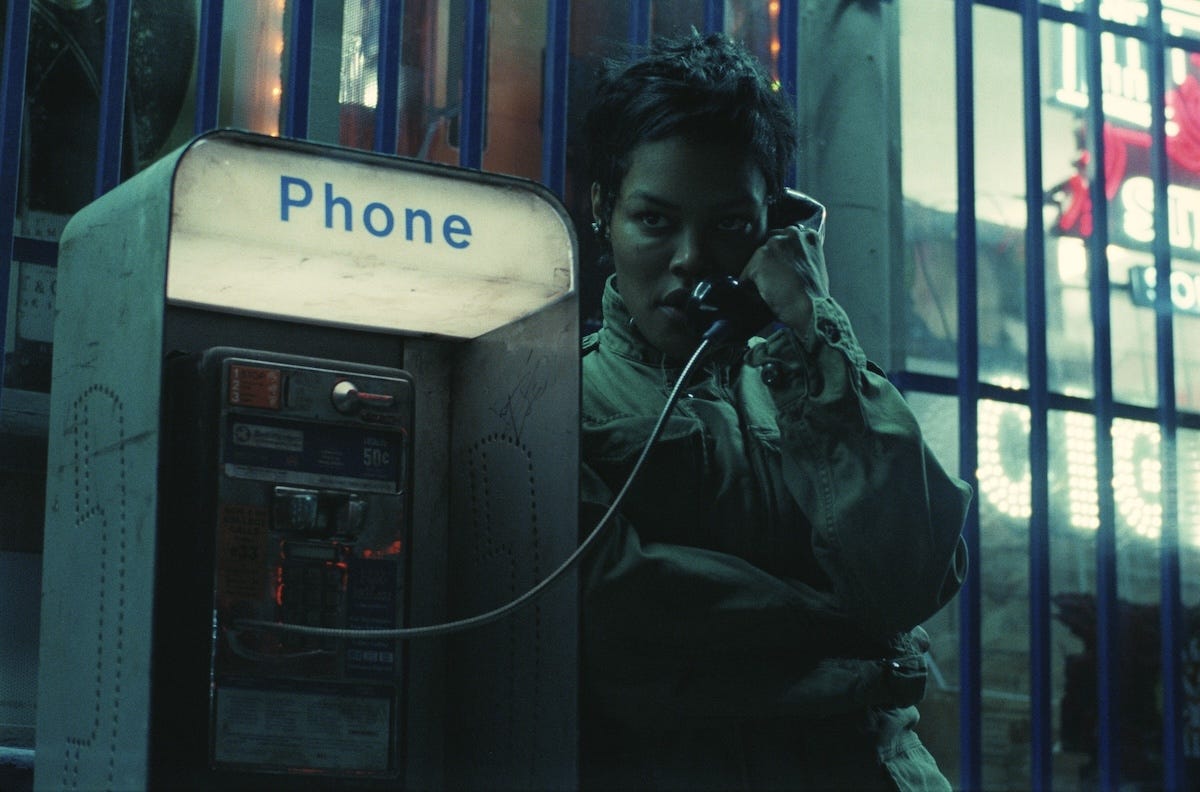
Throughout the second half, Anderson builds a narrative about endurance. Images of militarized policing, surveillance infrastructure, and confinement recur frequently. They evoke both past injustices and the ways in which institutional violence has become normalized. Rather than crafting explicit political statements, Anderson constructs his critique through rhythm, spatial contrasts, and the emotional consequences of state power on ordinary lives.
The film’s aesthetic qualities reinforce this thematic depth. The cinematography by Michael Bauman embraces shadows, smoke, neon, and sudden bursts of color. The sound design combines disorientation with careful structure, and Greenwood’s score offers a guiding intelligence that strengthens every tonal shift. Anderson’s editing, initially disjointed, develops into a deliberate pulse that supports the emotional trajectory of the story.
Much of the film’s resonance depends on its performances. DiCaprio delivers one of his most multifaceted portrayals, alternating between desperation, humor, and earnest tenderness. Chase Infiniti brings remarkable precision to Willa, grounding her character in confusion, anger, and a desire for clarity. Taylor’s portrayal of Perfidia remains magnetic, even when the script withholds aspects of her interior life.
In its entirety, One Battle After Another becomes a study of how people attempt to preserve tenderness and principle within systems that steadily erode both. Its contradictions form its energy. The film feels restless, urgent, and often unruly, yet it also displays a cinematic confidence that rewards patience. The eagerness of some viewers to label it “groundbreaking” speaks to current political anxieties as much as to the film’s qualities. Yet true provocation rarely depends on unanimous praise. It depends on a work’s ability to continue generating debate and introspection long after the credits roll.
In its entirety, One Battle After Another becomes a study of how people attempt to preserve tenderness and principle within systems that steadily erode both.
In a cultural environment often defined by safe storytelling and cautious political commentary, Anderson’s film stands as a bold and necessary intervention. It may not transform the medium, but it confronts its moment with conviction and creativity. Its imperfections are inseparable from its force, and its emotional core gives it a lasting relevance that resists easy categorization.