
Summary
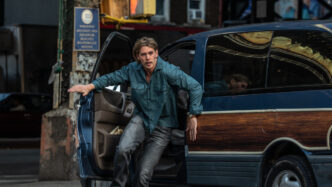
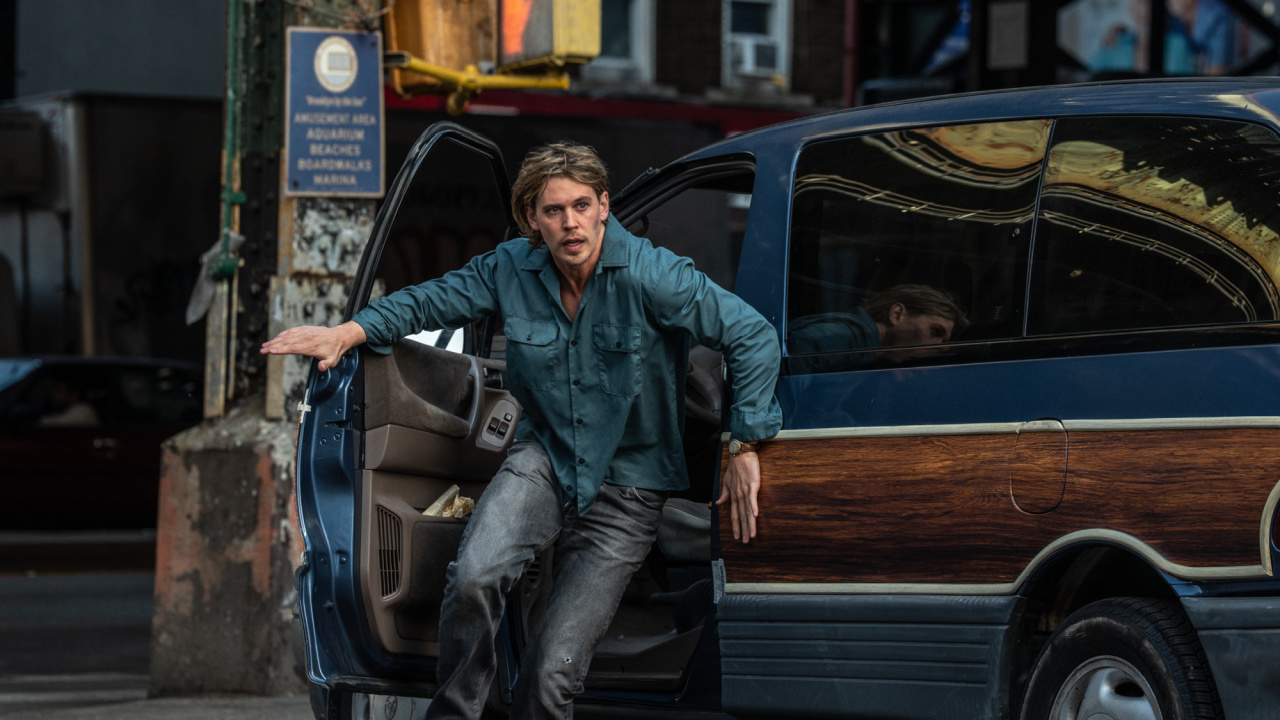
Caught Stealing marks a sharp yet confident shift for Darren Aronofsky, trading psychological intensity for a lean, tactile crime thriller set in late-1990s New York. Starring Austin Butler as a washed-up ex-ballplayer pulled into a violent underworld, the film swaps metaphysical suffering for physical consequence, building tension through analog isolation and grounded realism. With Matthew Libatique’s moody cinematography and Zoë Kravitz’s poignant supporting role, Aronofsky delivers a gritty, atmospheric portrait of survival and decay — a film less about redemption than endurance.
Overall
-
Plot
-
Pacing
-
Acting
Caught Stealing is a 2025 American crime thriller film directed by Darren Aronofsky, marking a distinct departure from his trademark psychologically intense films such as Black Swan (2010), Mother! (2017), and The Whale (2022), which explored extreme emotional states and operatic suffering. In contrast, this film adopts the conventions of a gritty crime narrative grounded in realism and dark humour.
Set in New York City in 1998, the story centres on Austin Butler’s Hank Thompson, a former baseball player whose promising career was derailed by a serious accident. Now tending bar in the Lower East Side, he tries to keep his head down, navigating a world where opportunities are slipping away and even ordinary gestures carry disproportionate risk.
The 1998 milieu situates Hank on the trailing edge of a decade defined by postmodern disillusionment. That stagnant world shifts when he agrees to pet-sit his punk rock neighbour’s cat—an innocuous act that plunges him into an underworld of Russian mobsters and Hasidic Jewish gangsters. The premise recalls the chaotic urban energy of After Hours (1985) by Martin Scorsese. As The Independent notes, “on paper, it’s Aronofsky’s take on After Hours … a shaggy-dog New York story undercut with an anxious, restless feel for the city.”
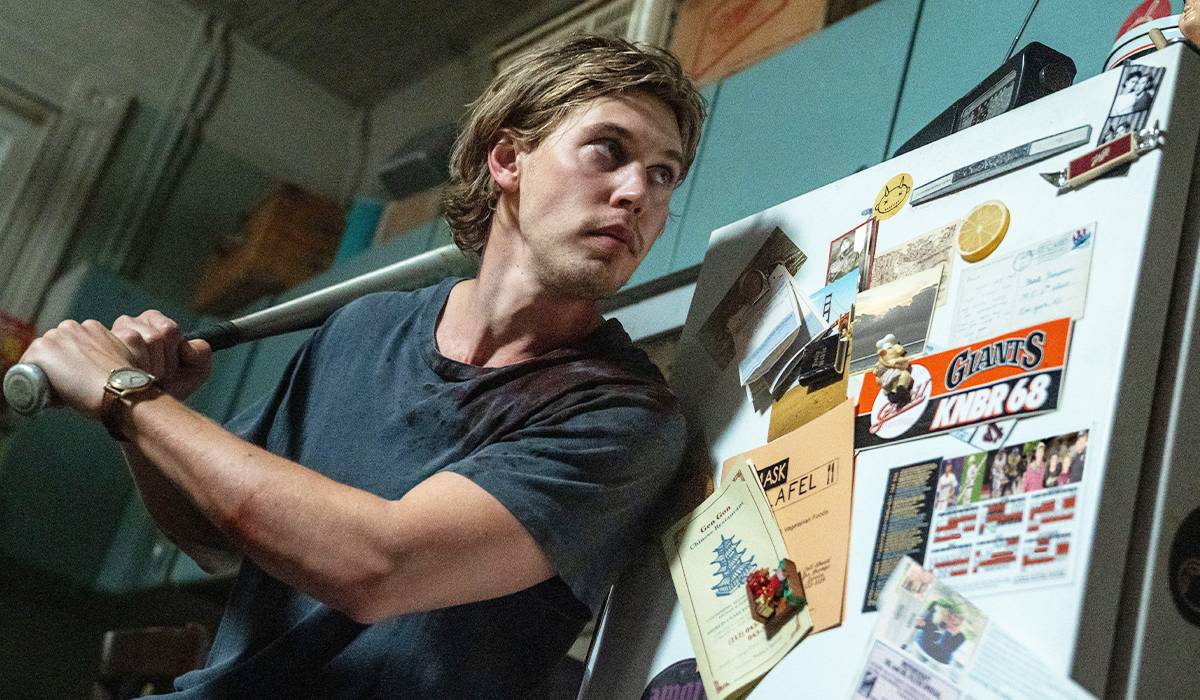
Critics have described Caught Stealing as a “love letter to 1990s New York,” praising Aronofsky’s palpable fondness for the era and his return to streets he once lived on.
The world Aronofsky constructs hums with jukebox anthems, flickering television screens, and the constant noise of a city negotiating the line between its analogue past and the coming digital age. The absence of modern connectivity—no smartphones, no instant messaging, no GPS lifelines—creates a mechanical friction that defines the story’s danger. The rhythm of this world is slower, more deliberate; miscommunication and delay fuel narrative tension.
Aronofsky uses this analog drag to heighten claustrophobic tension. Hank cannot call for backup or send a desperate message—each decision must be physical. Every action happens slowly enough for disaster to take root.
The contrast between stillness and eruption gives Caught Stealing its pulse. Aronofsky stages the monotony of Hank’s life with unhurried precision, so when violence erupts, it feels abrupt and real. The city itself becomes complicit: an urban labyrinth where the everyday can collapse into chaos without warning.
Aronofsky stages the monotony of Hank’s life with unhurried precision, so when violence erupts, it feels abrupt and real.
Visually, the period setting reinforces this duality. Matthew Libatique’s cinematography employs a subdued palette of desaturated browns, neon washes, and grainy textures reminiscent of late-century film stock. The camera alternates between tight close-ups and wide shots that reduce Hank to a solitary figure swallowed by the metropolis. The aesthetic abandons Aronofsky’s trademark visual excess—the kaleidoscopic delirium of Black Swan or the dream-logic of Mother!—for grounded realism that privileges physical consequence over psychological abstraction.
Unlike typical action films, Hank’s injuries, bruises, and exhaustion matter; the film insists on their weight. This restraint amplifies the sense that we are watching a man pushed to the limits of endurance by an indifferent world.
Within this environment, Aronofsky reimagines the wrong man trope through a lens of precarious realism. The narrative’s episodic drift mimics the unpredictability of city life—threads appear and vanish, encounters lead nowhere. Rather than smoothing these digressions, Aronofsky embraces them, reflecting the improvisational nature of survival in a pre-digital world.
Thematically, Caught Stealing continues Aronofsky’s fascination with characters under extreme pressure, yet it translates this obsession into a genre focused on crime and consequence rather than metaphysical torment. The late-1990s setting—grimy, transitional, tactile—externalises his preoccupations with failure, guilt, and perseverance in a world defined by tangible risk rather than hallucination. Hank’s trials unfold in alleys, bars, and subway tunnels, not dreamscapes or visions.
Aronofsky’s use of 1998 New York becomes a structural principle: it governs communication, limits agency, and amplifies both isolation and connection. The city’s friction—its slowness, noise, and imperfect machinery—shapes the film’s rhythm. The result is a story where survival depends on instinct and endurance.
The city’s friction—its slowness, noise, and imperfect machinery—shapes the film’s rhythm.
Zoë Kravitz plays Yvonne, Hank’s estranged girlfriend, whose limited screen time provides emotional grounding. Her presence contrasts Hank’s isolation and evokes a human vulnerability amid urban decay.
Aronofsky’s core themes—failure, redemption, and survival—are rendered in a more accessible register than his earlier work. Though the violence is brutal (“bodies get brutalised,” as one review noted), the tone balances sharp humour and crime-caper rhythm with his trademark moral intensity.
In summary, Caught Stealing is a meticulously crafted crime thriller anchored by a strong central performance, a richly textured portrayal of a bygone city, and a director renowned for psychological cinema exploring new ground through physical consequence and genre precision.