
The Critique of Capitalism Draws to a Close
Summary
Squid Game’s third season deepens its critique of capitalism and spectacle, exploring trauma, complicity, and resistance. The series refuses easy answers, implicating viewers in cycles of violence and questioning the very meaning of watching.
Overall
-
Plot
-
Narrative
-
Acting
-
Characterization
-
Pacing
Since first captivating global audiences in 2021, Squid Game has established itself as something far beyond a survival thriller. It is a mirror held up to a world wrestling with capitalism, trauma, and the boundaries between entertainment and exploitation. By the third and final season, the series has reached a stage where the weight of its own narrative—from the muted agonies of its main characters, to the ever-escalating spectacle of its brutal contests—presses in from all sides. There is a sense of inevitability here, not just in the fatal logic of the games themselves but in the way the story now circles around its own central questions: Is resistance possible within a system built for destruction? Can meaningful critique survive once the spectacle becomes the object of global consumption? And more uneasily still, what does it mean for us—viewers, consumers, ever-hungry for the next twist—to be implicated in a cycle we watch but cannot escape?
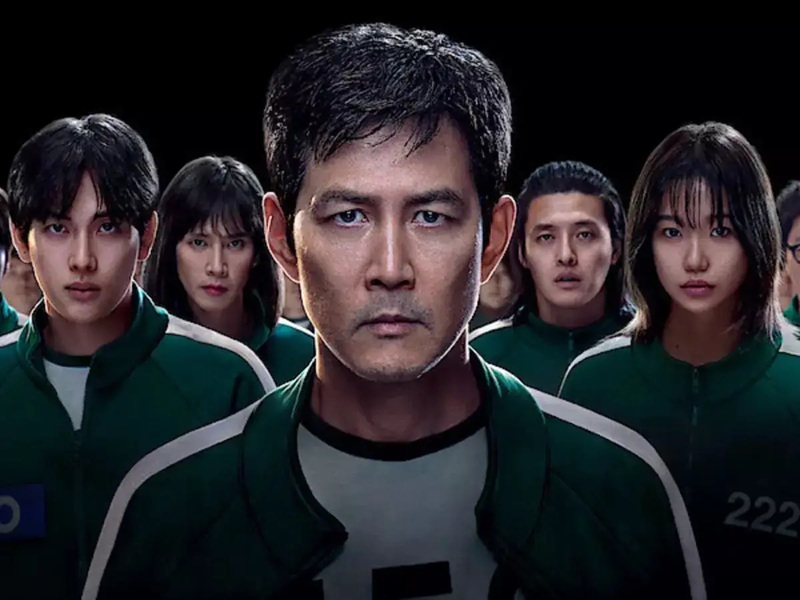
The new season does not rush to answer these questions. In fact, it seems to turn them over and over, examining them from every angle. Our main protagonist, Seong Gi-hun, begins these episodes as a changed man—quietly haunted, his face holding stories too jagged for easy telling. The wide-eyed, uncertain hope he once showed has nearly vanished, replaced by weariness and a suspicion that everything comes at a hidden cost. This version of Gi-hun is more withdrawn, less inclined to bold declarations and risk-taking for its own sake. His transformation is slow but unmistakable; the show makes it a point to let the silence speak for him, and the viewer is drawn deep into this unsettled, complicated grief. His survival feels less like a victory and more like a burden that never lifts, challenging the classic idea of heroism in favor of something far more human and uncertain.
The games themselves, the cruel heart of the series, return with new ferocity. What is striking about this season’s contests is less the novelty of their design and more the way they strip away the pretenses of fairness and morality. Early in the season, the updated hide-and-seek game is not merely a test of cleverness or luck; it becomes a trial where any sense of camaraderie quickly turns to ruthless suspicion. There is no safety here—not in numbers, not even in fleeting alliances.
Contestants are made to confront the reality that the only rule is survival, and the games are built to make even that uncertain. The show leans into these moments, using them to chip away at the hope of meaningful solidarity. Familiar betrayals from previous seasons replay themselves under new circumstances, and what little trust remains among the players is constantly put to the test. Nothing in the structure of this game encourages working together. Instead, it is rigged toward division—another echo of the world outside.
At the series’ emotional core, the relationships between contestants carry the traces of trauma and the cost of survival. A particularly revealing arc follows Gi-hun’s uneasy rapport with newcomer Dae-ho, a character shaped by anxiety and an understandable hunger for safety. Dae-ho is not introduced as a villain; instead, the show gives him the space to make mistakes, to falter and waver as the stakes rise. His development is slow but devastating—watching him compromise his values for another day alive is both understandable and deeply uncomfortable. He embodies the moral fog that settles over all who participate: when every choice is compromised, right and wrong blur until all that’s left is necessity. This is where the series’ greatest strength lies, illuminating the way desperation corrodes not only individual ethics but also the social bonds that might offer escape.
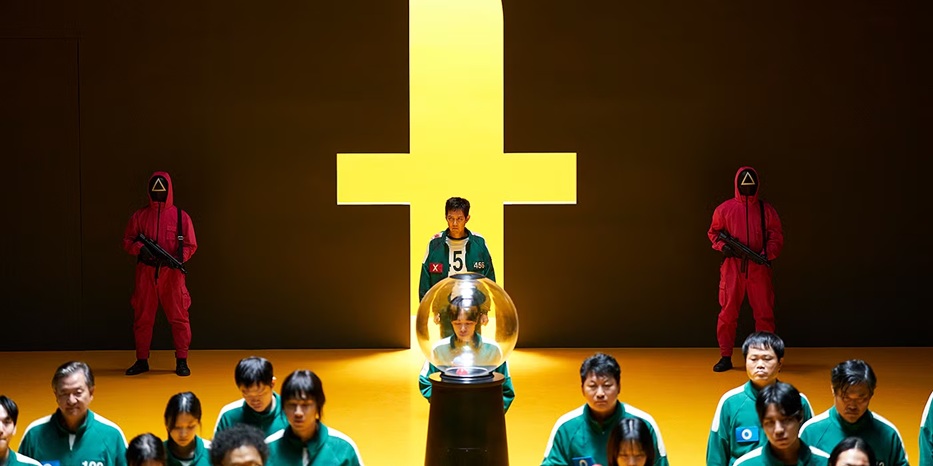
What sets this season apart is not just the escalation of violence but the reframing of who, exactly, is watching. The VIPs, those shadowy financiers who previously hovered at the edges of the action, step fully into the spotlight. Removed from anonymity, their twisted delight and open mockery act as a blunt force satire—turning them into exaggerated stand-ins for an audience that, by tuning in, craves the spectacle as much as it critiques it. These scenes walk a razor’s edge, at times veering uncomfortably close to parody. Yet their presence—and the obvious parallel they draw to viewers both inside and outside the story—serves a powerful function. The audience cannot stay invisible. Instead, the show demands we recognize our place within the circle of spectatorship and complicity.
The most haunting innovation of these episodes is the inclusion of Jun-hee’s infant daughter as a silent, ever-present symbol of innocence crushed by the machinery of spectacle. The child, by virtue of her helplessness, becomes both a living victim and a vessel for future trauma. Her involvement in the unfolding horrors is almost unbearable, a shot across the bow that reminds us cycles of violence are rarely contained in one generation.
The show does not let us look away; instead, it insists we understand that the brutality witnessed is not anomaly but a foundational feature of the world the games represent. This narrative choice adds a layer of bleakness, transforming what could have been a shocking plot device into a profound meditation on how cruelty is handed down, normalized, and endlessly renewed.
All of this is rendered with an unmistakably deliberate hand by creator Hwang Dong-hyuk. One of his abiding strengths has always been the refusal to offer neat resolutions or cheap catharsis. Here, that creative choice deepens. Plot climaxes are muted, even anticlimactic; answers are partial or ambiguous at best. Perhaps the most emblematic moment comes in the drawn-out encounter between Gi-hun and the series’ quietly menacing antagonist, Myung-gi. The expected confrontation—where the oppressed challenges the oppressor—leaves the system itself intact. The battle may end, but the war is never truly won. There is a persistent sense that those fighting for change are themselves entangled in patterns they struggle to disrupt.
These creative choices do not come without risk. Partway through the season, the emphasis on ever-bloodier games and the cartoonish grotesqueness of the VIPs occasionally betrays the show’s allegorical roots, threatening to become mere spectacle itself. Some viewers may find the repetition exhausting, but this may be intentional, mirroring the inescapable cycles that define both the in-story tournament and the capitalist world it critiques. The show’s insistence on ambiguity—even fatigue—parallels the way real power grinds resistance down, repeating patterns until hope is no more than a flicker.
One of the more pointed threads running through this season is the exploration of democracy and the illusion of agency. The games often appear to allow choice—the chance to vote, to opt out, to overturn the rules. Yet in each instance, these mechanisms only serve the interests of those in control.
Repeatedly, players only reinforce systems built to destroy them, not out of malice but out of hope for impossible escape or a belief in individual exceptionalism. The show draws a direct analogy between these doomed decisions and patterns in real-world politics: the trappings of democracy often reinforce underlying inequality rather than correct it. What starts as a gesture toward fairness is weaponized into another means of control.
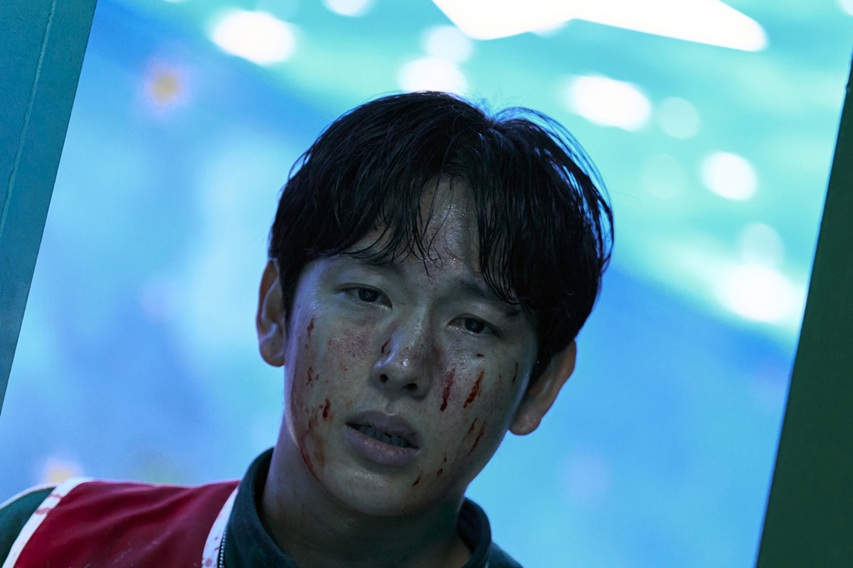
And still, as oppressive as this world becomes, Squid Game does not fully abandon hope. Instead, hope flickers quietly through Gi-hun’s internal struggle. Even depleted, his refusal to entirely relinquish his moral vision gives the narrative its emotional core. This is not the bombastic hope of a standard hero but something smaller and harder to extinguish: a refusal to be fully broken. The series never promises redemption—it barely even gestures toward it—but it does allow the possibility of meaningful resistance, however small or short-lived. By the finale, many of the show’s questions are left unresolved, and intentionally so. The audience is asked not to expect easy comfort but to consider their own relationship to the stories they consume. Are we moved to reflection or simply entertained? What does it mean to watch, and what responsibility comes with witnessing?
Visually and sonically, the third season continues the series’ tradition of unsettling contrasts. Bright, childish color schemes and eerily cheery music remain fixtures of the set and soundtrack, making the violence within all the more jarring. Nostalgic backdrops collide with the lived reality of terror and betrayal, blurring lines between innocence and menace. The effect is not subtle; it is designed to keep the viewer off-balance, reinforcing the idea that the world itself is untrustworthy—playful only until the rules change. The show’s technical craft, from meticulous production design to a nervy, dissonant score, serves as a constant reminder that spectacle and horror are intertwined, both within the narrative and in the act of watching itself.
Season three insists that systems of exploitation do not merely persist by accident—they survive because they are flexible and endlessly adaptive. The repeated churn of games and the rise and fall of alliances are less about individual agency than about the underlying machinery of power, which absorbs resistance and commodifies dissent. There are no final victories; the machinery rolls on, adapting to new challenges, consuming and transforming anything that stands against it.
Perhaps the most fascinating reflection of the series’ impact comes from its real-life afterlife. What began as a cutting satire is now a marketing phenomenon: from Halloween costumes in every corner of the globe to elaborate pop-up experiences and even reality television spin-offs that mimic its lethal competitions (with the danger tactfully stripped away), Squid Game has itself become part of the apparatus it warns against. The boundaries between critique and commodity have all but dissolved. Merchandise, viral hashtags, and themed attractions now extend the show’s reach far beyond what the original creators could have imagined. This transformation is not lost on the narrative itself—season three is attentive to the way critique, once packaged for entertainment, risks losing its edge. Yet this tension gives the show an added layer of complexity, providing a rare instance where a story seems aware of and even haunted by its own inescapable commodification.
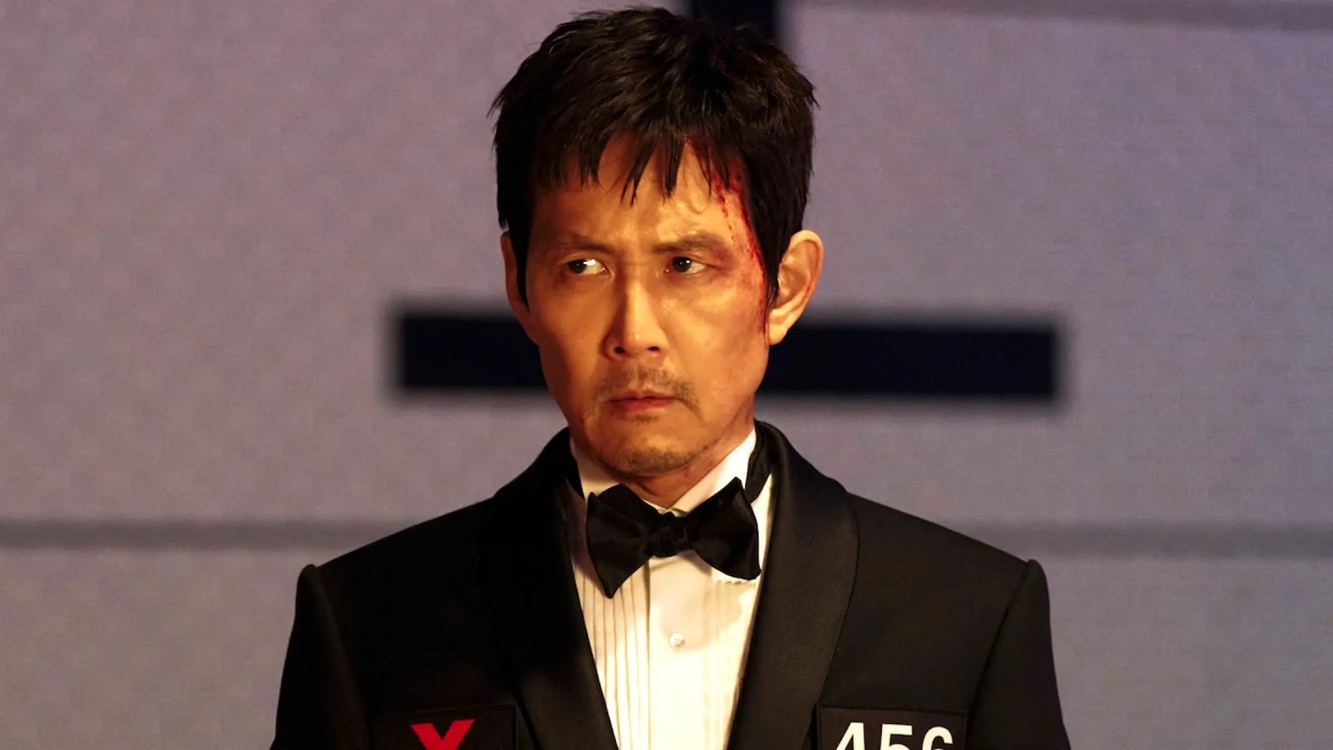
The legacy of Squid Game season three, then, is one of paradox and persistence. Much like its fictional tournament, the series can neither wholly transcend the cycles it exposes nor absolve itself—nor its audience—of complicity. Its greatest achievement is to keep this discomfort alive: to refuse closure, to insist on consciousness even when change seems impossible. Every moment of survival is shot through with pain; every gesture of rebellion is fraught with risk and uncertainty. The rebels here are not heroes in any sentimental sense but people, stumbling and compromised, trapped within structures that resist lasting transformation.
So, as the story closes, it is less about winners and losers and more about the meaning of watching itself. Empathy and appetite, protest and participation, are all tangled together. The series does not ask us to choose sides so much as it demands we examine why we watch, what we risk by doing so, and what possibilities—if any—for resistance or change remain.
In refusing to resolve its drama into a simple message, Squid Game lingers in the mind as a series that is about more than its plot. It is a sustained meditation on the cycles of spectacle and violence that define not only pop culture but the societies that produce it.
This, at its core, is where the brilliance of Squid Game lies: in making visible the invisible, in refusing to flatter the audience with easy answers, and in challenging both its characters and viewers to face the costs of spectatorship. If its story has always been a game, it is finally a game we are all playing—knowingly or not. In the end, what the show truly asks is, what are we willing to risk to change the rules—and can we bear the cost?