

Ballerina breathes new life into the John Wick universe
Summary
Ballerina redefines the John Wick universe with Ana de Armas as a lethal, graceful assassin. Balancing inventive action, emotional depth, and stunning choreography, the film crafts a fresh legend while honoring its acclaimed roots.
Overall
-
Plot
-
Narrative
-
Acting
-
Characterization
-
Action
-
Cinematography
-
Pacing
In the ever-evolving landscape of modern action cinema, franchises like John Wick set a unique standard. They mix style, ferocity, and a sense of myth that goes beyond the surface of gunfights. Now, From the World of John Wick: Ballerina pushes those boundaries further by delivering a spinoff that both honors and quietly reshapes its origins. The film introduces Ana de Armas’s Eve Macarro—a character whose journey from orphaned girl to lethal assassin becomes its own brand of transformation, realized through a blend of precision violence, graceful movement, and moments of vulnerable humanity. While the original series, so defined by Keanu Reeves’s meditative but brutal John Wick, thrived on carefully choreographed chaos, Ballerina takes the familiar and refashions it with new energy, a slightly lighter touch, and a focus that feels at once intimate and universal.
The story opens with an origin that mirrors yet subtly diverges from the path walked by John Wick himself. After witnessing her father’s violent murder, Eve is taken in by the Ruska Roma, an underground organization steeped in ritual and shadow. This premise continues the series’ trend of orphaned or broken characters finding new purpose in the world’s hidden corners. However, rather than falling into the trap of overwrought melodrama, the film presents Eve’s trauma as a silent force, letting her actions and choices speak louder than any sentimental flashback. The revenge setup is clear and unambiguous, propelling the plot forward without bogging it down in emotional excess. This simplicity may feel casual at first, but it positions the film to focus more on character growth and kinetic storytelling rather than on melodramatic heaviness.
As the film unfolds, it becomes clear that Ballerina is less interested in retreading familiar ground than in searching for new ways to surprise and excite. The act of violence itself is transformed—no longer just brutal but balletic. What sets Eve’s combat apart is not just her proficiency but the physical poetry with which she dispatches her enemies. Each fight scene has a rhythm that echoes her earlier training as a dancer: every kick, leap, and weapon swing is deliberate, almost rehearsed. Everyday objects frequently become tools of destruction—ice skates slice throats, frying pans turn into shields, and a kitchen is suddenly a stage for improvisational mayhem. These creative bursts blend fleeting humor and ultraviolence, often recalling the slapstick roots of classic physical comedy, yet with life-or-death stakes always lurking beneath the surface.
Crucially, this inventive choreography is not just spectacle for its own sake. It serves a greater purpose by redefining the notion of power and skill within this shadowy universe. The action is sharp, paced steadily, never relying solely on visual excess. Instead, the film pauses at times to let the tension simmer, making each subsequent burst of violence more impactful. These quieter scenes highlight Eve’s internal struggle—she is not an unfeeling machine, but a person wrestling with the scars of her past and the responsibility of her present.
Ana de Armas’s performance is central to this approach. Her portrayal of Eve Macarro reveals an understated intensity that stands apart from genre clichés. While many action films favor loud bravado or snarky one-liners, de Armas plays Eve as quietly determined yet unmistakably dangerous. Her stillness in the midst of chaos creates a sense of control that is as impressive as any flashy stunt. Instead of falling into the routine of the cold-blooded assassin or the femme fatale, she gives Eve a distinctive presence—a calm but fierce energy reminiscent of John Wick himself, but imbued with her own quiet authority.
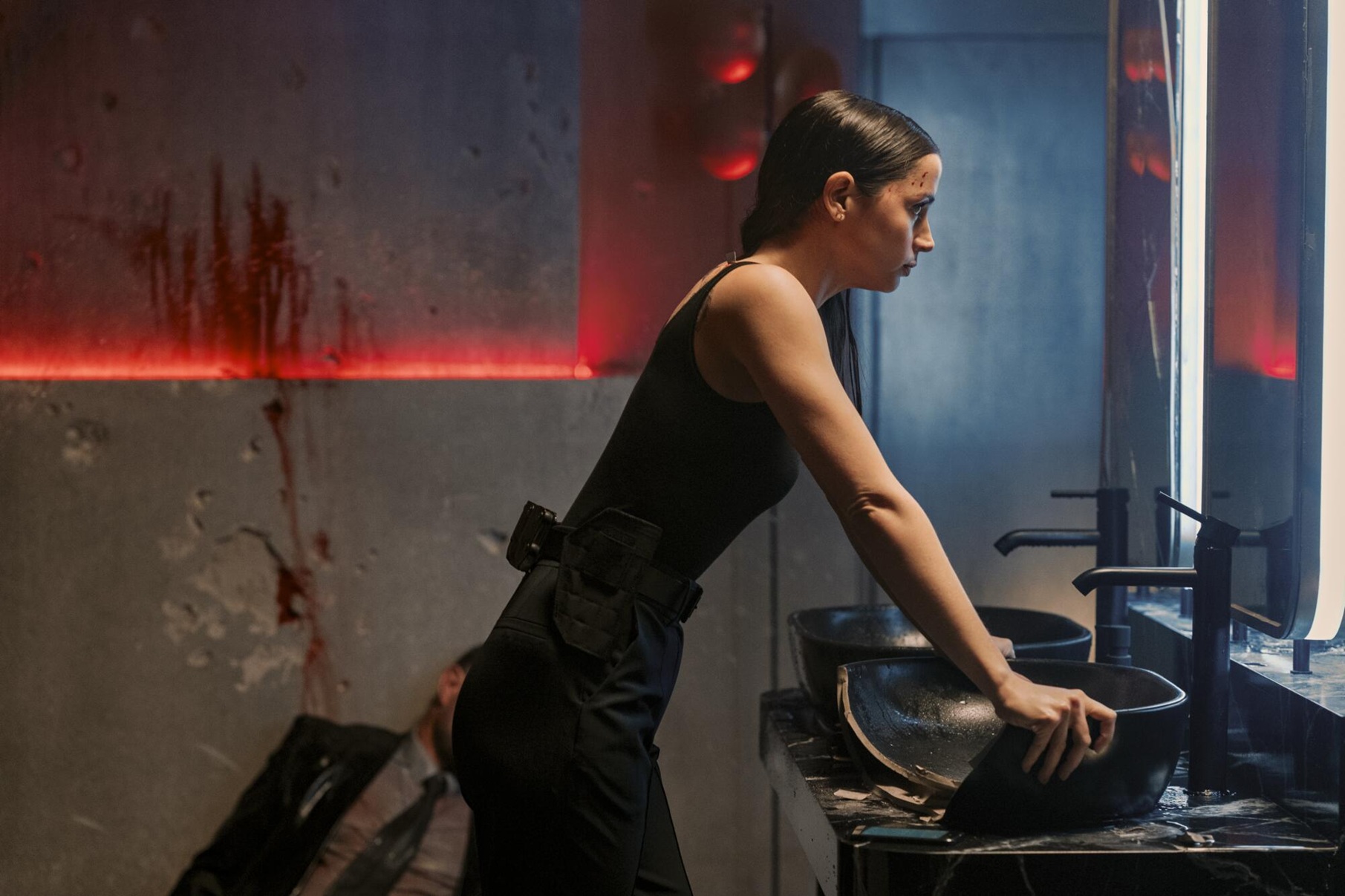
The film uses the repeated phrase “fight like a girl” to both challenge and reclaim old stereotypes. Here, it refuses to be an insult or an excuse for stylized choreography that downplays brutality. Instead, Eve’s style is every bit as intense as her male counterparts, with bone-snapping, throat-crushing, and inventive weapon play making it clear that gender is irrelevant to her effectiveness. In this world, fighting “like a girl” becomes a mark of respect, shaped by grit, creativity, and sheer determination. The physical confrontations are a visible expression of her refusal to be defined by anyone else’s rules, and de Armas’s performance solidifies this vision.
The narrative structure of Ballerina is streamlined and pointed, choosing to skip convoluted plotting in favor of direct momentum. Much like the original John Wick, the film understands the power of momentum in storytelling. The revenge quest is not overly decorated with exposition but allowed to unfold through motion and tightly framed encounters. Supporting characters, from Gabriel Byrne’s flamboyant Chancellor to Anjelica Huston’s stern Director, add personality and threat without overwhelming the story. Their roles anchor Eve’s journey in a specific, colorfully drawn world, but the focus never shifts for long from her central quest.
One of Ballerina’s crowning achievements lies in how it manages to pay tribute to the franchise’s balletic violence while gently updating it. The action sequences are highly stylized yet never lose their sense of danger. Each fight is distinct, drawing from Eve’s background as a dancer and her ability to improvise under pressure. Choreographed training montages serve as both plot device and visual motif, blending the discipline of ballet with the rigor of combat. Moments of dark humor emerge naturally within these scenes—a flying dinner plate or a thrown grenade punctuates the chaos with fleeting levity, shifting the tone without undercutting the stakes.
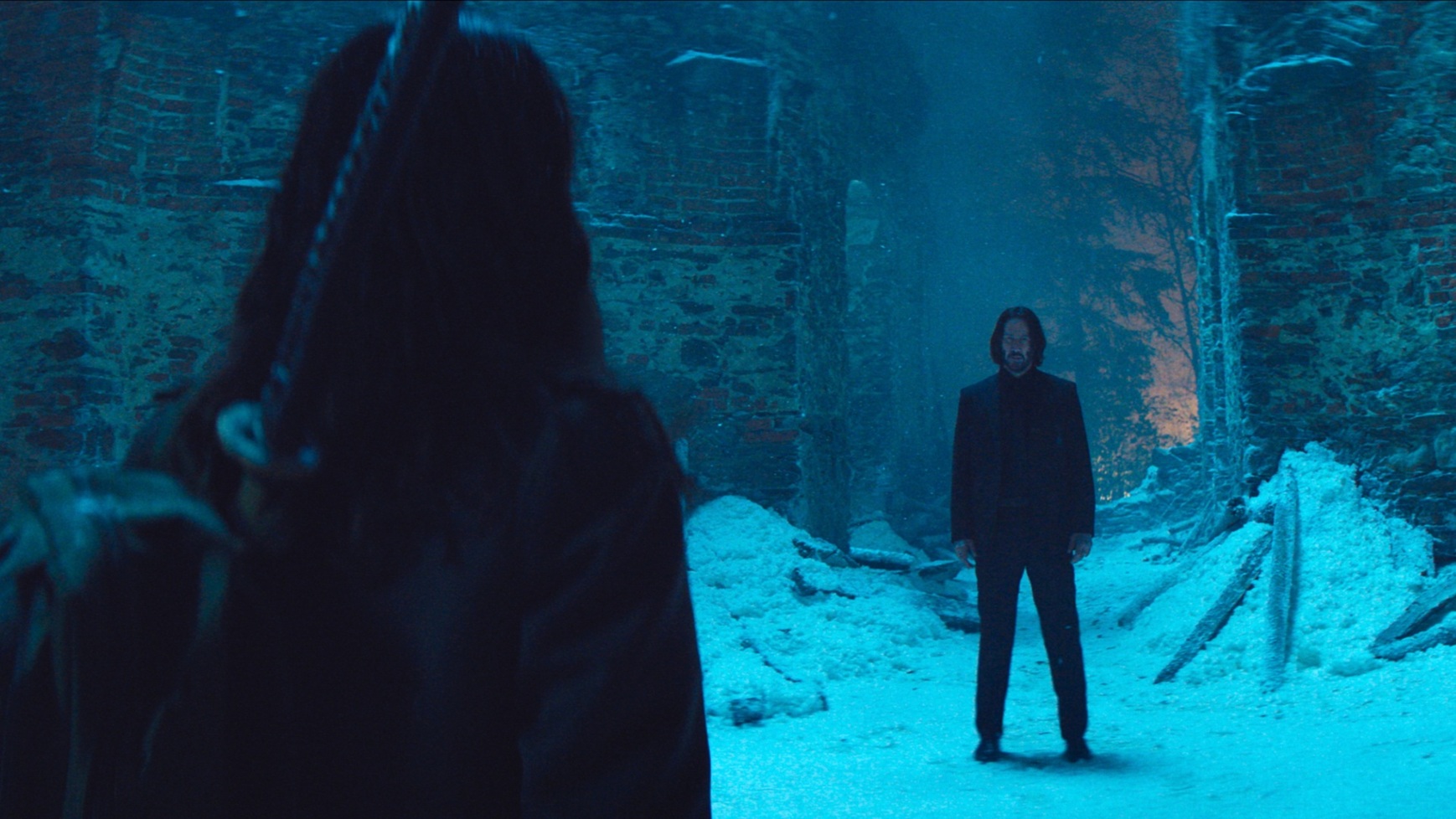
Keanu Reeves’s cameo as John Wick is handled with subtlety, refusing the easy route of glorifying or overshadowing Eve’s story. His appearance operates more as a nod of respect than a rescue, signaling the franchise’s intention to make space for more than one kind of legend. Here, their paths cross not as master and apprentice but as equals, each bound by their own codes and scars. This brief encounter is a reminder that the universe is big enough for parallel legends and that the franchise is willing to evolve alongside its new protagonists.
The tonal balance struck by director Len Wiseman, writer Shay Hatten, and producer Chad Stahelski is a departure from the often somber tempo of previous installments. While violence remains ever-present, it is accompanied by a newly playful sensibility. In the second half of the film, absurdity and seriousness dance side by side—one moment might put a kitchen gadget to lethal use; the next, a burst of unexpected humor emerges amid the carnage. This willingness to be both irreverent and intense injects fresh air into the series, preventing it from becoming a parody of itself while also signaling new creative choices.
World-building receives a careful, understated approach. Secondary characters—like the enigmatic Nogi (Sharon Duncan-Brewster) and the clan of the Ruska Roma—are introduced not with lengthy explanations but through interactions that reveal their personalities and motivations. The Chancellor’s ancient pact and the Ruska Roma’s fierce traditions are presented as facts of life, giving the setting depth but never burdening the narrative. This world is accessible to fresh viewers but satisfying for fans, a universe full of unexplored corners and hidden alliances.
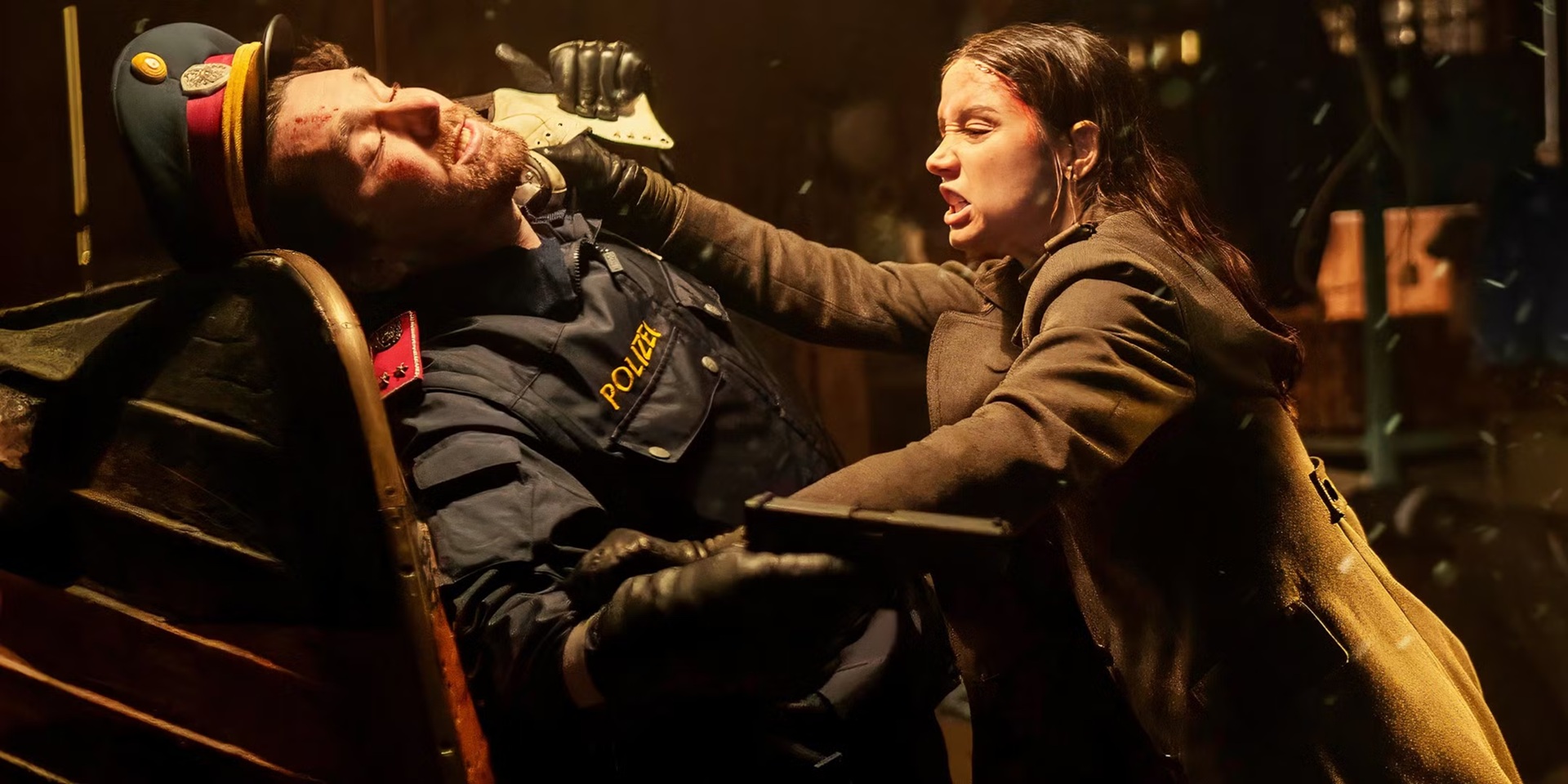
Eve’s journey is both personal and symbolic. Her story traces a clear arc: from vulnerability and loss to empowerment and autonomy. Her training is depicted with discipline and pain, and her transformation into a weapon is neither glamorized nor dismissed. The film keeps the emotional stakes close, using her singular quest for vengeance as a way to introduce the series’ larger mythos without requiring encyclopedic knowledge of established rules and tokens. By focusing on Eve’s personal resurrection, Ballerina offers an entry point for new audiences while enhancing the resonance for long-time fans.
Of course, the film’s directness is occasionally a double-edged sword. The simplicity of motivation—the well-trodden revenge plot—means that deeper emotional complexity sometimes slips through the cracks. While Eve’s internal struggles are suggested, they do not always receive the nuanced exploration that characterized parts of John Wick’s earlier chapters. Secondary roles, although distinct, sometimes feel more like stylized archetypes than lived-in personalities. These are minor missteps, though, as brisk pacing and inventive action rarely allow energy to lag.
By the film’s conclusion, it is clear that Eve Macarro is not simply a replacement for John Wick. Her victory is not about dominating all rivals or inheriting a legend, but about finding the resilience to survive and redefine her place within the saga. The mantra “fight like a girl” is repeated as a refrain, dissolving any last vestige of gendered expectations. What matters here is not whether the assassin is man or woman but whether they can endure, adapt, and leave their mark on this merciless universe. Eve’s legend is not a carbon copy but its own intense, unpredictable force.
The closing credits are set to “Fight Like a Girl,” a powerful song by Evanescence and K.Flay that perfectly captures the film’s mood—part self-aware empowerment, part sly fun, all wrapped in a thumping energy. It is a statement of intent, much like the rest of the movie: this is a story that knows its roots but is determined to craft something brighter and bolder out of them. The song’s presence in the credits, alongside the thematic focus on agency and self-definition, signals the film’s ambition to carve a fresh direction for the franchise.
What Ballerina does best is to balance familiar thrills with a sense of renewal grounded in character, movement, and style. Ana de Armas shines not by imitating John Wick’s grim solemnity but by crafting a lead who mixes poise and violence with a quieter stubbornness. The choreography is inventive, the supporting cast lively, and the world larger than ever—yet the focus never slips away from the human stakes. In combining raw action with moments of grace—using violence as a kind of dance, and dance as a form of survival—the film manages to keep the franchise feeling both rooted and open to possibility.
For action fans, the film offers everything expected from the Wick universe: tightly staged firefights, exotic underworld codes, and the thrilling interplay of honor and chaos. But it also reaches for something subtler: the quiet moments between bloodshed, where a character struggles with their own history or resists being defined by others’ expectations. These pauses allow for reflection, reminding us that adrenaline alone cannot carry a story without heart.
The film’s emotional impact comes from these contrasts—between kinetic violence and poised calm, between single-minded revenge and hesitant rebirth. Every gunshot, leap, or thrown object serves a dual purpose: not only pushing the plot but deepening our understanding of Eve’s path. When she faces the final confrontation, it is not only a contest of skill but of belief: a test of whether her journey—painful, transforming, unresolved—can forge a new legend from old shadows. It’s a question that lingers long after the credits roll.
In the end, From the World of John Wick: Ballerina succeeds by combining the strengths of the franchise—style, force, inventive spectacle, and charismatic leads—with an openness to change and a respect for character. It’s a film that knows where it comes from but sees just as clearly where it wants to go. Eve Macarro emerges as a singular force, not merely the “female John Wick,” but the start of a legend all her own. By inviting new audiences into its myth, laughing a little more, and fighting with both grace and grit, Ballerina proves the franchise still has new rhythms to explore—and that, sometimes, the most thrilling fights are those waged on entirely new ground.