




Summary
Zach Cregger’s Resident Evil delivers a bloody, atmospheric, and entertaining survival horror experience that captures the spirit of Capcom’s iconic video game franchise. Led by a convincing performance from Austin Abrams, the film blends terrifying creature effects, tense exploration, and dark comedy into a fast-paced nightmare. Rather than relying on familiar game characters, it recreates the fear, mystery, and absurdity that define the series. A refreshing video game adaptation that finally gets Resident Evil right.
Overall
-
Plot
-
Cinematography
-
Cast
-
Acting
Video game adaptations have often struggled to capture what makes their source material special. Capcom’s Resident Evil series has inspired animated films, television shows, and several live-action movies, but few have recreated the games’ distinctive mix of fear, mystery, and survival. Some adaptations have strayed too far from the source, while others have relied on familiar characters and references without building much suspense.
Zach Cregger’s Resident Evil takes a different approach. Rather than adapting one specific game, it tells a new story within the series’ world of Umbrella Corporation experiments, viral outbreaks, and terrifying mutations. Fans hoping to see definitive live-action versions of Jill Valentine, Leon S. Kennedy, Claire Redfield, or Chris Redfield may be disappointed. However, this choice gives the film room to focus on the franchise’s most important quality: the fear of trying to survive when nothing makes sense.
At its heart, Resident Evil is about being trapped in a dangerous place without enough information, weapons, or time. Cregger understands that feeling and brings it to the screen with speed and confidence. The result is a violent, often funny horror film that captures the experience of playing a Resident Evil game more successfully than any previous live-action adaptation.

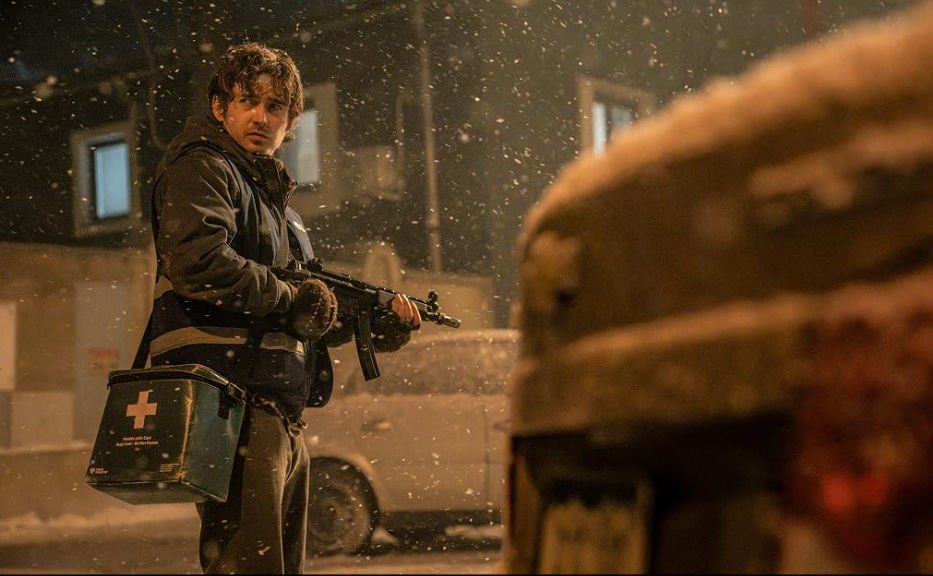
The story follows Bryan Hodukavich, played by Austin Abrams. Bryan is an anxious medical courier who accepts a difficult assignment in Raccoon City. During a winter storm, he must deliver an important package. He is not a trained soldier or police officer. He is an ordinary man with personal problems, including a tense conversation with his girlfriend about her pregnancy.
His job takes him to Raccoon City General Hospital, where he quickly senses that something is wrong. The workers seem unwilling to help. Patients have unusual injuries, and blood appears where it should not be. The hospital is not yet in open chaos, but its quiet, uneasy atmosphere suggests that it is already falling apart. Bryan does not know what is happening. The audience, however, can feel that danger is close.
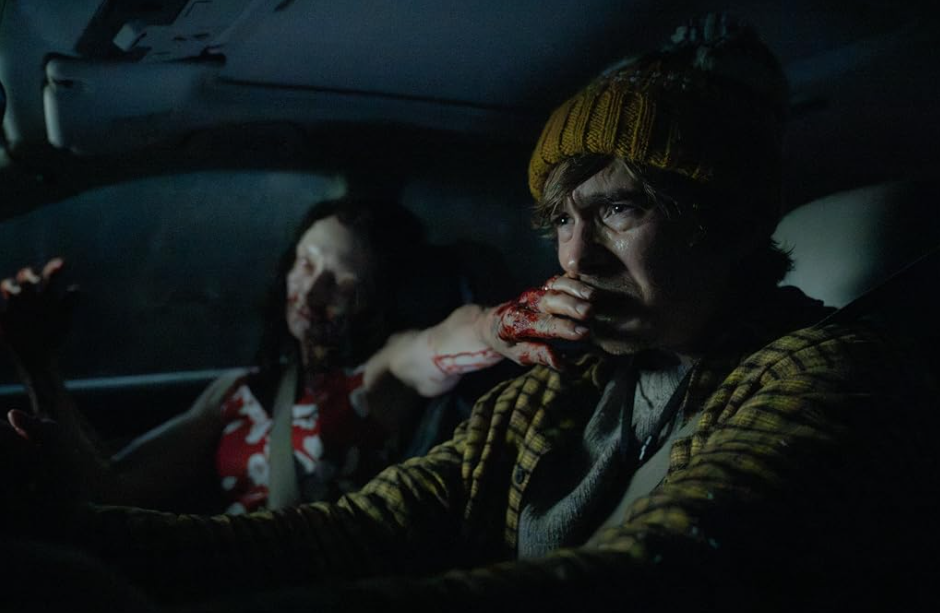
After leaving the hospital, Bryan’s night gets worse. A woman steps into the snowy road, and his vehicle hits her. He believes he has caused a terrible accident and tries to help. But the woman does not behave like an ordinary injured person. Worse, she does not stay dead for long.
That encounter pulls Bryan into a nightmare. An infection is spreading through Raccoon City, turning ordinary people into violent creatures. Umbrella’s experiments have created monsters, and the city is losing control. The danger grows with every passing minute.
Bryan arrives after the outbreak has begun. He has not seen how it started, and he does not know enough to understand it. His goal is simple: deliver the package, reach his destination, and stay alive. To do so, he travels through hospitals, snowy roads, empty buildings, blocked corridors, and deserted areas filled with threats he cannot explain.
Each location feels like a new level in a survival horror game. Bryan enters a space, discovers a problem, and has only a short time to work out what is happening before something attacks. The structure is simple, but that simplicity gives the film its strength. There is little need for lengthy explanation when the next hallway may hold a monster.
The horror begins almost at once. Before the title appears, Cregger establishes the film’s rhythm. Bryan gets a brief moment to breathe, notices something strange, and then must escape. The story moves like a game in which every new room brings another threat.

This structure helps the film feel true to the games, even though its story is original. Cregger understands that an adaptation does not have to copy characters or recreate famous scenes. It can capture the source material’s experience instead. Bryan explores unfamiliar places, searches for useful objects, wastes ammunition, and struggles to understand what each obstacle demands of him.
The film unfolds like a series of missions.
Bryan must find a weapon, open a route, retrieve an object, or reach another building. Some tasks are stranger than others. At one point, he must retrieve keys from severed legs. The objective is disgusting, but it also feels familiar. It resembles the unusual puzzles in the games, where exploring a dangerous room reveals the one item needed to unlock the next part of the map.
These moments show how well Cregger understands the franchise’s odd logic. Resident Evil has always mixed horror with strange puzzles, elaborate settings, and absurd obstacles. Characters may be surrounded by biological hazards, yet they still need to find a key or solve a riddle before they can move on. The film embraces this contrast without making it feel like a joke.
Small visual details also connect the movie to the games. A typewriter appears in a setting where longtime players will recognize its importance. A green plant in an abandoned vehicle recalls the healing herbs that have helped players recover from terrible injuries for decades. These references are woven into the story rather than announced. Fans can spot them without the film stopping to explain their meaning.
Cregger also uses camera movements that suggest a player’s point of view. An over-the-shoulder shot follows Bryan through different environments. His flashlight and weapons often point directly into the darkness. These choices do more than imitate gameplay. They place the audience beside Bryan as he discovers each new threat.
Austin Abrams is central to the film’s success. Bryan is frightened, confused, and unprepared for almost everything that happens. He does not become a skilled action hero after a dramatic speech. He survives through luck, instinct, stubbornness, and desperate improvisation.
Abrams plays him as an ordinary person caught in an impossible situation. When a creature appears, Bryan does not immediately know how to fight it. He screams, swears, misses his shots, and runs when he can. His reactions are often funny, but they also feel believable.
He behaves like someone suddenly trapped in a nightmare, with no reason to think he will survive.
That makes Bryan different from the franchise’s usual heroes. Leon S. Kennedy is capable and confident. Jill Valentine is trained and resourceful. Bryan is closer to the person many viewers might become if a zombie, mutated dog, or undead corpse appeared in front of them. His fear does not make him weak. It makes his courage easier to believe.

The delivery gives Bryan a clear purpose. As the city collapses, finishing his job becomes less and less logical. Still, he keeps going because the task is one of the few things he can understand. In a world where every familiar rule has disappeared, the package gives him a small piece of order to hold on to.
Abrams also gives the performance a strong physical quality. Bryan spends much of the film running, falling, hiding, recoiling, and trying to understand what he has seen. The role depends on his movement and panic, and Abrams carries the long sequences well. He never turns into an invincible monster killer. Instead, he slowly learns when to hide, when to run, and when he has no choice but to fight.
The film’s mix of horror and comedy is another strength. Cregger is more openly humorous here than he was in Barbarian, but the jokes do not erase the danger. They come from Bryan’s attempts to use ordinary logic in situations that are anything but ordinary.
A small decision can lead to disaster. A simple obstacle can waste precious time while a creature draws closer. A moment of safety can become funny, then turn violent without warning. These shifts give the film a personality that suits the Resident Evil universe.
The movie sometimes recalls Sam Raimi, especially in its mix of slapstick, disturbing images, and sudden violence. Its creature effects and strange horrors also bring John Carpenter to mind. The film is not embarrassed by the series’ more theatrical side. It understands that Resident Evil has always included elaborate conspiracies, bizarre puzzles, dramatic villains, and enemies that seem to require absurdly powerful weapons to defeat.
Still, the humor never gives the audience lasting relief. A funny moment can end with an attack. A foolish escape can lead to an even darker place. Bryan may get past one creature through luck, but the next threat is usually worse. The comedy strengthens the horror because it never makes the danger feel harmless.
The creatures are among the film’s most effective features. The movie includes zombies, mutated dogs, a huge sewer creature, and slimy organisms with tentacles and unfamiliar shapes. Some of its most disturbing moments show human bodies changing into forms that are difficult to recognize.
One recurring creature follows Bryan through different parts of the city. It connects several encounters and makes the story feel less like a string of separate fights. The creature is not simply a copy of Tyrant (Mr. X) or Nemesis, but its presence creates a similar unease. Something is always searching for Bryan.
The monsters are frightening partly because they do not always reveal themselves at once. A figure may look almost human before moving in an unnatural way. A familiar body may twist into something impossible. The film gives the audience time to question what it is seeing before revealing the full horror.
The practical effects are especially impressive. The movie uses computer-generated imagery when needed, but Cregger relies heavily on physical creatures and prosthetic makeup. The monsters have texture and weight. They feel as though they can touch the actors and occupy space beside them.
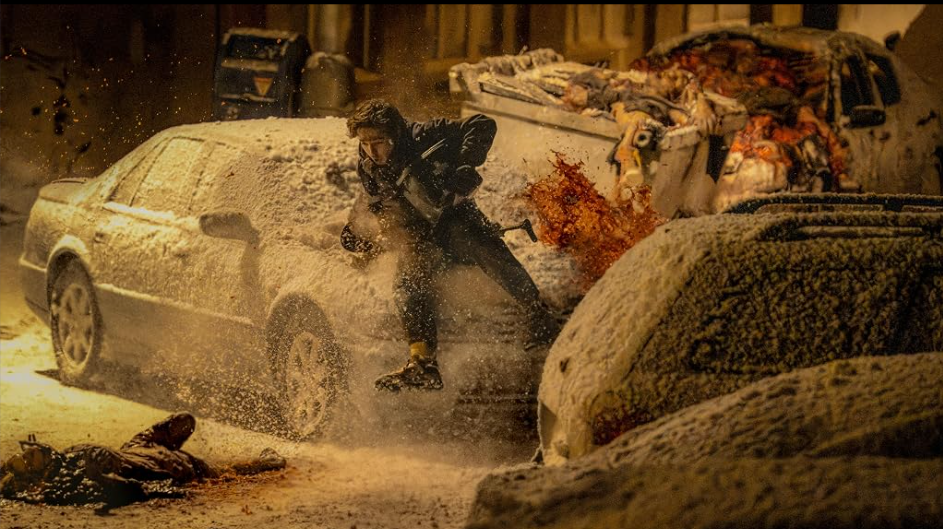
The action scenes are just as intense. Blood covers rooms, bodies, and floors. Flesh tears, bones break, and human bodies become biological weapons. A sequence in a maternity ward is especially brutal and delivers one of the film’s most shocking displays of violence.

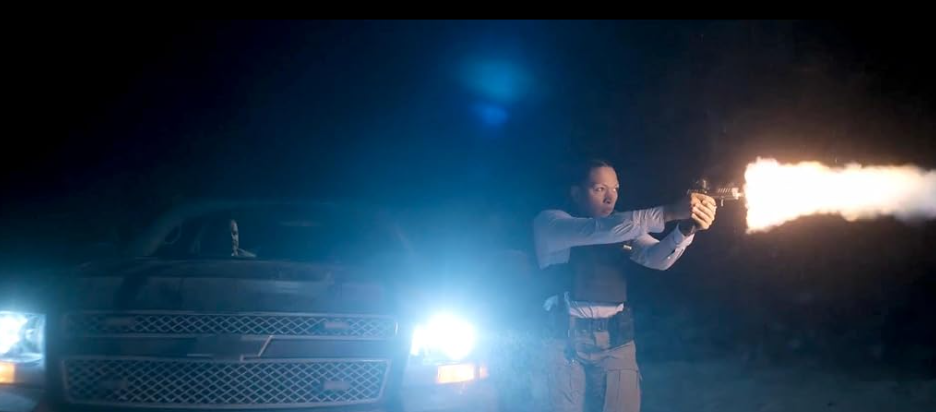
That violence serves the story. The infection does not simply kill people; it changes them. It turns the human body into something unstable and dangerous. Raccoon City becomes frightening because no person, room, or body can be trusted.
The film’s visual style adds to that unease. Cinematographer Dariusz Wolski gives Raccoon City a cold, oppressive look. Snow-covered roads, flickering lights, dark hospital corridors, and abandoned buildings make the city feel real while also recalling the strange geography of a video game.
Darkness becomes a threat in its own right. Bryan’s flashlight reveals only a small part of each room. Headlights and broken lights leave large areas hidden. Cregger sometimes holds a shot long enough for the audience to notice something unsettling before Bryan does. A shape in the background or a sound from a nearby hallway can be as frightening as a direct attack.
At about 90 minutes, the film rarely wastes time. It introduces Bryan, establishes his delivery, and sends him into the outbreak. There are no lengthy explanations of Umbrella Corporation or extended discussions of the franchise’s history. The larger conspiracy is present, but the story stays focused on Bryan’s immediate needs: finding a weapon, reaching an exit, and staying alive.
This focus helps the pacing. Film editing by Joe Murphy keeps the story moving while making the action easy to follow. The film is fast, but it does not become confusing. Each location serves a purpose, and every encounter pushes Bryan toward the next part of his journey.
The short running time can also be a drawback. One more major set piece, or a stronger connection between the different missions, might have given the final act more weight. Some viewers may also be divided by the ending, particularly its final comic turn. It fits the film’s strange sense of humor, but it may not satisfy those hoping for a more serious conclusion.
The ending leaves the audience wanting another level. That may be one of the film’s greatest achievements. Rather than feeling exhausted, viewers may find themselves ready to return to Raccoon City and discover what other dangers are waiting there.
Resident Evil does not provide definitive live-action versions of Jill, Leon, Claire, or Chris. But it shows that a successful adaptation does not have to reproduce every major character or retell a familiar story. It needs to understand the emotional experience of the games.
Cregger captures the fear of entering an unknown room, the frustration of wasting ammunition, and the relief of finding a useful weapon. Abrams gives the film an ideal central character in Bryan: an ordinary, frightened man who keeps moving even when survival seems almost impossible.
Fast, bloody, funny, and consistently entertaining, Resident Evil is the strongest live-action version of Capcom’s world so far. It understands that the series works best when horror, absurdity, and survival exist side by side. More than anything, it reminds us that the best hero in a nightmare may not be the strongest person in the room. Sometimes, it is simply the person who is terrified but keeps going.