





A Solid Continuation of Marvel's Daredevil Revival
Summary
Daredevil: Born Again Season 2 delivers a grounded, tense narrative where Mayor Wilson Fisk weaponizes the city’s justice system. Matt Murdock must navigate corrupt laws, ultimately sacrificing his secret identity to expose this authoritarian regime.
Overall
-
Plot
-
Narrative
-
Acting
-
Characterization
-
Action
-
Pacing
By the time Daredevil: Born Again Season 2 reaches its final shot, it accomplishes something many superhero shows no longer attempt. It makes the fate of a few New York blocks feel as urgent as any global crisis. The season does not chase cosmic threats or multiverse chaos. Instead, it stays close to the ground. It lives on city streets, in courtrooms, and inside cramped apartments. It shows how power behaves when it is near enough to touch.
The result is tense and grounded. It treats local injustice as something enormous rather than small.
Season 1 aimed high, but it often felt uneven. At times, it played like several different shows fighting for control. Each had its own tone, and each wanted to be the main story. Season 2 is more disciplined. It commits to one central idea and follows it all the way through.
That idea is simple and frightening: what happens when the system meant to protect people becomes a weapon? The season builds its argument slowly but clearly. It shows how authoritarian control rarely arrives as a dramatic takeover. More often, it comes through “reasonable” policies. It arrives through small changes people learn to tolerate. Then, one day, it is simply normal.
At the center of this new order is Wilson Fisk. He is no longer just a crime lord who thrives in shadow. He is something more dangerous now. He is legitimate.
He is the elected Mayor of New York City.
Season 2’s real horror is not Fisk’s strength or even his brutality. Those traits were always part of him. What has changed is his status. Fisk now holds press conferences. He signs bills. He speaks on television with flags behind him. He wraps his agenda in civic language.
His “Safer Streets” Act gives his rule structure. So does the Anti‑Vigilante Task Force (AVTF). On the surface, the AVTF appears to be a response to chaos. It claims to protect the public from masked figures like Daredevil. It offers the comfort of control.
In practice, it becomes a label Fisk can stretch as needed. “Vigilante” stops meaning “someone in a costume.” It starts meaning “anyone in the way.”
The season takes time to show how this shift happens. At first, the AVTF targets vigilantes and organized crime. Their uniforms look official. Their language is careful. Public reaction is mixed but not explosive. Many citizens accept the premise. Some even welcome it.
Then the boundaries blur.
Protesters become suspects. Witnesses become threats. Neighbors who ask questions are labeled “affiliated.” Warrants turn into paperwork formalities. Due process becomes performance. Violence no longer needs to hide in alleys. It can happen in daylight and be written up as “necessary force.”
The show avoids the easy fantasy of sudden public outrage. Instead, it shows something colder: people adjust. Reported crime numbers drop. Certain districts look cleaner. Some residents feel safer—especially those least likely to be searched or raided. Others vanish into holding cells and off‑books facilities. They disappear into a system that claims they were dangerous.
And life goes on.


That is what makes Fisk’s New York so unsettling. It is not a comic-book dystopia with obvious villains on every corner. It is a familiar world where institutions are repurposed rather than replaced. Season 2 understands that modern authoritarianism rarely announces itself with a single speech. It arrives through committees, policies, and slogans. It arrives wrapped in the language of safety.
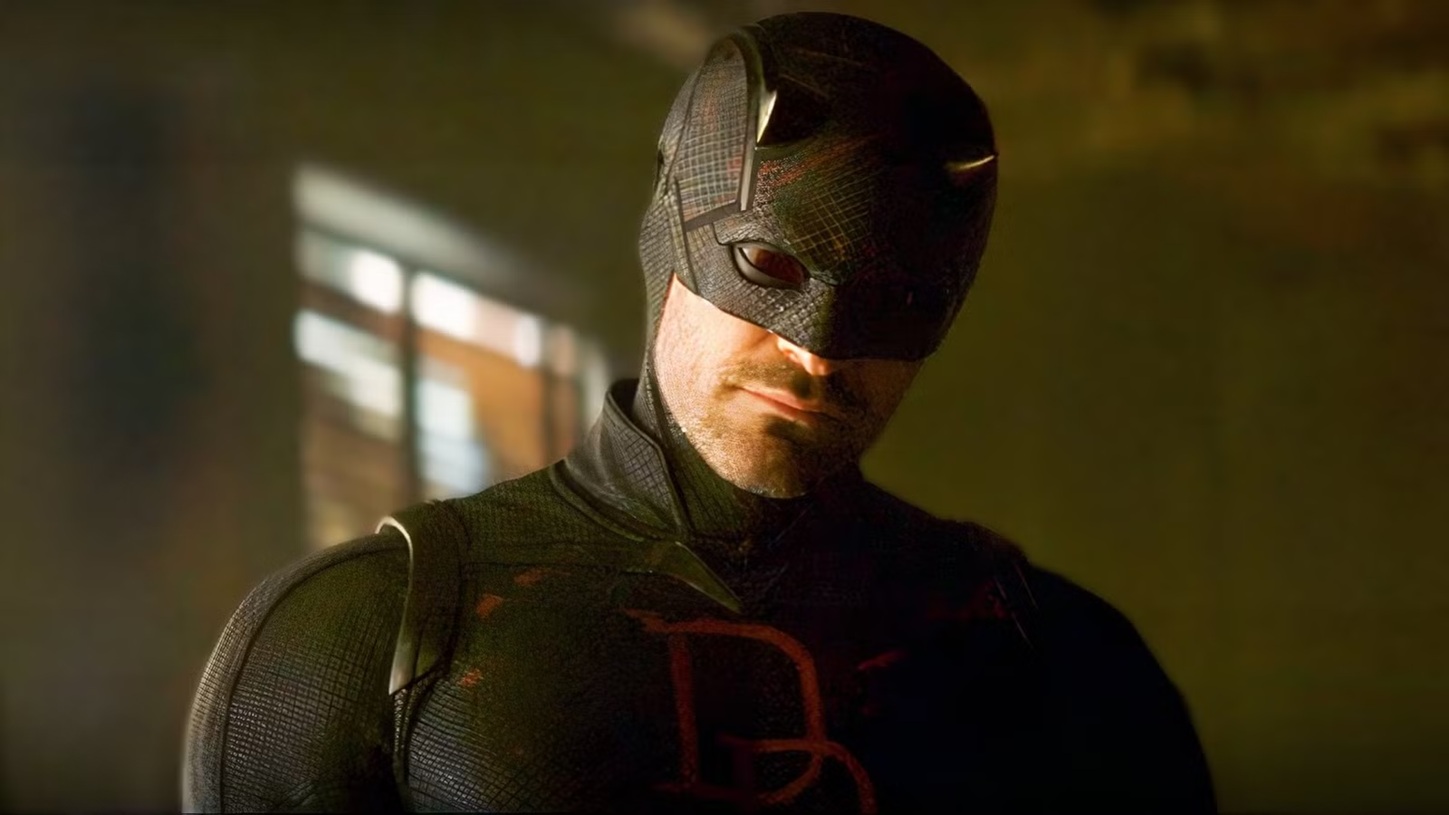
Matt Murdock stands in the middle of this transformation. He is pulled between his work as a lawyer and his identity as Daredevil. The season makes a smart choice here: it does not waste time on a slow return to the mask. Matt is already back in the suit when the story begins.
Charlie Cox plays him as a man worn down by years of pressure. Matt moves like someone who has carried this burden too long. He looks like someone who cannot stop—even if stopping might save him.
For Matt, Fisk’s rule is not only a physical danger. It is a direct attack on his beliefs. He has always tried to live in two worlds. As a defense attorney, he believes the law can be a tool for justice when applied fairly. As Daredevil, he steps in when that ideal fails in practice.
In Season 2, both paths begin to collapse.
Courts are pressured. Judges are influenced. Police resources are redirected toward political targets. The AVTF grows stronger. The definition of what is “legal” shifts to match Fisk’s agenda. What once served as a safeguard becomes a weapon.
The show treats courtroom scenes with the same seriousness as fight scenes. Hearings become battlegrounds. Prosecutors and officials argue over basic words—“citizen,” “threat,” “vigilante.” These terms are bent and narrowed until they protect only those in power.
For Matt, every objection becomes more than a technical maneuver. It becomes an attempt to protect the meaning of language itself. He is trying to preserve the link between law and justice.
The season returns to one question again and again: when the law is captured, what does it mean to uphold it? Is obeying a corrupt statute still moral? Or does morality sometimes require breaking the rules?
Matt must decide, case by case, whether the system can still be used—or whether it is beyond saving.
Season 2 makes its themes concrete through Jack Duquesne, known in the comics as the Swordsman. Here, he is not a flamboyant rogue. He is something more tragic. He becomes a test case for Fisk’s regime.
Jack is detained and isolated. He is pushed through a process that looks legal but feels hollow. His rights are not stripped away in one dramatic moment; they fade in small increments. Access to counsel is limited. Communication is controlled. Charges remain vague so they can expand whenever the administration needs them to.
Through Jack, the show highlights a crucial truth: harmful systems do not always depend on overt brutality. Often, they run on forms, reports, and routine.
The clearest example is Dr. Heather Glenn. Once personally connected to Matt, she now works as a mental health evaluator for Fisk’s administration. On paper, her job sounds neutral—even compassionate. In practice, her assessments become weapons.
She interviews Jack. She guides his answers. She edits his words in her notes. Then she produces a polished report that frames him as unstable and dangerous. That report justifies longer confinement and fewer rights. The damage happens quietly.
Heather is not written as a cartoon villain. She is calm and professional. She speaks in careful, measured terms. That restraint makes her more unsettling. The harm is disguised as care. It looks like expertise.
Officer Powell, one of the AVTF members tied to Jack’s case, represents another piece of the machine. He does not question his orders. He does not deliver speeches or wrestle with doubt. He enforces policy with quiet confidence.

The season makes its point without shouting: institutional cruelty does not require personal hatred. It requires people willing to do their jobs without asking what those jobs have become.
Compared with Season 1, Season 2 is more focused. Nearly every storyline connects back to power, legality, and resistance. That structure gives the season clarity and momentum. Viewers rarely have to wonder what the show is trying to say.
Still, this focus comes with trade-offs. The early episodes can feel subdued. Some viewers may expect immediate chaos after Fisk’s rise. The season refuses that rhythm. Instead, it shows control tightening gradually. The city does not erupt overnight; it hardens over time.
That choice fits the theme—normalization is the point—but it can feel slower than expected if you are waiting for quick escalation.
The cast is also large. Not every character receives equal depth. Heather Glenn’s role is central in concept, yet her personal motivations remain only partially explored. Angela Del Toro’s White Tiger and Jack Duquesne add energy and tension, but they sometimes function more as symbols than as fully developed emotional arcs.
The season hints at larger backstories and future conflicts. It does not always have the space to linger.
When the show locks in, however, it hits hard. A midseason flashback episode stands out. It revisits earlier phases of Matt’s life and trauma. It borrows visual language from past Daredevil stories without relying on nostalgia. Instead, it uses the past as evidence—reminding viewers what Matt has survived and why he keeps fighting even when the cost becomes unbearable.
Season 2 includes plenty of action, and it is not gentle. Fights are fast, ugly, and exhausting. Characters carry visible injuries. Violence has consequences.
The show avoids turning action into empty spectacle. Each fight has a clear purpose, and most tie directly to the season’s themes.
When Daredevil fights mob figures, the tone feels familiar. There is still a vigilante thrill. But when he clashes with AVTF officers and other state agents, everything changes. Matt is no longer fighting criminals in the shadows. He is fighting people with badges, legal authority, and public support.
The choreography reflects that tension. Matt holds back when he can. He tries to avoid permanent damage. He hesitates when the line grows thin. The show keeps asking the same question in physical form: what is the difference between defending people and attacking the state? And can that difference survive under pressure?
Daredevil’s billy club becomes especially significant. It is not just a prop; it represents restraint. Matt uses it to disarm, redirect, and restrain. He uses it for control rather than execution. The direction often emphasizes this choice, following the club’s path in tight shots that highlight his precision and discipline.
Karen Page carries much of the season’s emotional weight. After feeling sidelined before, she returns with renewed focus. Her relationship with Matt is no longer driven primarily by romance. It is shaped by hard conversations about what justice means under Fisk’s rule.
The show also refuses to forget the end of Season 1, when Matt came close to killing Bullseye. Season 2 treats that moment as a lasting wound, not a brief lapse.
Karen will not let Matt bury it. She forces him to confront what crossing that line would have meant—and to admit that part of him wanted to.
Karen’s position is not simple. She has suffered under the city’s failures. She has watched violence go unpunished. In that context, executing someone as dangerous as Bullseye can begin to sound less like revenge and more like prevention.

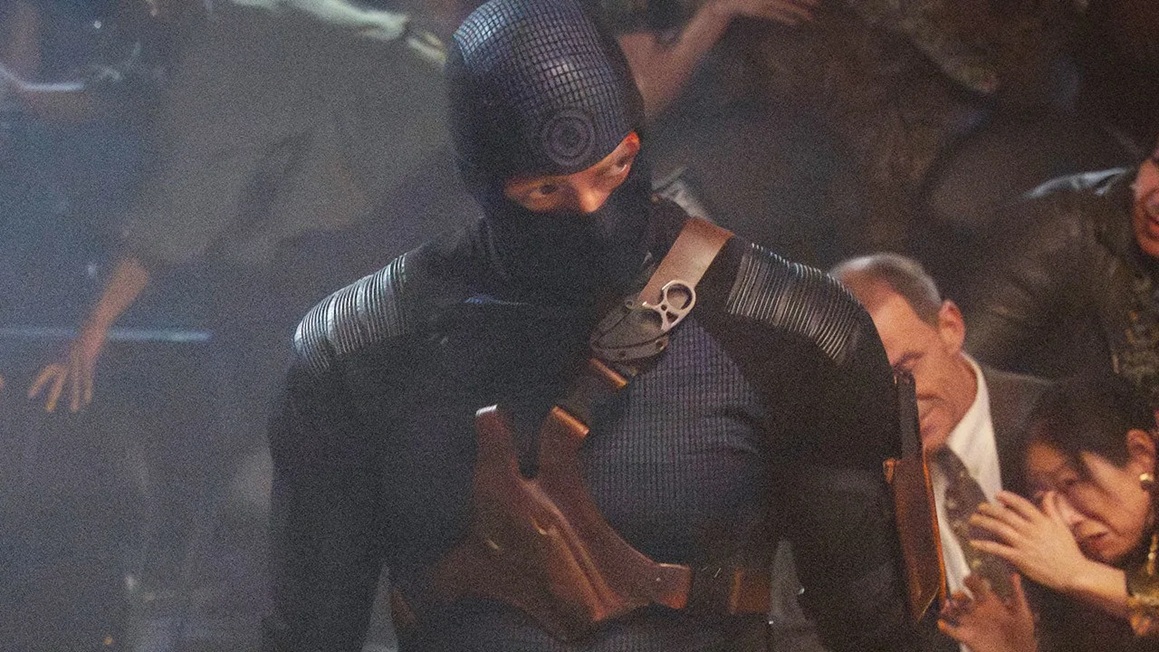
Bullseye remains Daredevil’s darkest mirror. Matt limits himself; Bullseye does not. His talent is terrifying. The show makes his effectiveness undeniable—and his cost unavoidable.
At times, the season teases the possibility of an uneasy alliance. The temptation is clear. Bullseye could be a blunt instrument against Fisk. He could do what Matt refuses to do.
But the show does not glamorize him. Every life Bullseye takes is treated as a permanent injury to the story, not a tactical detail. One death in particular continues to haunt him, casting a shadow over his scenes.
Through Bullseye, the season asks its clearest moral question: if you adopt the methods you condemn, what remains of your cause?
Karen and Bullseye represent two harsh responses to pain—grief and rage. Matt’s refusal to kill is not presented as simple heroism. It is discipline. It is a costly choice he must defend again and again.
In a world where the state abuses power, Matt’s restraint becomes a boundary Fisk has already crossed. The season never pretends that boundary is easy to maintain.
The final episode chooses an ending that matches the season’s themes. It does not build toward a single massive brawl. It begins in a courtroom.
Karen is accused of vigilante activity. The state wants to make an example of her. The tension arises from language, procedure, and public narrative rather than explosions.
This is Matt Murdock’s arena. He knows the system is twisted. Even so, he believes that truth—spoken clearly and publicly—can still shift outcomes.
Then he makes a decision that reshapes his life. To defend Karen and expose Fisk’s machinery, Matt reveals that he is Daredevil.
The reveal is not played for spectacle. It is quiet and painful. Matt gives up anonymity and, with it, a form of protection. He also removes one of Fisk’s sharpest tools: secret leverage over his identity. By merging his two lives in public, Matt creates a platform the administration cannot easily dismiss.
The outcome is not a clean victory. Fisk does not fall in a final fight. Instead, he is boxed in politically and legally. A negotiated end forces him to resign, surrender key protections, and leave the city he tried to own. The punishment fits the crime. His legitimacy is stripped away. His exit is framed as disgrace, not martyrdom.
But the cost is severe. Matt is arrested and charged with violent crimes tied to his years as Daredevil. He faces the possibility of prison. Karen avoids the worst outcome, yet she remains marked by the trial. Fisk is exiled, not erased. The final image of him on a distant shore is not closure—it is a warning.
Bullseye is not removed from the board, either. He is absorbed into a government‑affiliated program. His violence is not rejected. It is repackaged and redeployed.
The season ends without claiming the city is healed. The machinery that enabled Fisk is damaged, not dismantled. Matt’s sacrifice matters, but it does not reset the world. The show chooses realism over comfort.
When the credits roll, the dominant feeling is not triumph but exhaustion—and unease.
Season 2 is not designed to reassure. Its strength lies in refusing to treat systemic abuse as background noise. Raids, arrests, and manipulated trials are not isolated events here; they are patterns. Ordinary people—families, witnesses, small business owners—are caught between fear of crime and fear of those assigned to fight it.
The season argues that resistance is not only about defeating one man. It is also about rejecting the idea that cruelty is the price of order. Matt’s commitment to limits, Karen’s insistence on truth, and the hard choices faced by those around them all circle the same question: how do you fight back without becoming what you hate?
Season 2 is not flawless. Some arcs feel compressed. Certain character beats land more quickly than they should. The show could spend more time with White Tiger, Heather Glenn, or Jack Duquesne.
Even so, the season stands out in a crowded superhero landscape. It treats its street-level scale as a strength rather than a limitation. It uses that scale to explore institutions, language, and accountability. It shows how easily “safety” can become an excuse for harm.
While many superhero series chase bigger universes and louder spectacle, Daredevil: Born Again narrows its gaze. It looks closely at a handful of neighborhoods, a few courtrooms, and a city government—and argues convincingly that what happens there matters as much as any alien invasion.
It makes the battle feel immediate. It makes it human. And it leaves viewers with a final, unsettling thought: when the system learns to do harm in the name of justice, the fight is no longer only about stopping criminals.
It is about saving the meaning of the word “justice” itself.