


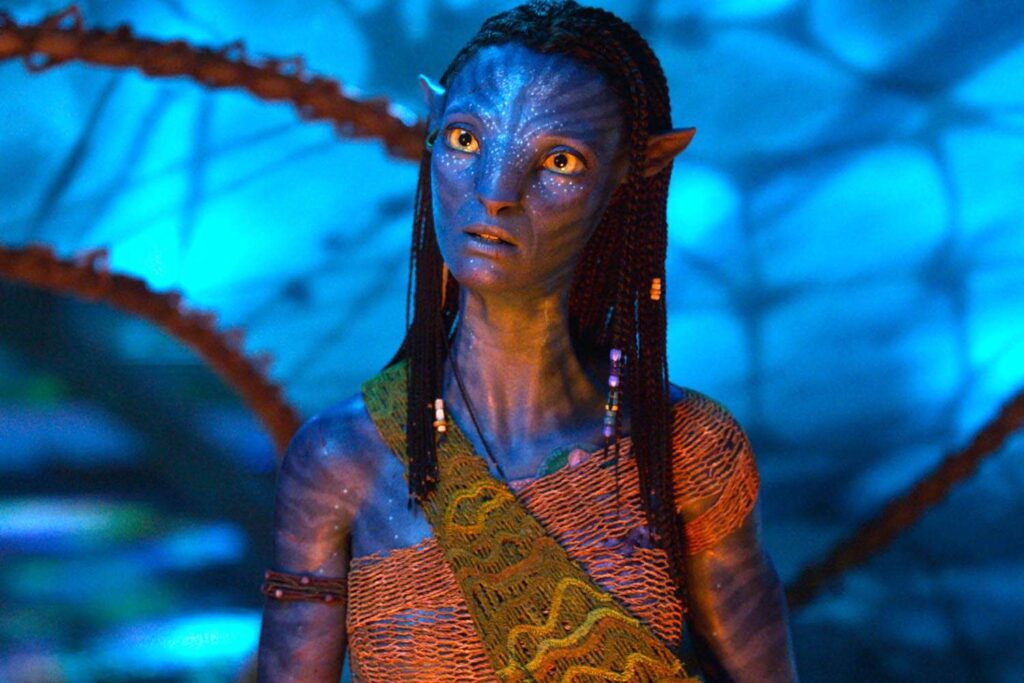


Summary
Avatar: Fire and Ash expands Pandora’s mythology with sweeping aerial spectacle and deeper ideological conflict. While its relentless scale sometimes drags, James Cameron balances visual innovation with emotional weight, delivering an ambitious, visually stunning finale.
Overall
-
Plot
-
Cinematography
-
Acting
James Cameron’s Avatar: Fire and Ash arrives at a significant crossroads, both for the sweeping narrative of Pandora and for a decade-long cinematic journey fueled by technical bravado and emotional ambition. Released three years after Avatar: The Way of Water, this new entry wastes no time reigniting the saga’s momentum. There’s a notable urgency in Cameron’s approach – Fire and Ash as not just a continuation but the inevitable next act in a story that never really left the cultural stage.
The film picks up directly in the shadow of The Way of Water, sending audiences back into the heart of the Sully family’s grief and the turbulent fate of Pandora . The loss of Neteyam looms heavily, setting a somber mood that influences every character’s arc. Jake Sully and Neytiri, burdened by sorrow, move through the film shaped by personal tragedy and the mounting tension between the clans. Lo’ak, in particular, is consumed with survivor’s guilt, and his restless search for meaning provides a fragile entry point into the larger drama. Events do not unfold in isolation—the pain felt by the Sully family is echoed by their adopted human son Spider. He serves as both a physical and thematic bridge between the world of the Na’vi and the persistent intrusion of humanity.
While earlier installments centered on a straightforward battle between native defenders and human invaders, Fire and Ash broadens Pandora’s world. The plot thickens through the introduction of two distinctive new clans. The Tlalim, the Wind Traders, represent the freedom and spiritual harmony found in Pandora’s skies. Their culture is built on a sense of connection to nature, soaring on Medusoids that capture the planet’s majesty. Against them stand the Mangkwan, or Ash People, a clan built on pragmatism and survival. Their philosophy is less about harmony and more about facing harsh reality with grim resolve—a tone embodied powerfully by their leader Varang. Played with ferocity by Oona Chaplin, Varang moves the narrative toward ideological complexity.


Cameron’s skill at world-building is everywhere, but the expansion this time shifts from the aquatic vistas of the previous film to the refreshing openness of the skies. The film’s aerial sequences are standouts, not just for their technical wizardry but because they redefine what Pandora can represent.
Against this backdrop, the Ash People’s narrative brings a darker, earthbound energy. Their choices raise difficult questions. Can survival justify moral compromise? Is resistance still possible when the enemy wears a familiar face? By delving into these questions, the film resists cliché and instead mirrors real-world debates about power, identity, and the cost of survival.
Spider’s arc is perhaps the film’s emotional heart. Neither human nor Na’vi in any full sense, Spider (played by Jack Champion ) demands empathy and attention by refusing tidy answers. He cannot breathe the planet’s atmosphere unassisted, a simple yet poignant reminder of his outsider status. His character is haunted by his background and the awkwardness of familial ties that never quite fit. He evolves beyond the “white savior” archetype that shadowed earlier films, instead embodying the messier, unresolved realities that come with living between cultures. It is through Spider’s dilemmas that Cameron deepens the trilogy’s meditation on colonial legacy, hybridity, and reconciliation.
His character is haunted by his background and the awkwardness of familial ties that never quite fit.
Action sequences, particularly the aerial battles, are exhilarating. Varang’s command of the skies stands as a showpiece for both character and spectacle. The flying warships devised by the Ash People are as much a technological marvel as a narrative escalation, their presence transforming the planet’s skies into conflict zones that feel both new and ancient. Varang is an antagonist defined as much by dignity and calculation as by brute force. This multilayered approach to opposition offers depth, making her relationship with the Sully family and the rest of Pandora’s defenders all the more riveting.


Visual achievement remains a hallmark of the Avatar franchise, and here Cameron elevates the artistry yet again. Gone are the primarily blue and green palettes; instead, waves of yellows, oranges, and neon lights pulse through Pandora’s new landscapes. Marketplaces bustle with color and movement, constructed in granular detail, immersing the viewer in Pandora’s day-to-day reality. These quiet scenes balance the relentless momentum of the action. There’s a tactile richness that rewards patient viewers. However, the film’s reliance on established visual and narrative motifs is a double-edged sword. While mythic echoes and ritualistic scenes reinforce the trilogy’s continuity, they also risk the danger of predictability.
When the film finally erupts into its climactic battles, Cameron offers some of the franchise’s most sweeping, kinetic set pieces to date. Familiar creatures thunder alongside dazzling new war machines. The return of beloved and hated faces alike evokes nostalgia without losing a sense of present danger. Weta Digital’s special effects again set new standards, combining digital artistry with tangible emotional stakes. The choice to employ *variable frame rate*s makes some sequences jarringly abrupt, but this does little to diminish the overall spectacle. There’s a sense that Cameron wants viewers not just to see Pandora, but to feel every shock and exhilaration that his characters endure in their struggle for survival.
Cameron offers some of the franchise’s most sweeping, kinetic set pieces to date.
There is, however, a danger of exhaustion. The relentless pace, the repeated clashes, and the perpetual sense of encroaching crisis threaten to wear thin the emotional impact of the story. Viewers may find themselves longing for more quiet, reflective scenes. Still, Cameron never loses sight of the series’ humanist roots. Beneath all the spectacle, moments of sacrifice, forgiveness, and tenuous hope shine through. The ultimate message is one of possibility, a faith in renewal even when cycles of violence seem inescapable.


The film’s critical response matches its ambitious reach. Many celebrate Fire and Ash as a feast for the senses, with lush visuals that command the full attention of the viewer. It is often described as a true holiday event, made to be experienced on the biggest screen possible. Yet, for all the stunning spectacle, there are voices of skepticism as well. Critics such as David Crow praise the narrative’s improvement over The Way of Water, but they also point out the film’s tendency to revisit familiar struggles without always advancing its characters or storylines. This is perhaps inevitable for a narrative built on such iconic foundations. Still, it is a challenge that the film confronts, sometimes with grace and sometimes with weary repetition.
Yet, for all its echoes and cyclical patterns, Fire and Ash stretches toward new meaning. The very title speaks to transformation after devastation, the hope that after fire, life and meaning can rise from the ashes. The narrative, split from an originally single third entry into a longer exploration, is sometimes repetitive. But this demonstrates that the film is not afraid to slow its pace, urging the audience to sit with the fragility of peace and the constant, perilous dance of existence. Cameron’s decision to focus on elaboration, rather than just relentless progression, gives Fire and Ash a contemplative power. It is a rare blockbuster that not only overwhelms, but invites reflection.