




Summary
The Smashing Machine strips sports cinema of triumph, presenting Mark Kerr’s career as a study in pain, addiction, and isolation. Benny Safdie’s restrained direction and Dwayne Johnson’s subdued performance reveal the quiet costs of fame and endurance.
Overall
-
Acting
-
Cinematography
-
Pacing
Benny Safdie’s The Smashing Machine is not a film you approach for the familiar highs of sports cinema. Instead, what unfolds is a carefully designed experience that rejects comforting narrative beats. From the very beginning, the film pushes aside the tropes of victory and redemption to immerse audiences in the journey of real-life mixed martial arts pioneer Mark Kerr. Safdie’s film lingers on the unseen costs—offering insight on pain, fame, and the loneliness that fame leaves in its wake.
Rather than launching viewers straight into glossy fight montages, the film keeps the audience at a distance, observing from behind cage bars and through dimly lit, uncertain angles. The combat here is not glamorous or stylized; the camera intentionally refuses to glorify violence or victory. This restrained approach creates a persistent sense of detachment. The camera’s perspective echoes the film’s central concern: that the greatest tolls exacted by sporting achievement often happen far away from public applause.
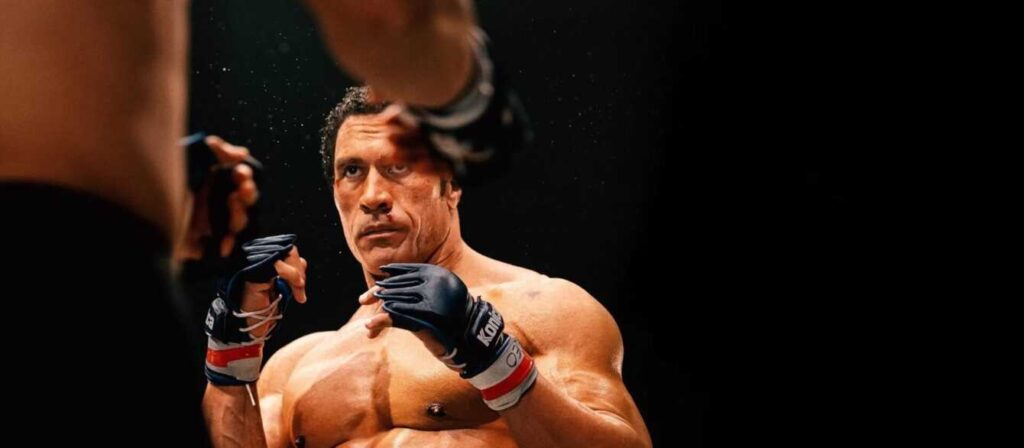
One of the film’s boldest choices is its casting of Dwayne Johnson as Mark Kerr. Known worldwide for his heroic on-screen roles, Johnson is nearly unrecognizable beneath layers of makeup and prosthetics. This transformation strips away his celebrity to reveal a far less certain, more broken figure. As Kerr, Johnson brings a reserved, stoic energy. We see flashes of barely controlled rage alongside moments of almost childlike vulnerability. By downplaying the expected heroics, Johnson makes Kerr’s conflicts painfully real.

Sound plays an equally crucial role in shaping the movie’s uneasy atmosphere. Safdie opts for a raw, shifting mix of pop music, rock music, and jazz. These offbeat musical selections leave the viewer with a taste of the disorientation and fragmentation that occupy Kerr’s daily life. The recipe never quite allows the audience to feel a sense of closure. The music holds us in an emotional limbo, underscoring the reality that even the greatest athletic success can mask deeper fissures.
In tracing Kerr’s journey, the narrative roots itself firmly in the rough-and-tumble world of 1990s MMA, before the sport’s rise to international spectacle. This era is far removed from today’s carefully branded events. Instead, the film immerses us in the atmosphere of grungy gyms and chaotic, loosely regulated bouts. Kerr’s battles happen in the corners and undercurrents of a world that is both thrilling and intensely lonely. Moreover, there’s a special focus on the sport’s beginnings in Brazil and its crescendo in the raucous Pride Fighting Championships of Japan.
The film immerses us in the atmosphere of grungy gyms and chaotic, loosely regulated bouts.
Against this ragged backdrop, Kerr’s career is depicted as a churn of hope and disappointment. In one significant scene, his opponent flagrantly breaks the rules, but rather than being awarded the win, Kerr gets a “no decision,” echoing the sense of frustration that is prevalent in his journey. These moments are not overdramatized. Instead, they are woven into the film’s fabric as everyday realities. Kerr’s spiraling struggles with prescription drug painkillers soon follow, and the film treats his addiction not as a neat cautionary tale but as a continual fracture.
The depiction of Kerr’s relationship with his girlfriend Dawn, played by Emily Blunt, is another layer where the film distinguishes itself. Their exchanges are raw, unfiltered, sometimes loving and sometimes destructive. Dawn is not simply a side character; she is rendered as someone navigating her own turmoil, and her presence on screen grounds the story in moments of vulnerability.


Kerr’s friendship and rivalry with fellow fighter Mark Coleman, embodied by real-life MMA athlete Ryan Bader, further shade in the film’s emotional landscape. Unlike other sports stories that build toward an inevitable, dramatic showdown, their relationship is instead defined by steady tension and mutual endurance. There is no climactic moment of resolution. Bader’s somewhat wooden screen presence actually works in this context, reinforcing the film’s commitment to an unscripted, documentary realism.
Unlike other sports stories that build toward an inevitable, dramatic showdown, there is no climactic moment of resolution.
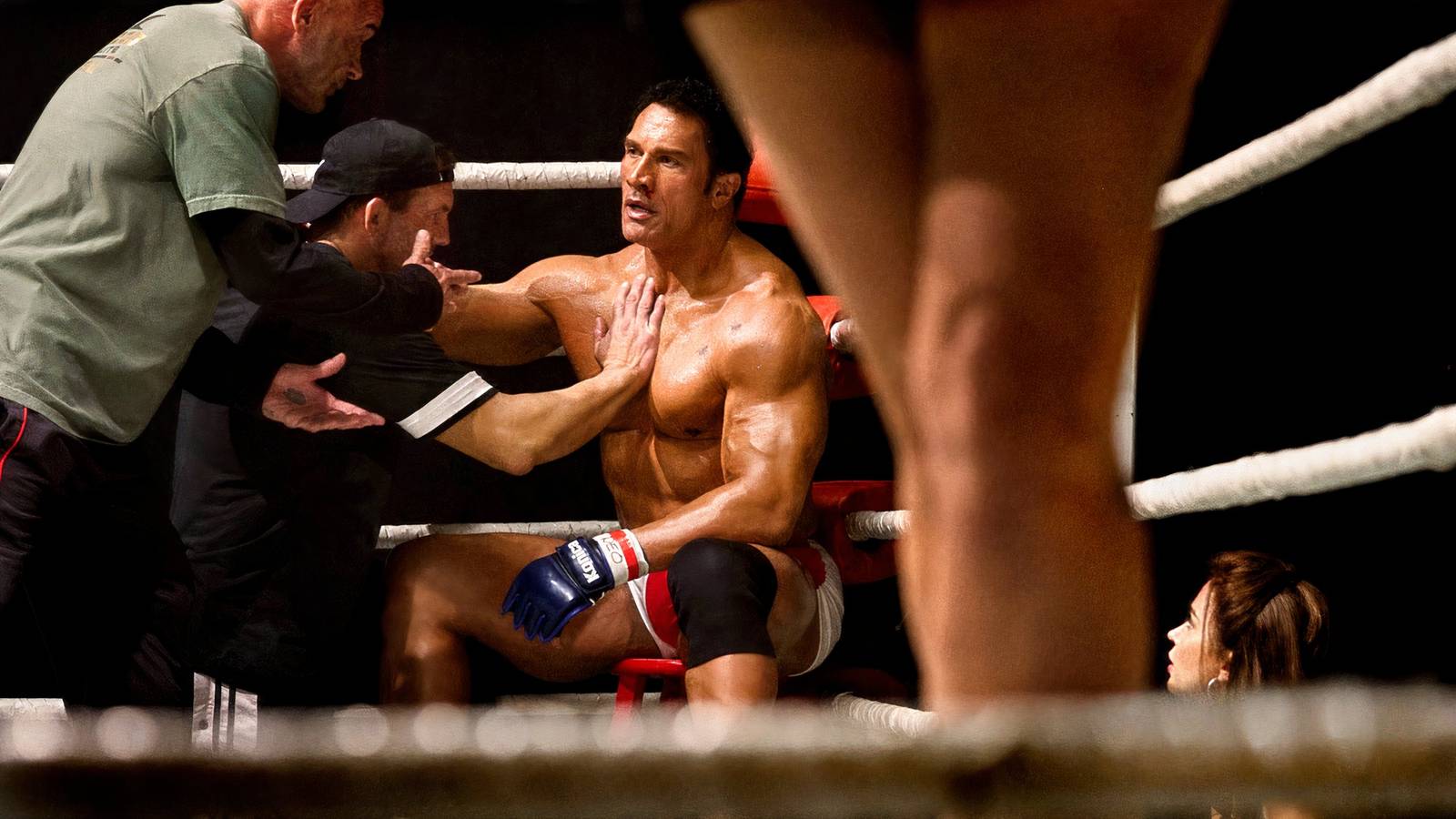
Fatalism and fragility run through the film. A key moment comes when Kerr, after a controversial defeat, angrily confronts a sponsor before collapsing in tears backstage. The film refuses to cloak this scene in stoicism. What is usually masked by toughness and bravado instead becomes an open wound, redefining our expectations of masculinity and athletic resilience.
Throughout, Safdie blurs the boundaries between fiction film and documentary. The film mixes scripted scenes with brief, unscripted interludes featuring true MMA figures like Bas Rutten. Locations are rendered without embellishment: cramped apartments, faded training rooms, anonymous hotel hallways. Nothing is staged for beauty or sentimentality. Even the violence feels abrupt, stripped of stylized moves or slow motion drama. The director draws us further into Kerr’s world—one where the line between performance and reality is always blurred.
Stylistically, the rhythm shifts—sometimes abruptly—from bare, documentary-style sequences to moments of stylized unease. Dialogue is pointed and spare. These choices challenge viewers: patient engagement is rewarded, but the film refuses to offer the kind of smooth, escapist entertainment typical of its genre.


The film’s daring, understated approach has divided viewers and critics. There are those who expected a rousing, action-driven ride and who found the movie’s pacing slow or even dull. Yet there are also many who praise the seriousness of Johnson’s performance, and admire the film for its willingness to linger on hard, unresolved truths.
Significantly, the movie resists the temptation to wrap up Kerr’s journey with a neat conclusion. Fights rise and fall, domestic disputes ignite and recede, but payoff is always elusive. The film closes not with a triumphant march or a dramatic defeat, but with low-key footage of the real Mark Kerr quietly living far from the spotlight. This ending makes clear that some wounds do not heal; there is a lingering ambiguity that unsettles. It calls attention to the ways in which the public narrative can obscure the complex, unresolved burdens they bear in private.
Ultimately, The Smashing Machine emerges not as a story about victory or greatness, but as a study of the ways in which myth and humanity collide. In showing Kerr’s pain, addiction, and emotional emptiness, the film calls attention to the sacrifices and invisible wounds tucked beneath every sporting legend. Its honest, often uncomfortable perspective urges us to reconsider the ways we construct and consume the stories of our heroes. This is not simply a biography but a quiet, sometimes devastating critique of the spectacle of fame itself.