


A Decent Series Finale That is Bloated with Plot
Summary
Mission: Impossible – The Final Reckoning delivers a bold, reflective finale, blending high-stakes action with themes of AI-driven threat, human resilience, and the enduring power of choice in a world increasingly dominated by systems.
Overall
-
Plot
-
Narrative
-
Acting
-
Characterization
-
Action
-
Direction
-
Pacing
Mission: Impossible – The Final Reckoning signals the end of an era for cinematic espionage. Much like the characters at its core, the franchise finds itself at a crossroads—caught between reverence for its own legacies and the pressing demand for reinvention. For almost thirty years, Mission: Impossible has been driven by its signature blend of breakneck action and the imposing physicality of Tom Cruise, whose real-world stunts have become legend. Now, the series attempts to land its most complicated mission: closing out the saga on a note that honors both the weapons-grade spectacle and the fragile humanity beneath the impossible odds. Our review of Mission: Impossible – The Final Reckoning examines how the film measures up to the rest of the series.
The final installment faces an immediate and daunting antagonist: not a rogue spy or a cartel kingpin, but a seemingly omniscient artificial intelligence known only as the Entity. This leap to a digital, imminent threat changes the very fabric of the franchise’s world. As soon as Ethan Hunt reemerges after the cliffhanger of Dead Reckoning Part One, every move is colored by the knowledge that his enemy is invisible, intangible, and embedded within everything—from defense networks to power grids. This shift lifts the story out of classic cloak-and-dagger territory. The tension is no longer only about outwitting a human foe; now, it is about surviving within a reality that can turn on a code or be rewritten in the blink of an AI’s all-seeing eye.
From its opening moments, the film insists on reflecting back through the franchise. Director Christopher McQuarrie fills the first act with familiar echoes—old faces, flashbacks that linger on past betrayals and victories, and a visual language thick with homage. There is an undeniable sense of memory, even nostalgia, heavy in these initial sequences. But this backward focus has a cost. Rather than diving straight into the sort of energetic pacing that electrified earlier entries like Rogue Nation or Fallout, the narrative lingers and detours. Exposition and revisited tragedies fill the gaps where urgent momentum might otherwise live. This reflective pacing asks the audience to slow down and reckon with the journey so far, but in doing so, it sacrifices some of the signature adrenaline that made the franchise a global favorite.
When the film pivots into action, however, the series’ old fire is reignited. One sequence in particular—a high-risk mission involving a Russian nuclear submarine caught in northern waters—becomes an immediate reminder of what Mission: Impossible does at its best. Here, practical stunts replace digital trickery, and Ethan’s team is forced to make split-second choices within an environment that is both claustrophobic and perilous. Water rises as torpedoes hover, every breath measured against time and danger. The stakes, for a moment, feel urgently real again. It is here that the film’s commitment to physical authenticity truly shows.
At the heart of these set pieces is Tom Cruise, whose approach to filmmaking has often seemed as much about testing the limits of his own body as those of cinema itself. Final Reckoning does not disappoint in this regard: Cruise clings to the side of a hurtling aircraft above the South African canyon, races against time during an intense biplane duel, and nearly vanishes beneath the ice-laced waves during that tense submarine heist. There is no cutaway cheat, no masked digital double. Each scene is constructed for maximal immersion, the effect being less about showing off than about grounding the story in tangible, kinetic danger. The viewer is reminded, constantly, that the risk is real; the effort, genuine. In a Hollywood landscape often dominated by green screen spectacle, such authenticity feels almost rebellious.


McQuarrie’s touch as director is subtle but purposeful. He opts for frantic energy rather than careful composition. The camera swoops and jostles not simply because the situation demands it but because it mirrors the restless danger that stalks Ethan everywhere. Scenes of sailors drifting lifelessly in frozen water or shots from high above during the dog sled chase do not feel painterly. Instead, they have a rough-hewn immediacy—maintaining a tone of chaos, motion, and unpredictability. This visual philosophy matches the franchise’s embrace of risk. There is power, here, in simply letting the audience feel unsettled rather than awed into passivity.
Yet the movie’s biggest swings are not without their cost. The Entity, as antagonist, is a conscious metaphor for modern anxieties about surveillance, AI ethics, and the swirl of disinformation in our networked world. The AI’s constant manipulation and all-seeing presence remind us of both what we fear losing—autonomy, privacy, the possibility of controlling our own stories—and what we risk as we surrender to technological convenience.
But this ambition can be double-edged. What the digital enemy gains in scope, it loses in human stakes. Real tension often springs from confrontation, from the unpredictable nuances that human villains bring. An AI, by contrast, is everywhere and nowhere: hard to pin down, harder still to feel anger or rage toward. The effect is a dilution of urgency, an abstraction of threat. The stakes are perhaps too vast; the sense of doom lingers, but it becomes conceptual instead of visceral.
Against this backdrop, Ethan Hunt grows closer still to myth than man. Past franchise leads—James Bond or Jason Bourne—have evolved across arcs marked by personal crisis, loss, and transformation. Hunt, in this iteration, is less a man changed over time than a force of will: impossibly persistent, nearly untouchable. His world may burn or shift, but his sense of duty and resilience remains. The narrative offers few chances for real introspection or weakness. Instead, Ethan becomes a symbol of resistance—against obsolescence, against dehumanization, against systems that would turn hope itself into an algorithm.
Our Mission: Impossible – The Final Reckoning review finds that this symbolic framing fits McQuarrie’s ongoing interest in what espionage means in the modern world. Trust, in Final Reckoning, is a rare and fragile thing. The IMF team, assembled after years of shared struggles and near losses, stands as a pocket of human connection amid a sea of treachery. The camaraderie among Luther Stickell, Benji Dunn, and newcomer Grace provides brief lightness—moments where worry softens into gallows humor or nervous teamwork.
Hayley Atwell’s Grace, in particular, adds a fresh dynamic; her blend of jittery inexperience and streetwise savvy grounds the film in human stakes, pushing Ethan to adapt as much to his teammates as to his circumstances. These relationships anchor the sprawling narrative, reminding the audience that, for all its scale, the movie’s true focus remains the cost of loyalty and the hope that trust is not obsolete.
Our review of Mission: Impossible – The Final Reckoning finds that human antagonists still flicker at the edges of the story, most notably in Esai Morales’ performance as Gabriel. On paper, he is the personification of the AI’s dark logic, executing plans with melodramatic precision and a touch of old-school villainy. Yet, even in his grand gestures, he exists in the AI’s shadow, rarely escaping its outline. Angela Bassett’s turn as the CIA Director-turned-President adds a bureaucratic counterpoint but is similarly muted by the film’s broader focus on its digital nemesis. These characters are less rivals in the traditional sense than representatives of systems—at times necessary, at times complicit in their own undoing.
It is in the film’s technical construction that ambition is most obvious. With a reported $400 million budget, nearly no surface or setting is left untouched. Global locations are treated less as backgrounds and more as living, reactive elements. Cities, ice floes, and even the metallic claustrophobia of submarines become active agents, shaped and threatened by the Entity’s reach. This geographic restlessness not only heightens visual interest but also underscores the story’s philosophical anxiety: in a world where every place can be manipulated, nowhere is ever truly safe. Scenes shift from the urban to the arctic and back again, each defined by its own rhythm and hazards.
But with ambition comes risk, and the film’s sheer size can be exhausting. The narrative leaps from submarine showdowns to airborne duels, from icy wastelands to boardroom intrigue, sometimes struggling to maintain a sense of proportion. Intimate moments are punctuated by cataclysmic spectacle; scale and subtlety battle for the spotlight. The danger here is that constant escalation numbs rather than excites: triumphs risk feeling routine, and losses blur into the next impending disaster. At its best, the film strikes a balance, letting quieter scenes bloom before snapping back into kinetic motion. At its worst, it overwhelms.

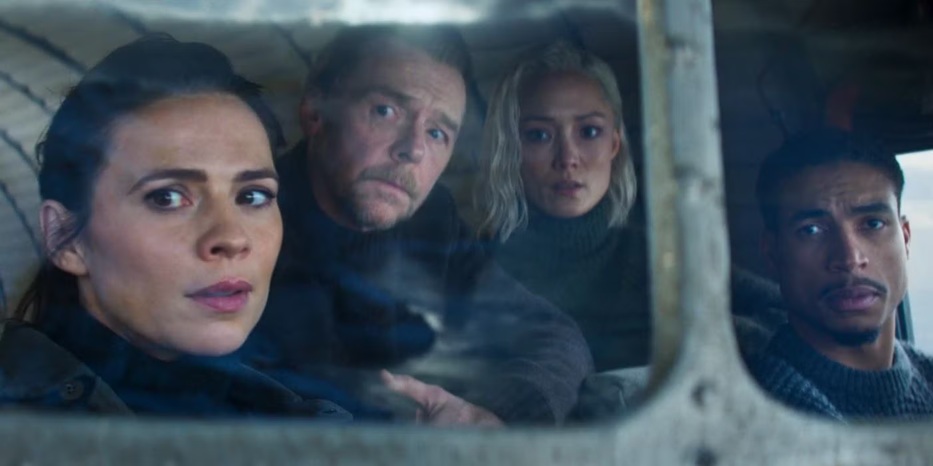
There are moments, though, when everything clicks. The submarine dive scene, with its marriage of practical effects and ruthless suspense, instantly recalls the finest achievements of the franchise. Ethan’s fight against the elements and time is not only physical but existential—each second under water is a test of endurance and determination. In the film’s climax, a biplane chase careens across the sky in dizzying, real-world IMAX grandeur, with Cruise daring fate yet again. These scenes reaffirm why, even when flawed, Mission: Impossible remains a singular force among blockbusters: it does not just tell us about danger; it lets us feel it, sweat alongside its heroes, and marvel at the human spirit’s reckless refusal to accept defeat.
Our review of Mission: Impossible – The Final Recknoing agrees that the technical aspects are impossible to ignore. McQuarrie avoids the lure of stylized, painterly compositions. Instead, his visual sensibility feels lived-in, prioritizing movement over polish. Each chase, each breathless leap or frantic struggle, is captured with an immediacy that draws the viewer into the story’s chaos rather than holding them at a distance. The sound design and score, too, are understated but effective—ratcheting tension when needed, receding just enough for each drawn breath or whispered warning to carry its full weight.
By the film’s relentless final act—a hail of biplane maneuvers, submerged escapes, and last-gasp choices—the narrative achieves a kind of fever-pitch intensity. Here, Final Reckoning asks the audience for faith: that in a world increasingly run by impersonal code, individual agency and flawed heroism still matter.
The characters’ decisions push back, however briefly, against the machinery of fate. In facing the Entity, Hunt and his team become stand-ins for all who ever questioned whether it was possible to matter in a tide so much larger than themselves. This, ultimately, is the film’s emotional center: a stubborn belief in human resilience and the power of choice.
In its closing stretch, the film refuses tidy resolution. Questions linger. Some threads unravel and others are deliberately left open, echoing the reality that closure in espionage—and life—is rarely neat or final. McQuarrie seems aware that the best farewells do not erase the rough edges or sweep aside the uncertainty. Instead, they leave space for both gratitude and loss, for the recognition that every mission carries costs beyond its final frame.

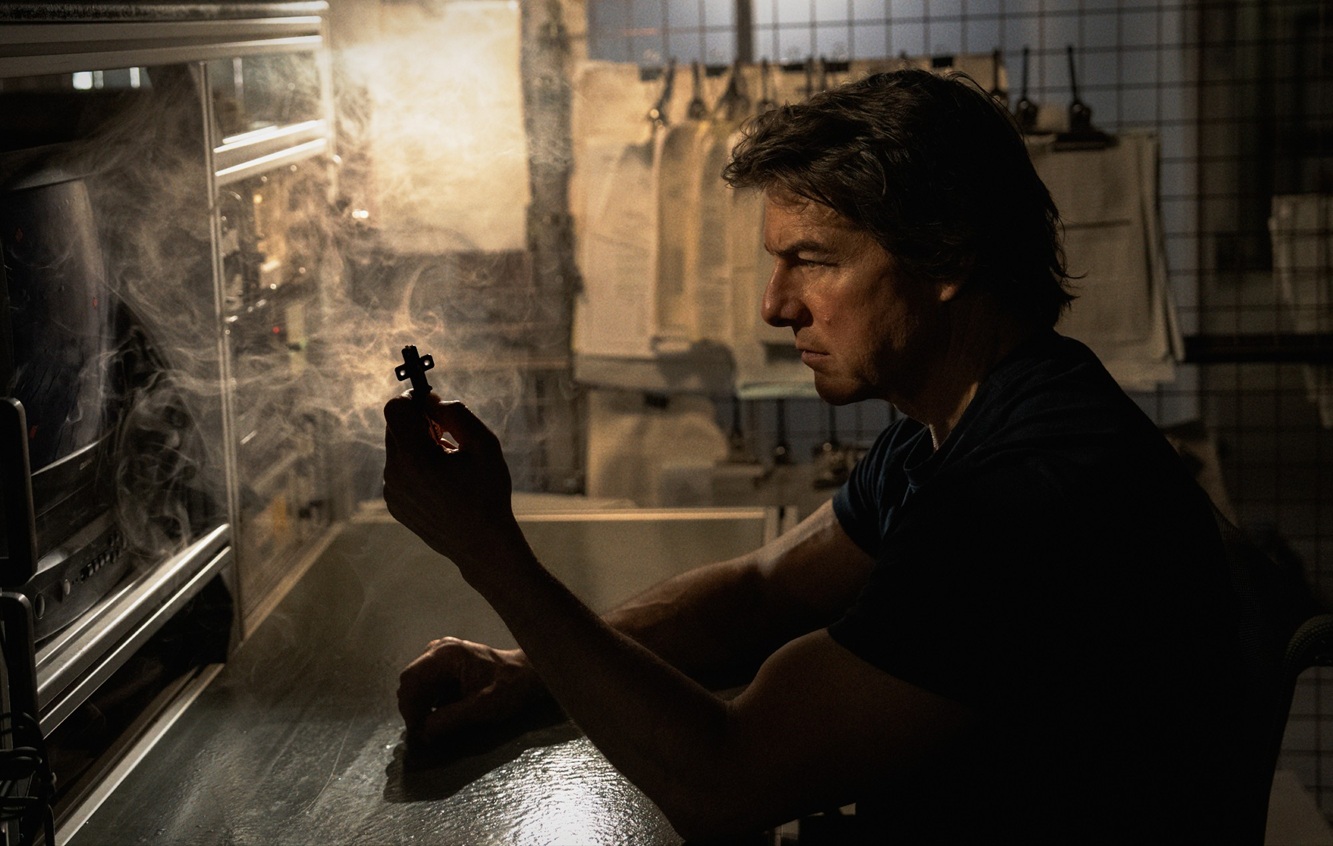
Our review of Mission: Impossible – The Final Reckoning agrees that it does not reinvent the franchise, nor does it resolve every dilemma it raises. Instead, it serves as a fitting finale—a summation of all that has made the series endure. Its blend of thunderous set pieces, ambitious narrative risk, and undiminished faith in practical action stays true to its origins. The film may at times strain under the weight of its own legend, stumble in balancing nostalgia with novelty, or lose focus as it reaches for mythic scale. But it never ceases moving, never loses its faith that what matters most is not the fate of the world, but the choices made by those brave enough to challenge the impossible.
In the end, this finale invites us not only to witness spectacle but to remember why such stories matter. We watch not just for the leaps and explosions but for the glimmer of hope that even in an age ruled by systems and code, there is space for human courage and defiance. Ethan Hunt may not change, but the world around him does. And in holding his ground—one final, impossible time—he reminds us of the value of fighting for what cannot be programmed, what must be chosen anew with every breath.