





Summary
The Blood of Dawnwalker is an ambitious, dark gothic role-playing game that follows Coen of Laslea, a peasant who becomes a hybrid human-vampire after his family is abducted by the vampire lord Brencis.
Overall
-
Narrative
-
Visuals
-
Replayability
-
Gameplay
The Blood of Dawnwalker begins with tragedy. Coen of Laslea is a peasant living in Vale Sangora, a Carpathian region already crushed by feudal rule. His life changes when the vampire lord Brencis attacks his village and takes his family. Coen attempts to rescue them, but the plan fails. He survives only by becoming something new.
By day, Coen is human. By night, he is a vampire.
That change shapes nearly every part of the game. Human Coen uses swords, witchcraft, medicine, and food. Vampire Coen moves faster, fights more fiercely, feeds on blood, and gains supernatural powers. He can climb walls, turn into a wolf, travel as smoke, and heal by feeding on enemies. Neither side of his identity feels entirely safe or comfortable.
Coen has 30 days to save his family before Brencis holds a coronation and tightens his grip on the region. This deadline makes the game more than a traditional open-world role-playing game. Every day brings choices. Every quest competes for Coen’s time. Every person he helps may cost him another chance to act.
The result is a dark, thoughtful vampire RPG. The Blood of Dawnwalker is not flawless, but it has a clear identity. Its strongest ideas explore time, transformation, and the difficult choices involved in trying to save people in a world that will not wait.
The 30-day limit is the game’s defining feature. After the opening, Coen must decide how to spend the time before Brencis’ coronation. He can investigate the vampire lord’s lieutenants, help local communities, find allies, develop his abilities, and search for a way to reach his family.
Each day contains 16 time units. Major quests, investigations, training, and certain story events use them. Before an action advances the clock, the game warns the player. This makes it clear when a choice will cost Coen time.
Simply exploring does not usually move the clock forward. Coen can travel through forests, search abandoned homes, gather medicinal plants, fight animals, and examine ruins without losing days. The calendar feels less like a punishment and more like a resource. Players can explore freely, but important actions require thought.
This creates steady pressure. In many open-world games, side quests wait until the player chooses to complete them. Here, that is not always the case. If Coen ignores someone, their situation may change without his help. A character might leave, die, turn against him, or never appear again.
In many open-world games, side quests wait until the player chooses to complete them. Here, that is not always the case.
Players who want to see everything in one campaign may find this frustrating. The game makes it clear that a single playthrough cannot include every quest or character. Some storylines end because Coen chooses another path. Some people never become allies. Choices made early can also close off certain multiple endings.
This suits the game’s central theme. Coen is constantly deciding what he is willing to sacrifice. His vampirism threatens his humanity, while the calendar encourages him to rank people by importance. The game does not offer easy answers, but it asks difficult questions often.
Coen’s transformation is more than a story detail. It changes how he fights, travels, explores, and deals with the world.
The two forms have separate skill trees and equipment setups. Players can shape each one differently. Human Coen might become a careful swordsman who favors defense and practical spells. Vampire Coen might become a relentless hunter who heals through parries, feeding, and aggressive attacks.
Day and night also change exploration. During the day, Coen can move through settlements more easily, speak with ordinary people, visit merchants, and investigate public spaces. Night brings greater danger, but vampire abilities can help him reach places that would otherwise be difficult to access.


Some actions are only available at certain times. A ritual might require Coen to be human, while his supernatural movement makes a nighttime journey faster. Players must consider not only what to do, but when to do it.
The game also has a bloodlust system. During conversations, Coen may have the option to give in to his hunger. When he is injured or has not fed recently, it becomes harder to resist. In extreme cases, Coen can lose control and kill someone important to a quest.
This is one of the game’s best ideas. A conversation can suddenly become dangerous. Feeding on the wrong person may cost Coen an ally, destroy a source of information, or end a quest. His hunger is not simply another power. It is a threat.
However, the game does not take this idea as far as it could. Animals and ordinary enemies provide easy sources of blood, while upgrades and passive skills further reduce the danger. Bloodlust is memorable, but experienced players rarely need to fear it.
The world’s reaction to Coen’s powers is uneven, too. In some quests, his identity has serious consequences. Elsewhere, he can use supernatural abilities near people without causing much fear or suspicion. His divided nature matters, but the people around him do not always respond convincingly.
Even so, the day-night cycle system is the game’s greatest success. These are not merely different lighting conditions or enemy schedules. They change Coen’s movement, combat abilities, healing, and access to the world.
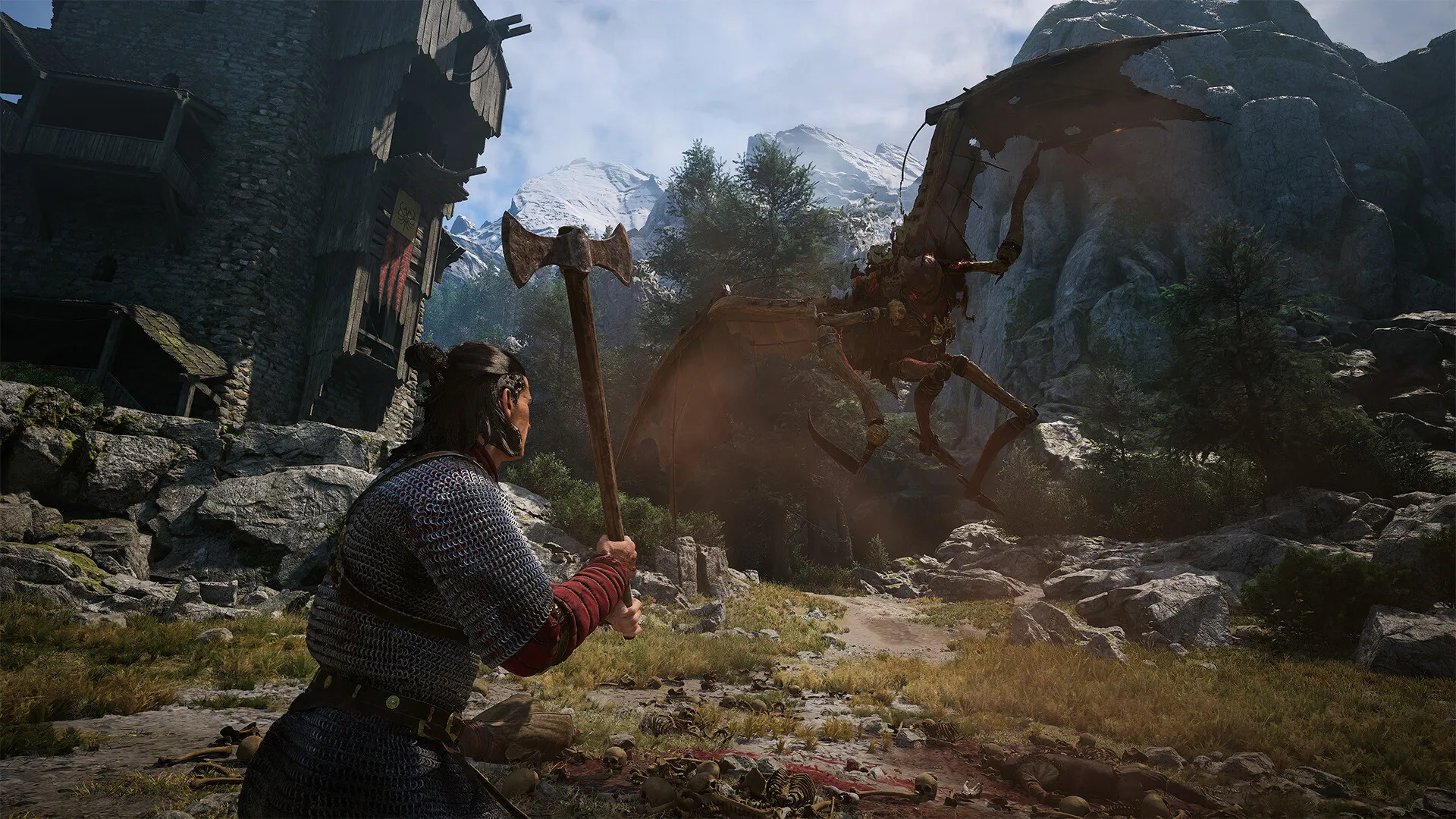
Combat is about reading enemy attacks and defending in the right direction. Enemies signal where their strikes are coming from, and Coen must block in that direction to parry successfully.
A good parry leaves an enemy open and can restore stamina. A regular block also works, but it uses stamina and offers less reward. Players who block every attack will tire quickly. Those who learn to read their opponents can stay on the offensive.
The system takes time to learn. Early battles can feel awkward, especially when several enemies surround Coen. Direction matters more for defense than for attacking, and some enemy moves are not as clear as they should be. Once players understand the rhythm, however, fights become satisfying.
Direction matters more for defense than for attacking, and some enemy moves are not as clear as they should be.
Many battles feel like duels. Coen waits for an attack, turns toward it, parries, and counters. Special abilities charge during combat and can be used at the right moment. Groups make this harder because enemies can strike from the sides or behind.
Human and vampire Coen use different resources, but they share many of the same combat basics. Both rely on parries, counters, stamina, and abilities with cooldowns. But Vampire Coen has more ways to heal and deal damage. Human Coen must manage medicine and food more carefully.
This creates an imbalance. As a vampire, Coen can become extremely powerful. With the right upgrades, he can heal through attacks, recover from parries, and feed often enough to keep fighting. Human Coen remains more fragile, especially in larger battles. Players may start waiting for night before taking on difficult encounters.
The difficulty settings help. Players can adjust combat and role-playing settings separately. These options change parry windows, enemy damage, stamina costs, and healing. Higher difficulties make battles tougher without simply turning enemies into damage sponges.
There are still technical frustrations. Lock-on targeting can behave poorly when several enemies are nearby. The virtual camera sometimes gets trapped behind scenery, and hit detection can feel unreliable. Wildlife also appears too often. Wolves and wild boars can become interruptions rather than meaningful threats.

The campaign centers on Brencis and his three lieutenants. Each controls a different part of the vampire regime. One may oversee military recruitment, another blood collection, and another the control of local people.
Players can pursue the lieutenants in different orders. Coen can investigate their operations, uncover their weaknesses, meet their allies, and decide whether to kill them or exploit their rivalries.
The writing is strongest when it avoids making the conflict simple. Brencis is cruel, but he is not merely a monster without reason. He believes vampire rule can bring order to a region already suffering under human nobles. His methods are horrifying, but his argument is not entirely without logic.
The supporting characters are just as complicated. Anca, a kind witch who teaches Coen magic and Latin, brings warmth to the grim setting. Crake, a rebel leader, is willing to commit terrible acts for the resistance. Lacra, a vampire ally, can be helpful while displaying casual cruelty.
Many quests offer choices with no clear right answer. Poisoning a lieutenant may require harming an innocent person. Convincing a soldier to abandon his post could make a later fight easier but put his family at risk. The rebels may be as willing to sacrifice ordinary people as the rulers they oppose.
Many quests offer choices with no clear right answer. Poisoning a lieutenant may require harming an innocent person.
These decisions give the story emotional weight. Coen wants to save his family, but the world keeps asking him to help others. The political conflict and personal tragedies across Vale Sangora can become as compelling as the rescue mission.
Coen himself is less developed than some of the people he meets. He can seem stiff beside the more expressive supporting cast. His family also receives less depth than many of the game’s allies and enemies. Still, the wider cast provides enough human conflict to keep the story moving.

Vale Sangora is bleak but beautiful. Misty forests, ruined villages, mountain roads, abandoned settlements, caves, and vampire fortresses create a strong gothic atmosphere.
The region is especially striking at night. Moonlight, fog, fire, and darkness make familiar roads feel dangerous. Even a simple journey can become unsettling when enemies hide among the trees or the remains of a blood-collection camp appear along the way.
Environmental details tell their own stories. Abandoned homes show how ordinary lives have been destroyed. Villages reveal how vampire rule has changed the way people work and survive. Camps and fortresses expose the systems of power that keep the region under control.
The visuals also support the story’s themes. Vale Sangora is shaped by disease, war, poverty, and authority. The vampires did not create every problem, but they found a damaged society and built their own system on top of it.
The PlayStation 5 version offers Quality, Performance, and Balanced modes, targeting 30, 60, and 40 frames per second, respectively. Performance mode is the best choice for combat, where smoother movement helps with parries and quick reactions.


The Blood of Dawnwalker is an ambitious vampire RPG with a strong sense of purpose. Its 30-day calendar makes time matter and forces players to accept that one campaign cannot include everything. Its day-and-night system gives Coen’s transformation real importance, while combat rewards patience, timing, and careful defense.
Some parts work less well. Bloodlust is easier to control than it should be, and the world does not always react strongly enough to Coen’s vampirism. Technical problems and frequent wildlife encounters also break the mood.
Still, the game’s best ideas are powerful. Vale Sangora feels like a place where every decision has a cost. Its characters are often complicated, its political conflict is rarely simple, and its story understands that helping one person may mean failing another.
The game also understands why players want to explore everything. It fills the world with tempting stories, then makes it impossible to experience them all at once. That choice may frustrate some players, but it gives each decision greater weight.
The result is a dark, beautiful, and often stressful RPG. The Blood of Dawnwalker does not make Coen’s journey easy, and it does not let players save everyone. In a world ruled by vampires, time may be the most dangerous enemy of all.