


Summary
Fallout Season 2 is an ambitious, visually stunning expansion that successfully brings the iconic ruins of New Vegas to life. Despite an overstuffed eight-episode structure that occasionally leaves subplots feeling rushed, the powerhouse performances ensure the wasteland remains one of the most compelling settings on television.
Overall
-
Plot
-
Acting
-
Cinematography
The second season of Fallout doesn’t narrow its focus or simplify what it wants to do. It expands into new parts of the wasteland, deeper into the franchise’s history, and closer to the gravitational pull of the games. The Mojave, in particular, hangs over the season like a promise.
That ambition often pays off: the world feels bigger, the stakes feel louder. The show feels more confident about what kind of adaptation it wants to be. Season Two is an upgrade in scale. It adds more locations, more political conflict, more pre-war connections, and more iconic institutions. In many scenes, that expansion is exciting. The show suggests that history is moving under the characters’ feet.
Following the explosive revelations of the first season, this season shifts its gaze toward the neon-drenched ruins of New Vegas. The story picks up with Lucy MacLean and the Ghoul forming an uneasy alliance as they trek across the Mojave Wasteland. Their mission remains centered on uncovering the deep-rooted conspiracies of Vault-Tec and finding Lucy’s father, Hank, who has fled toward the iconic desert strip.

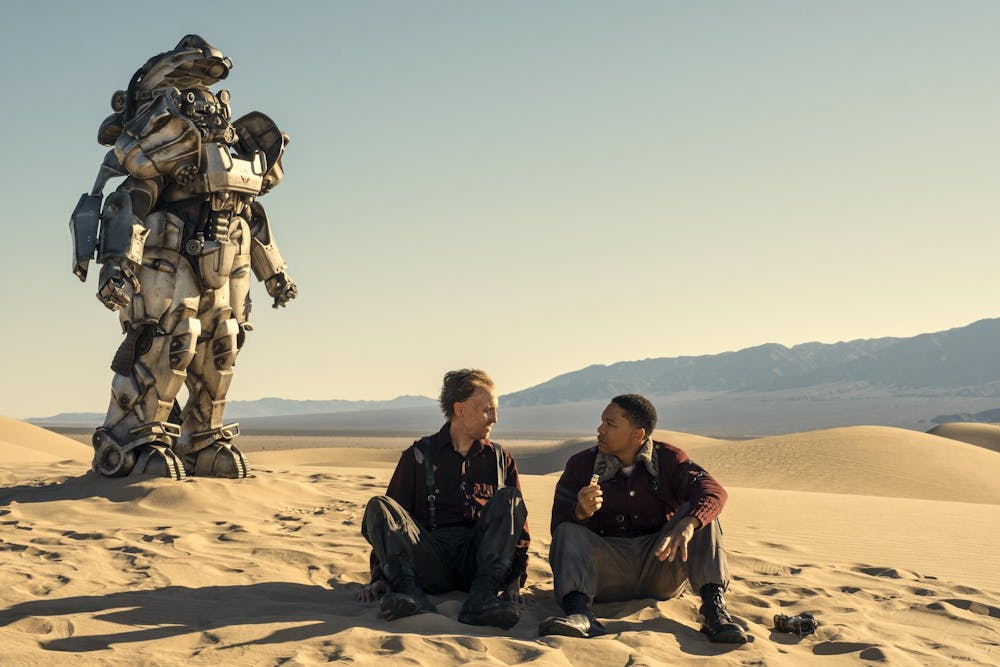
Meanwhile, the power dynamics of the surface world are in total flux. The Brotherhood of Steel, now bolstered by newfound technology, attempts to tighten its grip on the region. Around this time, remnants of other factions emerge from the shadows to claim the Mojave’s resources. As Lucy grapples with the dark truth of her heritage, Maximus faces a crisis of conscience within the Brotherhood’s ranks.
Fallout Season One ends with Norm trapped in Vault 31, surrounded by cryogenically preserved Vault-Tec personnel. They’re living artifacts of the corporate ideology that helped shape the end of the world. It’s a fantastic premise. Fallout Season Two starts as if it understands that potential. Norm navigates a dangerous social game. He has to pretend he belongs among people who represent the rot under everything he was taught to trust.
Norm navigates a dangerous social game. He has to pretend he belongs among people who represent the rot under everything he was taught to trust.
Lucy remains the emotional center of Fallout. Her mission is clear: find her father and bring him to justice. Fallout Season Two gives her some of its strongest material, especially when she’s forced into direct confrontation with her father’s ideology. Her conflict is still compelling: compassion versus coercion, love versus refusal, optimism tested against systemic cruelty.
Maximus may benefit the most from the season’s expanded ambition. Fallout Season One often positioned him as a pawn inside the Brotherhood’s myth. Fallout Season Two turns him into a symbol. The show gives him depth by returning to what shaped him, without flattening him into generic trauma. His story becomes about what remains when institutions strip a person down.
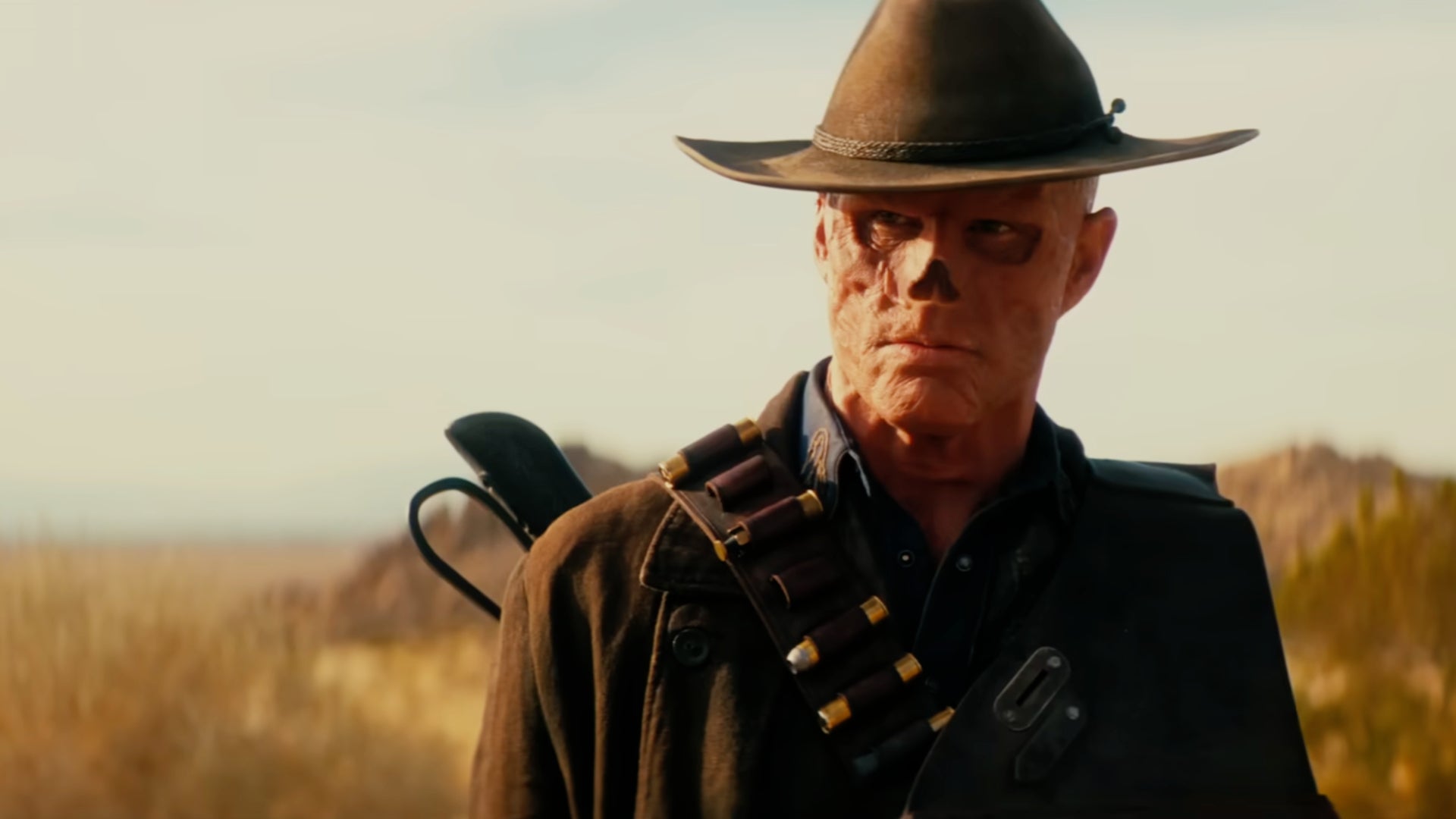
Cooper remains the character who most reliably turns Fallout lore into something human. Walton Goggins continues to play the Ghoul as both brutal survivor and the show’s most honest voice. He understands the world’s joke because the joke has been carved into him. His storyline is dense, but it’s also the one that best justifies the season’s heavy use of pre-war material. For Cooper, the past isn’t background–it’s motive.

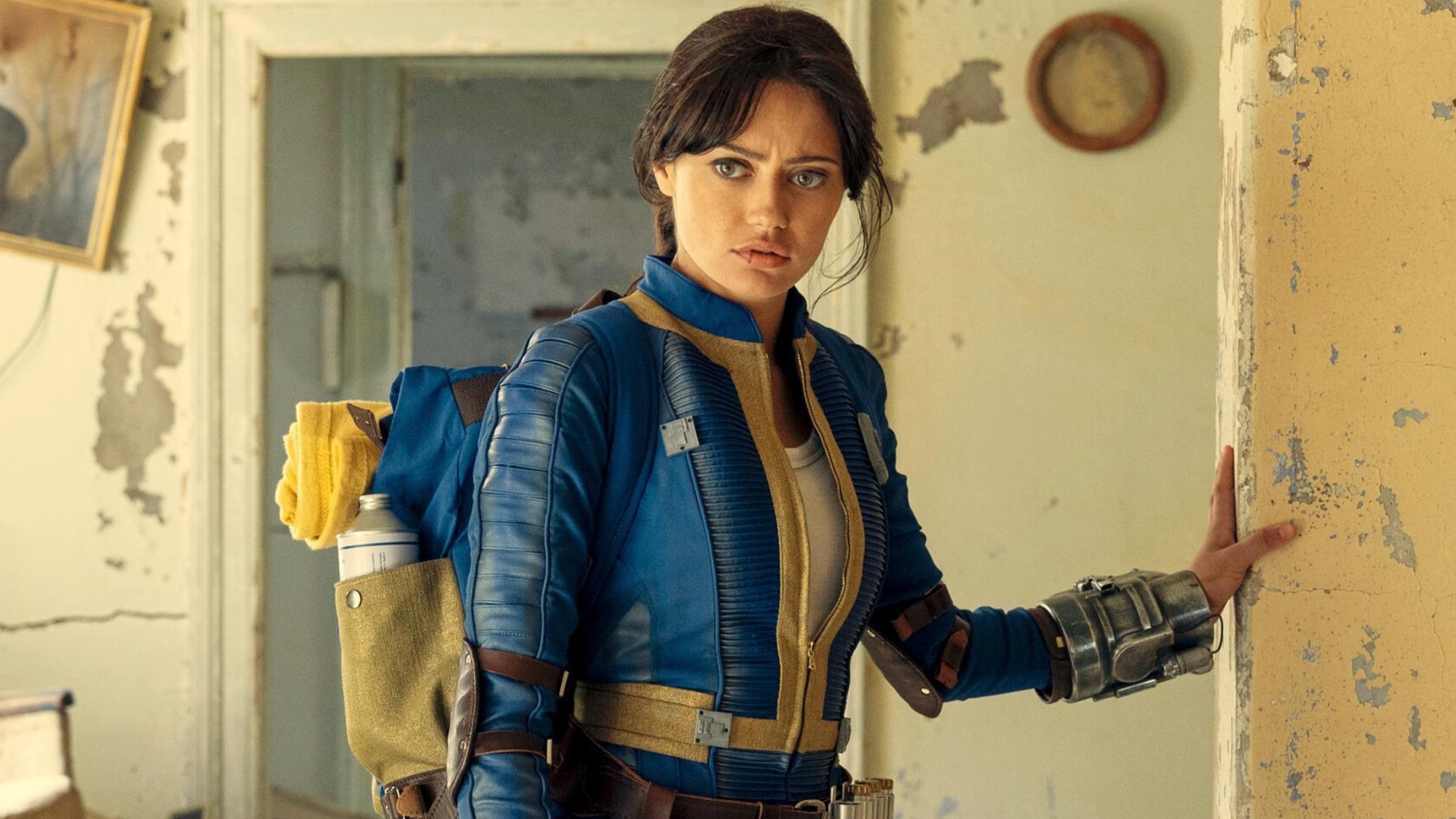
Visually and tonally, the show matches expectations. The production design stays strong. The wasteland looks lived-in, not staged. It’s sun-bleached, grimy, and darkly funny–the show still knows how to let absurdity puncture brutality in that specific Fallout way. The violence remains sharp and physical. The Mojave isn’t just fan service. It becomes a setting that naturally raises bigger questions: Who gets to rebuild? What kind of order is worth the cost? How often is “peace” just another name for control?
Still, New Vegas comes with baggage. The show has to reference recognizable factions and figures without treating them as sacred relics. It also can’t reduce them to quick jokes. Fallout Season Two walks that tightrope unevenly. Some elements land with real presence. Others feel like they exist mainly to signal that the franchise’s larger board is now in play.
At times, the tone leans so comedic that it risks weakening the factions that need to feel dangerous. This season wants to be heavier and funnier. That combination can work; it just requires discipline. When a militarized force becomes too much of a punchline, later stakes struggle to feel real.
At times, the tone leans so comedic that it risks weakening the factions that need to feel dangerous.
There’s also a mismatch between what the show promises and what it shows. The season keeps telling us that enormous conflicts are coming. A “big war” always looms, history is shifting. But the on-screen reality can feel smaller. Sometimes it looks like skirmishes between a few groups, not a crowded political wasteland. Some of that is likely down to production logistics, but it still affects the sense of weight. The narrative aims for a moving continent; the visuals sometimes feel like action along a few roads and inside a few key rooms.
However, the biggest structural issue is simple: eight episodes isn’t enough time for everything this season tries to juggle. Big ideas arrive quickly, and some are introduced without enough time to emphasise why they matter now. That can make the story feel less urgent for viewers who don’t already know the games. Even longtime fans may feel the impact soften. When every episode introduces another “major” piece of the universe, it becomes harder for any single revelation to feel definitive.
Eight episodes isn’t enough time for everything this season tries to juggle. Big ideas arrive quickly, and some are introduced without enough time to emphasise why they matter now.
By the end of Fallout season two, the board is set for something larger. Tensions rise in the Mojave. Major factions draw closer. New Vegas becomes an ideological center. The main characters split geographically, pointing the story toward multiple fronts.
The core trio still works. Maximus receives the clearest upgrade, and the Brotherhood material gains weight. Cooper remains the show’s best fusion of lore and character, grounding mythology in something personal and painful. Lucy’s confrontations, when the season fully commits to them, deliver the strongest emotional payoff.

At the same time, the season is overstuffed. It introduces threads faster than it resolves them. It withholds answers so often that it becomes a kind of noise. Several subplots entertain without paying off. The finale feels less like a conclusion and more like a pause.
Viewers have Fallout Season Three to look forward to, which still feels worth the investment because the foundation is strong and the characters remain vivid. The path forward is simply clearer now. Fallout doesn’t need to shrink its world. It needs to give its story room to breathe. It also needs to remember what the best wasteland narratives do: they aren’t defined by how much history they can reference. They’re defined by how cleanly they turn history into consequence.