


Summary
HBO’s IT: Welcome to Derry expands Stephen King’s universe, exploring Pennywise’s cyclical terror in 1962. Blending cosmic horror with social critique and an extraterrestrial origin, the series delivers slow-burning dread and intense psychological fear.
Overall
-
Acting
-
Cinematography
-
Plot
Stephen King’s IT has always cast a long shadow over the horror genre, skillfully blending themes of childhood innocence with a creeping, inescapable dread. When HBO announced IT: Welcome to Derry, expectations ran high, but so did skepticism. Instead of treading over old ground, the series enters new territory. It travels back decades before the Losers’ Club’s fateful encounter with Pennywise, crafting a story that is both an expansion and a reconfiguration of Stephen King’s nightmarish fictional town. Returning to Derry means re-examining its mysteries, revealing layers that are familiar and startlingly foreign. The result is a show that balances cosmic horror with grounded social critique, catering to a modern audience.
The first chilling moments set the tone for something different. The year is 1962, and the setting is rendered with a reserved confidence. A slow introduction tracks the new group of main characters—Marge, Ronnie, Lilly, Will, and Richie—as they navigate the patterns of small-town life. They are drawn with care, their hopes undercut by an atmosphere of unspoken threat. The non-linear storytelling technique, which jumps between 1962, 1935, and earlier, is more than a narrative flourish. It stitches together the idea that Derry’s terrors are not isolated, but cyclical, crawling through the town’s timeline. This repetition of evil is quietly unsettling, as each new tragedy echoes the ones that came before.

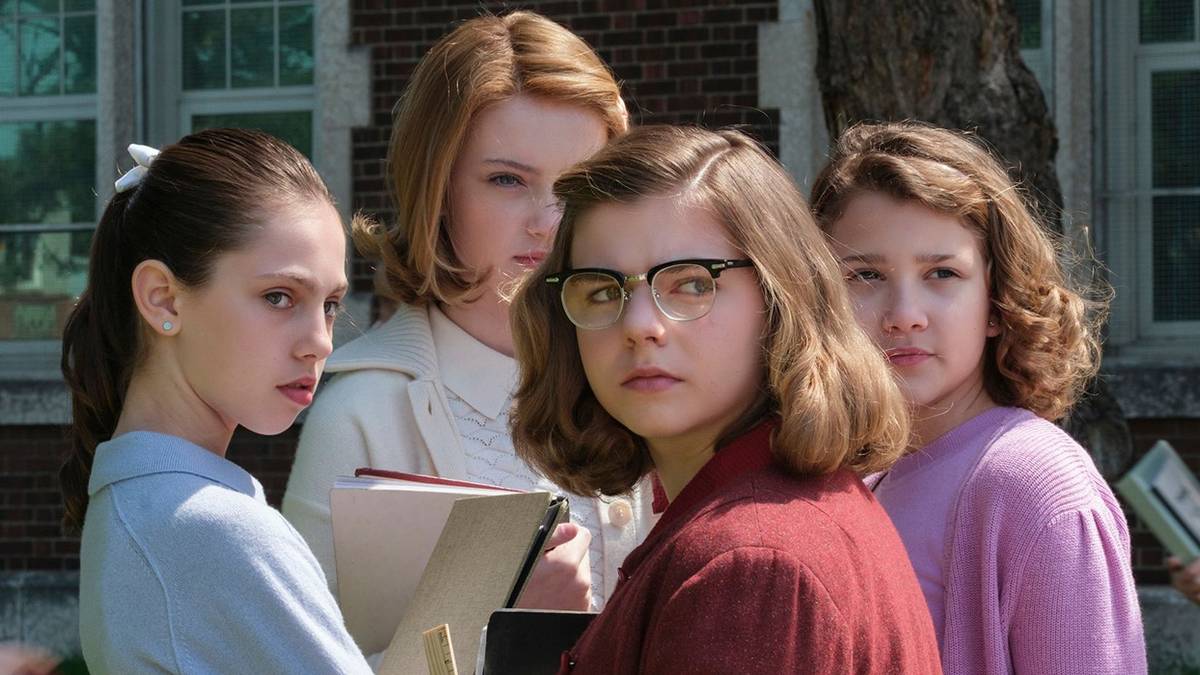
Where earlier adaptations centered on the Losers’ Club and climaxed with the ritual defeat of Pennywise, Welcome to Derry opts to follow a new band of children. Their stories are fresh but threaded with allusions. Throughout the series, viewers witness violent and abrupt losses. The show doesn’t shield its audience from the reality that evil, both supernatural and ordinary, spares no one. Death comes swiftly and sometimes randomly, lending each episode an unpredictability that keeps the viewer on edge.
The show doesn’t shield its audience from the reality that evil, both supernatural and ordinary, spares no one.
At the narrative’s center is Pennywise, now portrayed by Bill Skarsgård in a performance that dials down some of the garishness of earlier takes and leans into ambiguity. Here, Pennywise is less a monster lurking in the shadows and more a presence seeping into every crack of Derry’s existence. Skarsgård’s approach feels subdued and alien. He radiates a kind of otherness as a being that is both part of Derry and forever outside of human understanding. The result is a character who is as frightening when smiling in silence as when baring fangs. His performance anchors the series, shaping the fear as more psychological than physical.
But Welcome to Derry stands out not just for its cosmic terrors. The show uses Pennywise and the supernatural as only part of the larger threat. The true haunting of Derry lies also in the social realities of early 1960s America. The arrival of Charlotte and Leroy Hanlon—an interracial couple—pulls the town’s prejudices to the surface. Daily life is riddled with small and large acts of cruelty. Through these struggles, the series draws clear lines connecting Derry’s supernatural plague and its environment of hostility, distrust, and systemic racism. Authority figures such as teachers, police, and clergy are often powerless. Their failures compound the community’s vulnerability.

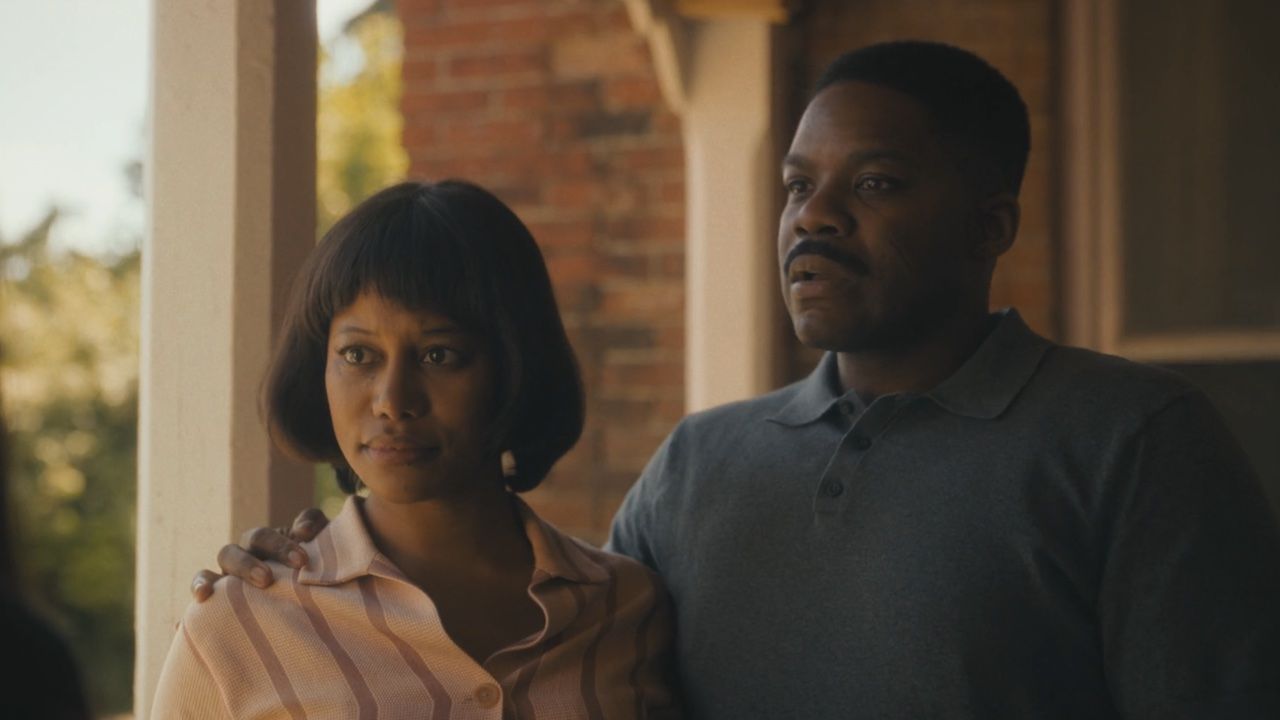
In this context, the monster is only partly to blame for the town’s pain. Pennywise feeds off what already fosters within. The linkage to King’s broader work is smartly handled – Dick Hallorann, is portrayed with steady restraint by Chris Chalk. His psychic abilities introduce the idea that Derry is not alone in bearing evil, and dark forces ripple outward. This crossover feels natural, deepening the sense that no evil is ever truly contained.
One of the show’s most striking narrative moves is reimagining Pennywise’s origins as something explicitly extraterrestrial. A meteorite crashing into Maine is the starting point. Suddenly, Derry’s blight is not only a matter of folklore or gothic horror, but connected to larger cosmic mysteries. Purists may disprove the overt science fiction frame, but the series manages the transition with deftness. Alongside this new origin story, the presence of Indigenous lore and tradition provides a contrast. These mythologies are woven with respect, grounding Pennywise’s otherworldliness with the memory and rituals of those who have long lived in Maine. This balance of cosmic and cultural horror gives the narrative a fresh complexity.
Purists may disprove the overt science fiction frame, but the series manages the transition with deftness.
For those more concerned with lore, the addition of a Cold War subplot is among the season’s surprises. American operatives, eager to harness Pennywise’s unexplainable power, introduce a layer of political drama that expands the threat. Though this angle could risk melodrama, it is handled with care. These narrative threads intersect neatly, keeping the stakes from feeling limited solely to Derry.
The reactions to these deviations in genre and mythology are, predictably, mixed. Fans longing for the gothic horror of past versions may find the new origin and the militaristic scheming to be distractions. But others, especially those drawn to the intricacies of King’s greater universe, have praised the interconnection of stories and the series’ willingness to take narrative risks.
The visuals of Welcome to Derry reinforce the pervasive feeling of dread. Ordinary sights like a rain-glossed street or a flickering light on a porch become subtle reminders of how close danger always is. The camera lingers on faces and facades, allowing fear to build slowly. In this way, the town itself comes alive as an entity marked by secrets. Sound design is equally meticulous: music builds tension without ever overwhelming the story. Every scene is allowed to unfold in its own time, trusting the audience to notice the changes in tone and detail.
Ordinary sights like a rain-glossed street or a flickering light on a porch become subtle reminders of how close danger always is. The camera lingers on faces and facades, allowing fear to build slowly.
Violence in Welcome to Derry is treated as sharp and unforgiving. The series resists indulgence in gore; instead death registers as a shock that exposes the frailty beneath bravado. Survivors are left visibly changed in ways that ripple across their lives. This is horror not just as spectacle, but as lingering emotional injury. When violence erupts, it is quick, but the consequences are drawn out, woven into ongoing character arcs and enriching the sense of real loss.


Underpinning everything is a visual and sonic world perfectly tailored for slow-burning fear. New and returning viewers alike will notice how much emotional weight the show carries. As the finale approaches, the show resists the urge to tie up every loose end. Instead, it reframes earlier events to suggest that Pennywise’s hunger, like the history of the town itself, operates in cycles. The encounter between Marge and Pennywise closes the season with both a warning and an opening. Time itself feels unstable, with hints that the terrors haunting Derry in 1962 might spiral into other decades, other families. This approach ensures that the mythos remains flexible, capable of supporting sequels, prequels, or entirely new stories within King’s world.
At its best, Welcome to Derry is a story about what makes a place and its people vulnerable to darkness. It is a series where horror is both cosmic and microscopic: a flaw in the social order, a moment of silence where someone should have spoken. The performances ring true, the writing does not rush, and the scares are woven into the fabric of the characters’ lives. By daring to combine science fiction and folklore, the series honors King’s legacy while also carving out new territory. As Derry’s story winds on, we are reminded that real horror never rests. It circles, re-emerging in the places we least expect.