





Summary
Emily in Paris season five trades Parisian charm for Roman splendor without altering its glossy formula. While visually dazzling and self-aware at moments, the season resists deeper growth, favoring curated aspiration, fashion, and influence over emotional risk or meaningful transformation
Overall
-
Plot
-
Acting
-
Cinematography
Emily Cooper’s story returns with a new backdrop and familiar ambitions in the fifth season of Emily in Paris, this time exchanging the cinematic streets of Paris for the sunlit charm of Rome. The change of scenery is immediate, transforming the show’s visual palette and amplifying its sense of possibility. For dedicated viewers, the shift may seem bold at first, bringing a promise of fresh cultural texture and narrative growth, but soon the premise circles back to its familiar themes of aspiration, style, and consumer spectacle. As season five unfolds, it becomes clear that Rome mostly serves as an elaborate frame for the show’s signature blend of glossy whimsy and curated fantasy.
From the very first moments, Rome is presented less as a real, lived in city by regular people and more as a living and breathing Instagram feed: a destination whose history and beauty combine into a carousel frame only to support Emily’s next viral marketing campaign or slow-motion gelato moment. Landmarks such as the Colosseum and Trevi Fountain are rendered in glowing light, each location selected with the precision of a stylist arranging branded photo shoots rather than a chronicler of local culture. While these images are dazzling and picturesque, they rarely delve beneath the surface; Rome becomes a showroom of opulence and aspiration, transformed into another backdrop for the show’s ongoing pageant of style and ambition.
Despite the dramatic relocation, the core of the series remains much the same- traveling lightly across the surface of its new setting without probing deeper questions of authenticity, cultural encounter, or transformation. Despite its vibrant settings and elaborate set pieces, season five follows a rather steady rhythm, lingering on carefully curated meals and glamorous parties, while keeping the underlying emotional stakes at a measured distance.
The main pivot of this season revolves around Emily’s work with Agence Grateau as it attempts to launch a new branch in Rome. This premise offers a chance to show Emily grappling with unfamiliar challenges and the realities of professional acclimatization in a new city.

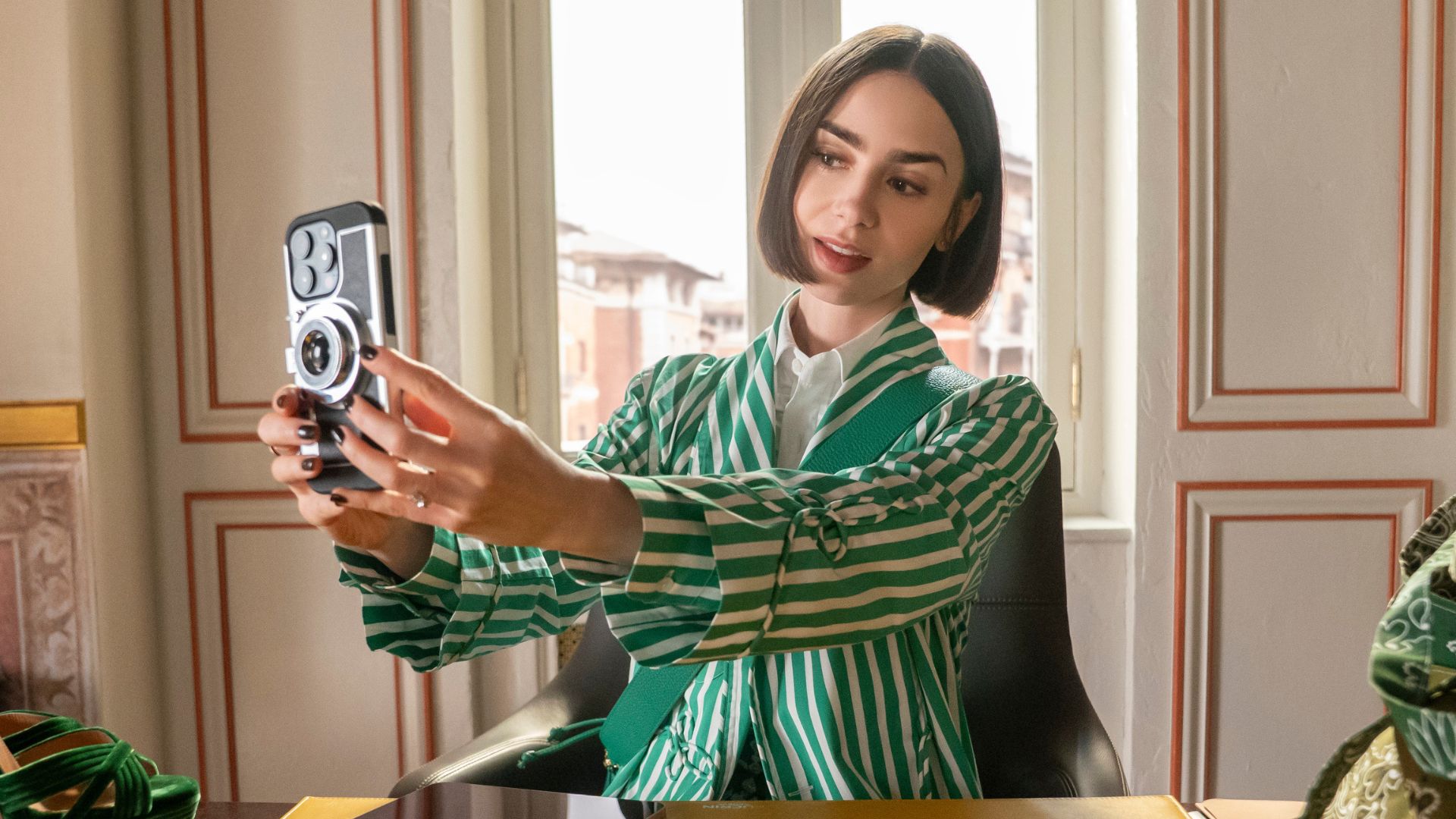
Yet, the show resists meaningful reinvention. Instead, it leans into its most established patterns: high-stakes pitches, social media strategies, and the magic touch that allows Emily to turn every casual interaction into a dazzling marketing coup. The Italian setting is mined for its aesthetic potential, but it rarely intrudes on the comfort of the show’s already established universe. Occasional tableside scenes with hearty Italian cuisine, or brief indulgences in wanderlust, like Emily losing herself in gelato, remain orchestrated for brand appeal and aspirational living, rather than for genuine cultural exploration.
In this world, the distinction between work and leisure is all but erased. Friends become clients and vice versa; lovers turn collaborators; every gathering is a campaign opportunity waiting to be reframed. Emily’s relentless optimism and talent for viral ingenuity secure her place at the heart of this ever-churning machine. Her interactions- part genuine sociability, part calculated influence- blur the boundaries of intimacy and self-presentation, making ambition not just her professional drive but also her lifestyle. The impact is a portrait of modern aspiration, filtered through a late-stage capitalism lens, in which personal fulfillment is measured by material perks and digital clout as much as by real emotional connections.
In this world, the distinction between work and leisure is all but erased. Friends become clients and vice versa; lovers turn collaborators; every gathering is a campaign opportunity waiting to be reframed.
Characters like Mindy Chen and Sylvie Grateau exemplify the different flavors of ambition and identity that animate this universe. Mindy’s transformation into an international pop star is depicted less as an artful journey and more as another branch on the tree of curated influence. While her musical talents earn moments in the spotlight, the narrative’s focus consistently returns to image and recognition, often sidelining deeper artistic struggles in favor of glamorous European stages and on-brand partnerships. Sylvie, meanwhile, remains a pillar of executive acumen, making managerial maneuvers with effortless style. She embodies the blend of sophistication and power that defines Agence Grateau’s strategic outlook, turning setbacks into moments of elegance and surprise. Her story arc remains a touchstone for those who find aspiration less in overt spectacle and more in personal command and control.

New faces further complicate the interplay between personal and professional identities. Marcello, Emily’s Italian boyfriend and the manager of luxury fashion house Muratori, introduces subtle tensions by blending his romantic and business roles. His presence allows the series to play with the fusion of desire, brand alliance, and cultural difference, even as these threads remain secondary to the overriding drive for spectacle and status. The inclusion of the Muratori storyline briefly gestures toward questions of heritage, legacy, and the cost of relentless modern marketing on traditional craftsmanship. Still, these weighty themes emerge only in flashes, often overshadowed by the needs of plot and pace.
There are, in fact, hints throughout season five that the show is self-aware about its own commercial excess. The introduction of Princess Jane, played with knowing wit by Minnie Driver, provides moments of lively meta-commentary. As a flamboyant socialite who seems to exist in a haze of product placement and high society antics, Jane gently mocks the culture of branded influence that surrounds her. Her lines blur the boundary between parody and celebration, giving the audience a wink yet never undermining the show’s overall mood of wide-eyed celebration. It’s a seed of irony in an otherwise earnest garden, and it helps that the show briefly pokes fun at itself before returning to its main business of rebranding consumer culture as feel-good, aspirational and luxury.
As a flamboyant socialite who seems to exist in a haze of product placement and high society antics, Jane gently mocks the culture of branded influence that surrounds her.
Even if these meta-moments seem to offer a chance for self-examination or critique, the show ultimately maintains its steady course. Narratives around the “transactional logic” of ambition, as highlighted by characters like Luc, are acknowledged but rarely challenged. Emily continues to skirt any serious pitfalls; setbacks are momentary, and recuperation is swift. The consequences that might destabilize her in a foreign land, or at least stressing over their possibility might cause emotional burnout: like failures, genuine heartbreak, or career reversals- these do not truly materialize. Despite portraying these as high stakes, at the end of the day the narrative itself holds tightly to its vision of the untouchable girlboss, a heroine whose story accumulates luxury, admiration, and opportunity as if these things were simply her due. This distances the audience from investing into said stakes when she shrieks over them the very next episode again.In this fashion, her actions remain circular and personal growth remains largely out of reach. Characters swirl in familiar romantic triangles and office intrigues, circling old ground rather than charting new terrain.

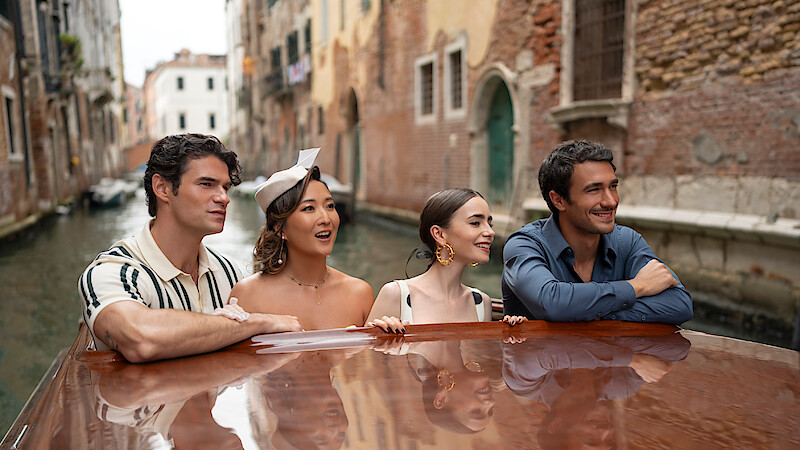
For Mindy, this means her growing fame as a singer is continually complicated by half-hearted romantic entanglements, which seem designed more to sustain plot momentum than to deepen her character. Emily’s own romantic life, meanwhile, oscillates between flirtatious tension and transactional commitment. These relationships are set pieces as much as storylines, serving to extend the central narrative about performance and ambition, but rarely exposing fragility or transformation. The show’s habit of recycling romantic tension from previous seasons, rather than evolving it, contributes to a sense of emotional stasis. Even as new relationships arise, the emotional risks and rewards remain curiously limited.
That said, there are still flashes of emotional resonance within the season. The depiction of friendship, its pleasures and pitfalls, provides some of the season’s most grounded and impactful moments. The way the show treats moments of tension, apology, and forgiveness among friends feels unexpectedly true, anchoring the otherwise glossy spectacle in genuine emotion. These moments allow the characters to step outside the relentless churn of ambition and branding, offering brief but meaningful pauses for vulnerability and support. The ensemble cast’s performances play a major role here: Lily Collins gives Emily a sense of poise and sincerity, navigating precarious professional and personal obstacles with skill; Eugenio Franceschini, as Marcello, injects warmth and nuance into a character that could otherwise dissolve into stereotype.
The way the show treats moments of tension, apology, and forgiveness among friends feels unexpectedly true, anchoring the otherwise glossy spectacle in genuine emotion.
Through it all, the visual language of the series is consistently dazzling. Rome is rendered in luminous detail, each piazza and café stylized to perfection. Much like the switch from Paris to Rome suggests a change in narrative rhythm, the cinematography shifts to favor broad cityscapes, sun-dappled terraces, and late-night promenades. The music and soundscape underscore the show’s glancing engagement with cultural difference- a blend of Italian pop and classic European standards that keeps mood at the forefront. The care with which each scene is assembled is obvious.
The pacing bears the hallmarks of a show comfortable in its own skin. It balances fast-paced marketing schemes and glamorous parties with slower, more reflective stretches, often during scenes shared by Emily and her friends, or moments when the echo of a failed campaign aspires to gravity, without ever becoming truly consequential. These slower beats allow the season’s emotional currents to surface, but they are never allowed to become overriding. The sense of calm, punctuated by bright flares of action and spectacle, mirrors the show’s commitment to aesthetic over complexity.


Season five’s ultimate strength and weakness lies in its refusal to change the rules of its own game. The series embraces its identity as an escapist fantasy, defined by sharp fashion, sunlit drama, and the pleasures of aspiration, refusing to probe too deeply into disappointment, contradiction, or loss. Even when threatened by profounder questions about culture, heritage, and the value of authenticity , the narrative sidesteps anything that might undercut its vision of a flawless, consequence-free world. The show remains deeply committed to reflecting a world in which every experience is fodder for the next post, every relationship a possible alliance or backdrop, and every setback another lesson in the power of reinvention.
The season’s conclusion, unfortunately, lands without much impact, delivering not so much resolution as a hurried pause. It hints at future possibilities and leaves threads untied, giving the audience little in the way of emotional payoff. Yet, for all its narrative stumbles, the series maintains its optimism about reinvention and the ever-fresh potential of new beginnings. There is, the show suggests, always another campaign to launch, always another city to conquer; the carousel of consumer fantasy and curated style never truly stops turning.
Ultimately, the appeal of Emily in Paris remains uncomplicated. And season five is both a celebration of beautiful surfaces and a gentle reminder of the hollowness that sometimes lies beneath. It’s a world of radiant cities, breathtaking fashion, and curated lives- a fantasy that, for better or worse, reflects the dreams and desires of our very modern age.