




Summary
Ghost of Yotei continues the legacy of Ghost of Tsushima with quiet confidence, trading spectacle for emotional depth. Centered on Atsu—a warrior driven by grief and purpose—the game transforms revenge into a meditation on loss and resilience. Through its snowy landscapes of Ezo, refined combat system, and reverence for Ainu culture and samurai cinema, Ghost of Yotei emerges as both an evolution and reflection.
Overall
-
Plot
-
Narrative
-
Visuals
-
Gameplay
-
Replayability
Ghost of Yotei picks up the legacy of samurai adventures in a way that feels both familiar and refreshingly distinct. Instead of chasing loud reinvention, it opts for a slow-burn approach, carefully expanding the saga that began with Ghost of Tsushima. Everything here is subtle but intentional, from its character-driven narrative to the refined combat. It paints a picture of northern Feudal Japan that is intricate and breathtaking. In this sequel, Sucker Punch Productions invites players back into ancient Ezo, trading the thunderstorms of action for a moody, snow-dusted atmosphere where every decision shapes the heart of its protagonist.
Atsu is at the center of Ghost of Yotei—a young woman whose mission is colored by pain and purpose. After the massacre of her family at the hands of the Yotei Six, her thirst for revenge is natural. Unlike Jin Sakai’s measured restraint in Ghost of Tsushima, Atsu’s emotions burn at the surface. This makes the journey less about methodical redemption and more about embracing the messy reality of grief. The performance, brought to life by Erika Ishii, portrays Atsu with vulnerability beneath her outward resolve. Even as she hunts her enemies, moments of reflection and doubt break through, turning what could have been a mindless journey of revenge into a nuanced exploration of healing.


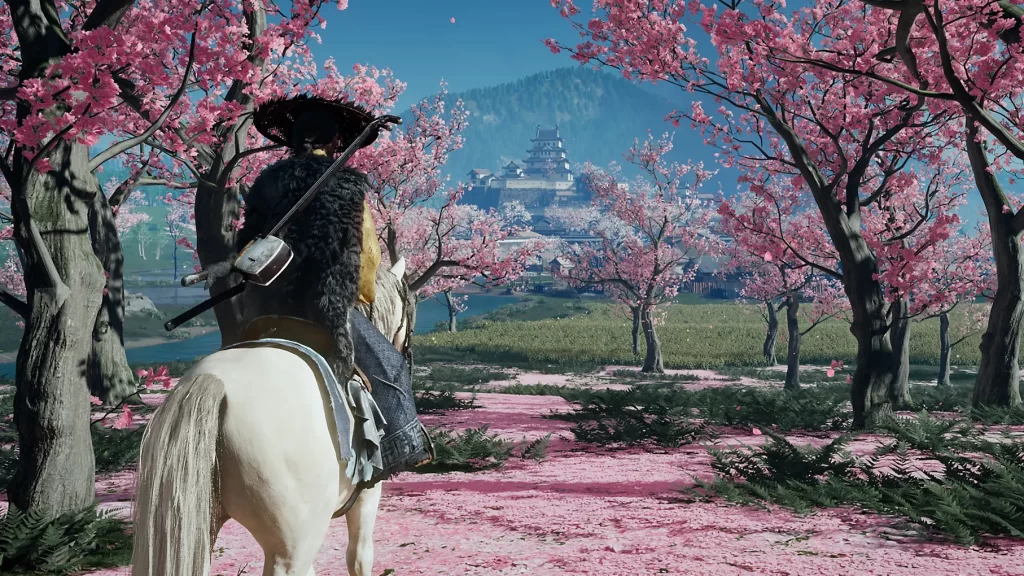
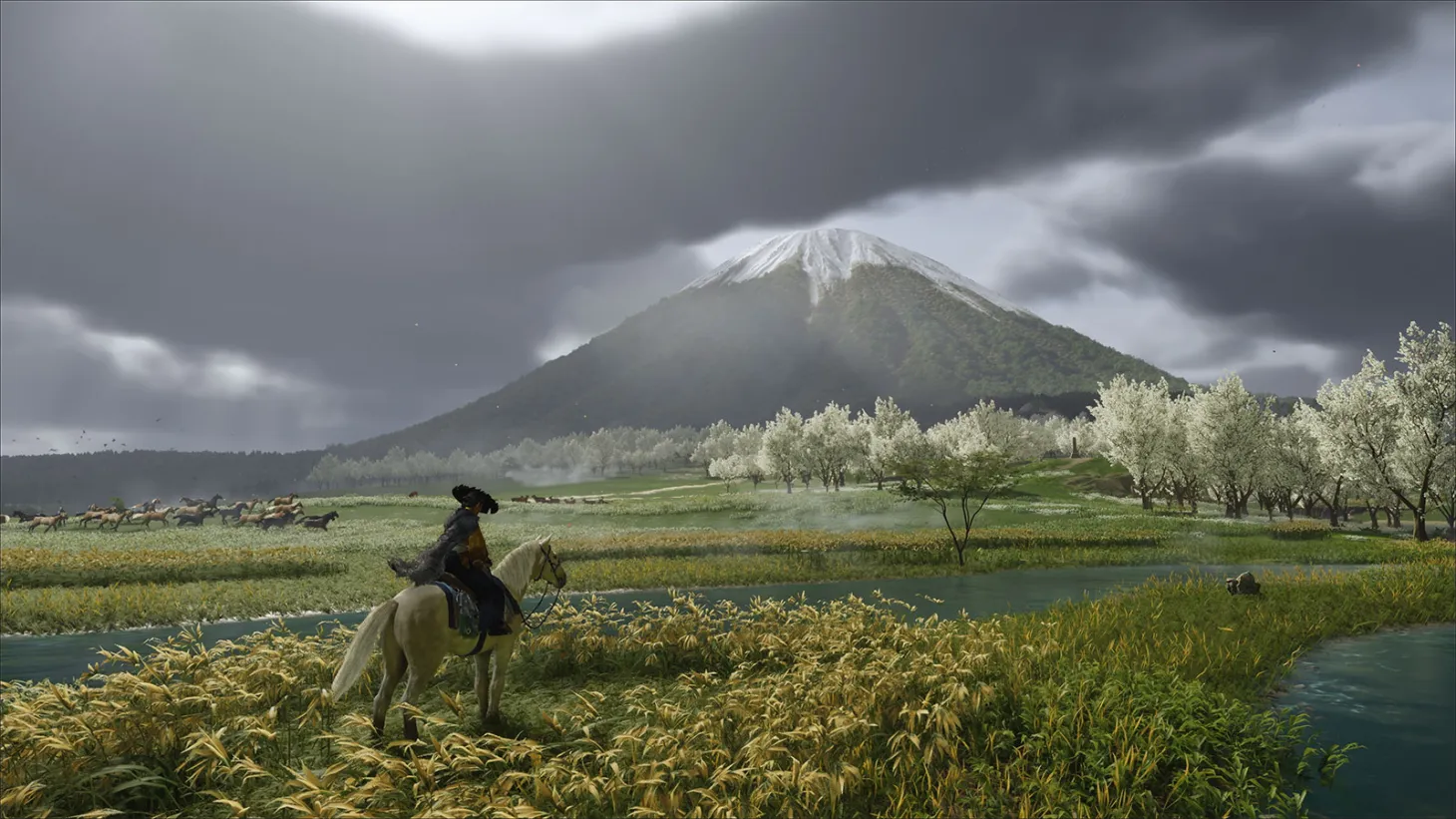
What sets Ghost of Yotei apart is not just the protagonist’s inner battles, but also the careful way it crafts its world. The landscape of Ezo is stark and vast, filled with rivers, deep forests, and mountains capped with unyielding snow. Every stretch of land carries careful attention, inviting players to slow down and observe the world around them. There’s a sense of patience embedded in the design. Instead of overwhelming players with endless objectives, the game presents points of interest as subtle interruptions. This creates a world that encourages both exploration and contemplation. Whether wandering off to follow a golden bird or pausing to take in the drift of autumn leaves, the experience rewards curiosity more than checklist completion. Atsu grows not through endless combat loops, but through lived experiences. The game’s narrative and mechanics walk hand in hand, making every bit of progress feel truly earned.
Whether wandering off to follow a golden bird or pausing to take in the drift of autumn leaves, the experience rewards curiosity more than checklist completion.
There is a persistent mood of loneliness that colors the story. Atsu moves through Ezo as much an outsider as an avenger. She camps alone in the wild, cooking food for modest buffs, or crafting ammo in the shadow of a grove. These scenes reinforce her distance from others. At the same time, her evolving relationship with her wolf is rich with meaning. The animal’s appearances underscore themes of loyalty, companionship, and healing through shared adversity. On the whole, it acts as both emotional anchor and tactical wildcard.

Combat feels new, but doesn’t let go of its roots. While Ghost of Tsushima built its swordplay to be slick and cinematic, Ghost of Yotei builds on those foundations to develop its own style. There is simplicity in its system—a blend of quick strikes and well-timed parries—but also room for experimentation. New weapons make appearances, ranging from chained sickles to dual katanas, encouraging tactical adaptability. The kusarigama, in particular, is worth mentioning for its reach and utility, shattering shields from afar. These tools aren’t just for show. They force the player to think on their feet, adjusting to enemies who might switch tactics and weapon choices in the middle of a brawl.
One brave change comes in the form of firearms. Muskets and flintlock pistols add a new nuance to battle. Each brings tradeoffs: muskets are slow but devastating against armored foes, while pistols are nimble and precise. Far from undermining the spirit of samurai warfare, these weapons introduce a new layer of strategy. Notably, the game refuses to offer a lock-on targeting system. Instead, every clash becomes a study in awareness, where winning requires reading the battlefield as closely as any blade. Boss battles hinge on patience and timing, with small mistakes quickly punished. Different armor sets can change parry timings and recovery rates to reward experimentation and planning. Moreover, the ability to disarm foes and use their weapons not only adds tactical satisfaction but also enriches the flow of battle.
Notably, the game refuses to offer a lock-on targeting system. Instead, every clash becomes a study in awareness, where winning requires reading the battlefield as closely as any blade.
But the lack of forced lock-on targeting in combat is a double-edged sword. On one hand, battles retain a spontaneous energy, where spatial awareness is key. But it can also result in moments of confusion during chaotic skirmishes. Fortunately, players can choose between a new action-focused camera, which heightens immediacy, and a classic widescreen perspective that follows cinematic traditions. This flexibility is typical of the game’s willingness to let players set their own pace and approach.
The technical achievements are quietly handled but hard to ignore. Ghost of Yotei glides seamlessly on the PlayStation 5, with every cutscene rendered in-engine to maintain immersion. The art direction takes inspiration from classic samurai cinema, layering shots with the careful, deliberate pacing of vintage films. Kurosawa Mode returns as a tribute, recasting the landscape in brooding black and white. For those seeking a different flavor, Takashi Miike Mode offers grittier, higher-contrast visuals, changing the tone of every encounter.


Beyond the fighting and technicalities, every aspect of Ghost of Yotei is quietly steeped in local culture. The influence of the indigenous Ainu people is woven gently into the narrative, appearing in side quests, environmental details, and even in the way explorations are structured. Instead of leaning into generic fantasy tropes, the game takes care to ground its world in history. This attention to detail turns even the smallest moments into lessons about the larger world and its people. Threads of music run seamlessly through the story like veins beneath the skin. The shamisen occupies a central place in both the ambience and the narrative. Its melodies serve as a link between the past and present, anchoring Atsu’s journey culturally and personally. These songs appear not just in soundtrack moments, but also in key gameplay features where the instrument becomes a channel for summoning her wolf companion or recalling childhood lessons.
Instead of leaning into generic fantasy tropes, the game takes care to ground its world in history.
Though it is careful not to chase abrupt transformation, Ghost of Yotei achieves something rarer: a thoughtful evolution. Every aspect of the game, from combat to music to story and world, works in measured harmony. Duels resonate the artistry of old samurai cinema, while long walks in the wilds invite introspection. There is always a tension between aggression and melancholy, beauty and brutality. In this way, Ghost of Yotei does not seek to break with the past so much as refine it. Each system is chosen with care, each moment of stillness or action is tuned for effect. While some players may wish for a bolder leap away from Ghost of Tsushima, the beauty of this sequel lies in its unwavering patience, its trust that storytelling can be as powerful in silence as in spectacle. What emerges is not just another action-adventure game, but a meditative journey through loss, healing, and the struggle to do right in a broken world.