




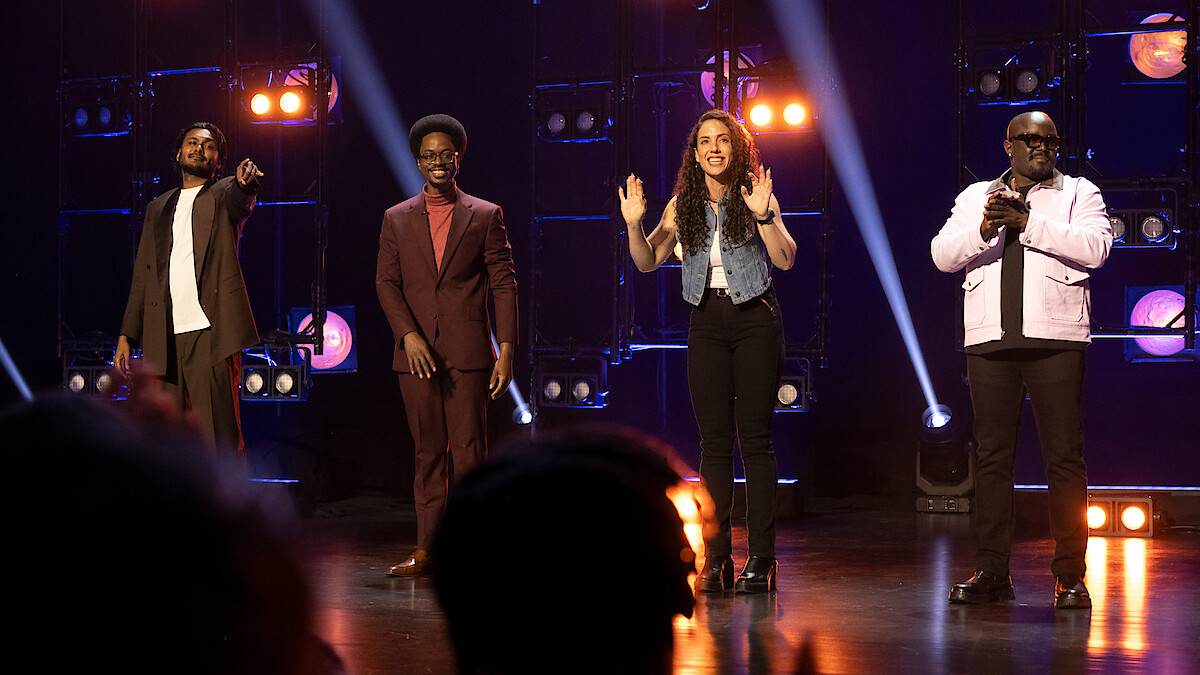
The screen opens on America. Sweeping aerials of Los Angeles, Chicago, New York- the holy trinity of American comedy real estate- before settling on something more intimate: a stage, a mic, a spotlight, and a room full of people who came to laugh and stayed to be surprised. Funny AF With Kevin Hart is Netflix’s latest entry into the competitive reality format, and it arrives with the full arsenal- rotating panels of comedy heavyweights, Kevin Hart in the host seat radiating barely-contained energy, and a lineup of stand-up comics competing for the exposure most of them have been grinding toward for years. The judges across the season include Keegan-Michael Key, Tom Segura, Kumail Nanjiani, Chelsea Handler, Nikki Glaser, and Chris Rock. The bar, to put it mildly, is not low.
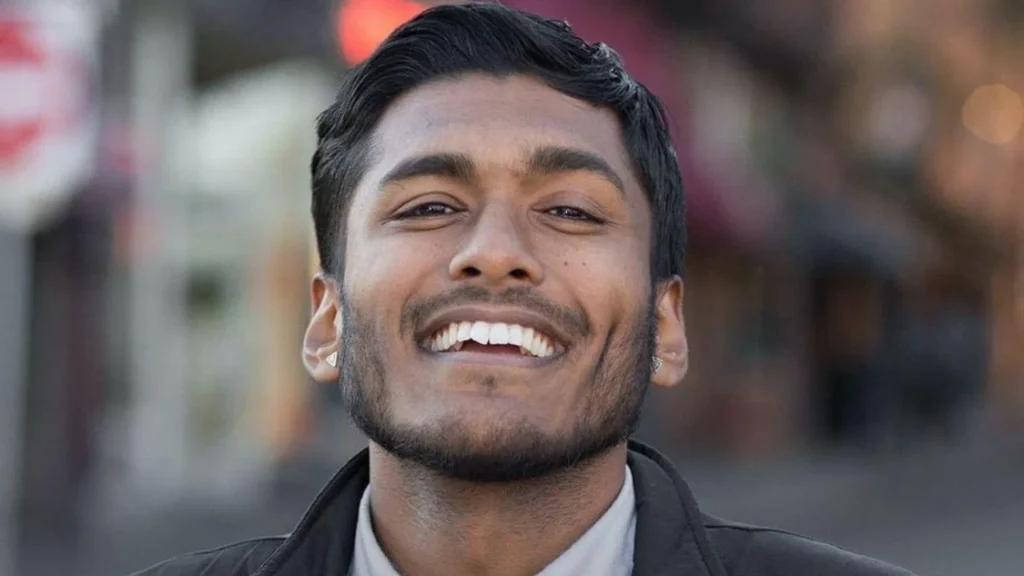
And then out walks Usama Siddiquee.
He is a distinct presence the moment he hits the stage- not just visually, though the Bangladeshi-American comic from New York cuts a specific figure in the lineup, but in manner and velocity. There’s an immediacy to him. He doesn’t ease into the room; he simply begins, and within minutes the audience has decided, without quite knowing when they decided it, that they trust him completely. He returns backstage from each performance trailing the echo of roaring laughter. He does this repeatedly, across cities, across panels, across increasingly high-stakes rounds. When the dust settles, Ron Taylor takes the win. Siddiquee finishes second.

And yet. There’s a version of this story where finishing second is the best thing that ever happened to him.
His own bio- written, he notes with perfect deadpan, entirely in third person, which “should already be impressing you by now”- describes his act as “an energetic (bordering on frenetic) and intelligent (bordering on genius) romp through his own life experiences“.. Before Funny AF, Siddiquee had built exactly the kind of career that people in the industry recognize as serious and the general public has never heard of. He’d been passed at the Comedy Cellar, which for New York stand-ups functions as both a rite of passage and a form of extreme psychological evaluation. He’d done New Faces at Just For Laughs in Montreal in 2018- the festival’s annual showcase of comics who are considered worth watching before they’re famous enough to require a reason. He’d won competitions in Albany, Yonkers, and New York. He’d done television: BET’s 50 Central, Showtime’s Desus and Mero, America’s Got Talent. He’d appeared in Inventing Anna, And Just Like That, Nora from Queens, Better Things. His acting resume is, as the bio helpfully notes, “shameless” in the listing of it.

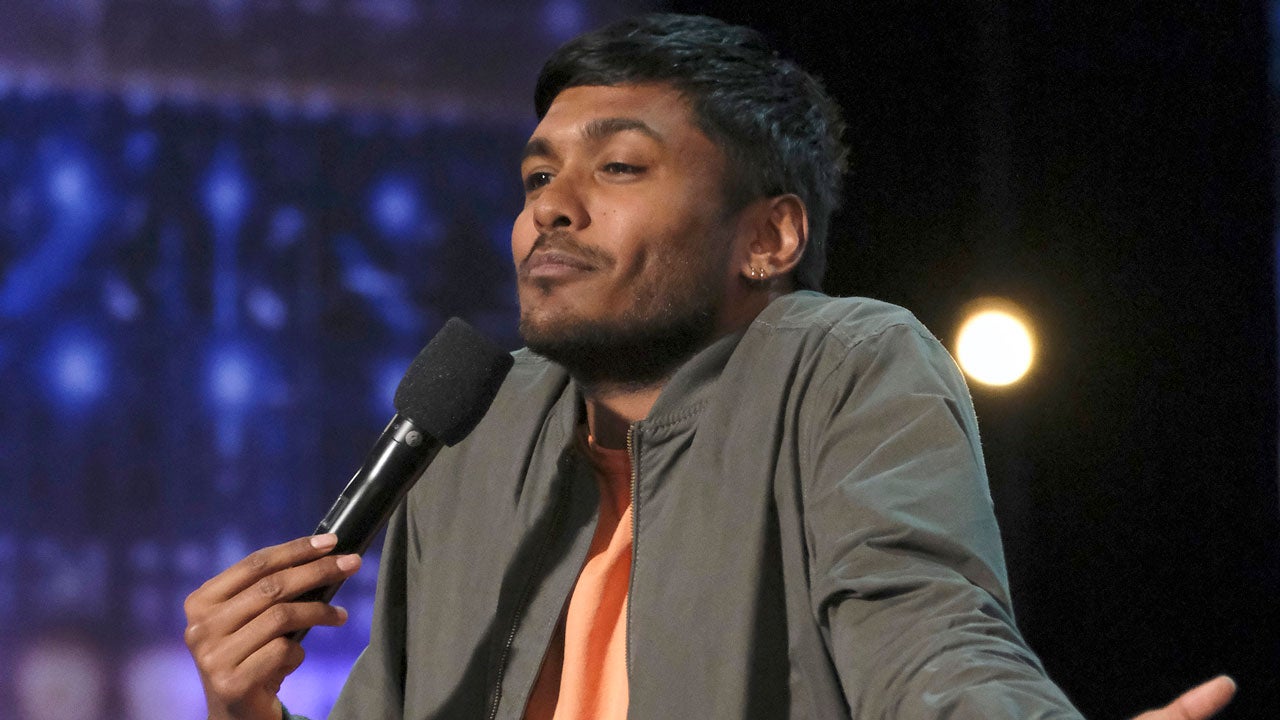
The point is: he wasn’t unknown. He was the kind of comic who other comics knew was good, who club regulars had opinions about, whose name occasionally got passed around in the “you should check this guy out” tradition of comedy word-of-mouth. He had done the work. He had receipts. What he didn’t yet have was a moment large enough to be undeniable. Funny AF was that moment.
What makes a comic work on a competition show is a genuinely strange alchemy. The format is not neutral- it compresses, it fragments, it forces performers to land in five minutes what they might normally build toward across a full hour. Some comics shrink under these conditions. Their timing goes clinical. Their stage presence becomes calculated. They start performing at the room instead of inside it.
Siddiquee, by contrast, seemed to metabolize the pressure and convert it into fuel. His sets had the quality of controlled chaos- rapid-fire, yes, but never scattershot. The pacing was deliberate even when it felt frantic, like watching someone drive fast on a road they’ve memorized. He had the confidence of a comic who has been in enough rooms to know that the room will come to him if he believes it will. Which is the whole game, really. Confidence in comedy is not about arrogance; it’s about conviction. The audience can tell, with unnerving precision, whether the person on stage believes what they’re saying. Siddiquee believed. His storytelling landed because it committed. He wasn’t hedging or soft-selling or leaving exits in the material in case a joke didn’t work. He went toward the funny with the kind of directness that reads, from the audience’s side, as both skill and generosity. And the compliments from the panel were significant: Kevin Hart responded with the kind of energy he reserves for comics who genuinely surprise him. Chris Rock and Kumail Nanjiani, who between them have seen roughly every possible iteration of stand-up comedy, both offered sincere appreciation. The judges selected him to advance immediately after his opening set. This is not how audiences respond to someone who is merely competent.
He had the confidence of a comic who has been in enough rooms to know that the room will come to him if he believes it will.
There’s a broader conversation worth having here, and it’s more interesting than the version that usually gets written. Bangladeshi representation in mainstream Western comedy is, to use the technical term, essentially nonexistent. South Asian comics have made genuine inroads over the past decade- Hasan Minhaj, Aziz Ansari, Nimesh Patel- but within that category, the Bangladeshi experience remains largely absent. The community is specific, the cultural texture distinct, the immigrant narrative arriving from a different angle than the more familiar South Asian trajectories that television and film have slowly, partially begun to accommodate. What’s interesting about Siddiquee is not simply that he occupies that space, but how he occupies it. There’s a generation of immigrant-background comics for whom their identity was primarily a subject: something to explain, to translate, to make accessible to an audience assumed not to share it. The joke was often about the gap between cultures, the punchline landing in the space of mutual incomprehension. It was valid comedy and it did real work, but it carried a certain posture: the performer as anthropologist, the audience as curious outsider.
Siddiquee’s comedy doesn’t work that way. It isn’t asking for permission or offering orientation. His material uses his background as texture, not thesis. He’s not explaining himself to the room; he’s including the room in something that is already in motion. It’s the difference between a comic who says “let me tell you about my culture” and one who just starts talking and trusts that you can keep up. Audiences in 2026 largely can. The cultural fluency of comedy crowds has expanded considerably. Mixed references land now without requiring a footnote.
This is, if you want to be generous about it, what representation at its least self-congratulatory looks like: someone so competent, so assured, so plainly funny that his background is part of what makes the work interesting without being the reason you’d go see it. His bio was formerly under the name “Usama Bin Laughin.” He retired the stage name. He didn’t need it anymore.
There’s a persistent myth in competition television that the winner gets the career and the runner-up gets a nice thing to put on their website. This myth has been comprehensively and repeatedly destroyed by actual evidence. Adam Lambert. Jennifer Hudson. Susan Boyle. In comedy specifically, the relationship between competitive success and sustained momentum is at best complicated. What matters more than placement is whether, during the competition, someone generated the specific kind of interest that causes people to go looking afterward. The “who was that?” search. The ticket purchase made before the tour is even announced. The clip shared because someone genuinely wanted the other person to see it.
There’s a persistent myth in competition television that the winner gets the career and the runner-up gets a nice thing to put on their website. This myth has been comprehensively and repeatedly destroyed by actual evidence.
By every available indicator, Siddiquee generated that interest. His ticket sales have spiked in the wake of Funny AF. The show gave him, in the space of a season, what years of Comedy Cellar sets and festival spots had built steadily but couldn’t have accelerated: the attention of the casual viewer, the person who doesn’t follow stand-up closely but knows what they like when they see it.
In late 2024, Siddiquee made his late-night debut on The Late Show with Stephen Colbert. It is the kind of milestone that the industry treats as confirmation- not of potential, which everyone who’d watched him already understood, but of arrival. Comics who do Colbert tend to be comics the broader machinery has decided to take seriously. Then, in March 2025, he released a debut half-hour special through Don’t Tell Comedy on YouTube, continuing to build an audience that exists independently of whatever platform or competition put his name in circulation. None of this happened by accident. The grinding years- the competitions won, the clubs played, the television appearances accumulated in that list he calls shameless were the infrastructure for a moment that needed somewhere to land. Funny AF was the moment. What comes next is what the infrastructure was built for.

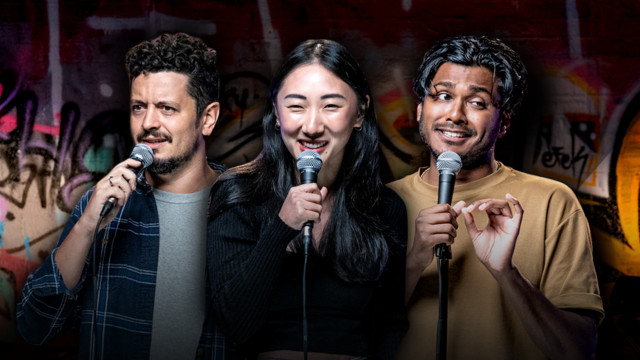
Usama Siddiquee is, by his own account, comfortable writing a bio about himself in third person. His ease should already be impressing you. It should also, if you’ve been paying attention, be telling you something about what kind of comic he is: someone who has thought about how he presents, who uses self-awareness as a comedic instrument, who can be in on the joke about himself without losing any of the authority that makes the joke work. That is a rare and specific skill. It is also, as it happens, exactly what you need to walk out onto a Netflix stage in front of Chris Rock and a clamouring audience and make the whole room decide, within five minutes, that you belong there.
He does. They knew it. Now everyone else does too.
“Funny AF With Kevin Hart” is currently streaming on Netflix.