


In 2013, Ubisoft did something accidental. While developing what was intended to be another installment in their increasingly formulaic historical action series, they stumbled into the best game they would make for the next decade. Assassin’s Creed IV: Black Flag was, improbably, one of the finest open-world games of its generation: a pirate adventure with genuine freedom, naval combat of startling depth, and a protagonist — Edward Kenway, morally compromised and vividly alive — who remains one of the most compelling leads the series ever produced. Ubisoft has spent much of the intervening years making games that could not recapture whatever was working in that Caribbean sea air. Now they have decided to stop trying to recapture it and instead just rebuild it. Assassin’s Creed Black Flag Resynced releases July 9, 2026, and the preview material suggests it may be the most honest thing the company has done with its flagship franchise in years.
What Made the Original Worth Remaking
Before discussing what Ubisoft Singapore has built, it is worth being precise about what they were working with. The original Black Flag was not a perfect game. Its Assassin’s Creed obligations — the Animus framing, the modern-day corporate conspiracy, the collectibles scattered across every inch of map — were always the weakest parts of it. What made it exceptional was everything surrounding those obligations: the tactile pleasure of sailing the Jackdaw through storms, the ambient life of the Caribbean ports, the specific moral texture of Edward Kenway’s arc from opportunist to something resembling a man with principles. The game let you be a pirate in a way that felt genuinely earned, and the naval combat system was built with enough depth that players could spend hours in it without exhausting what it offered. That is the thing worth preserving, and Ubisoft Singapore has apparently understood this.
The No-RPG Decision

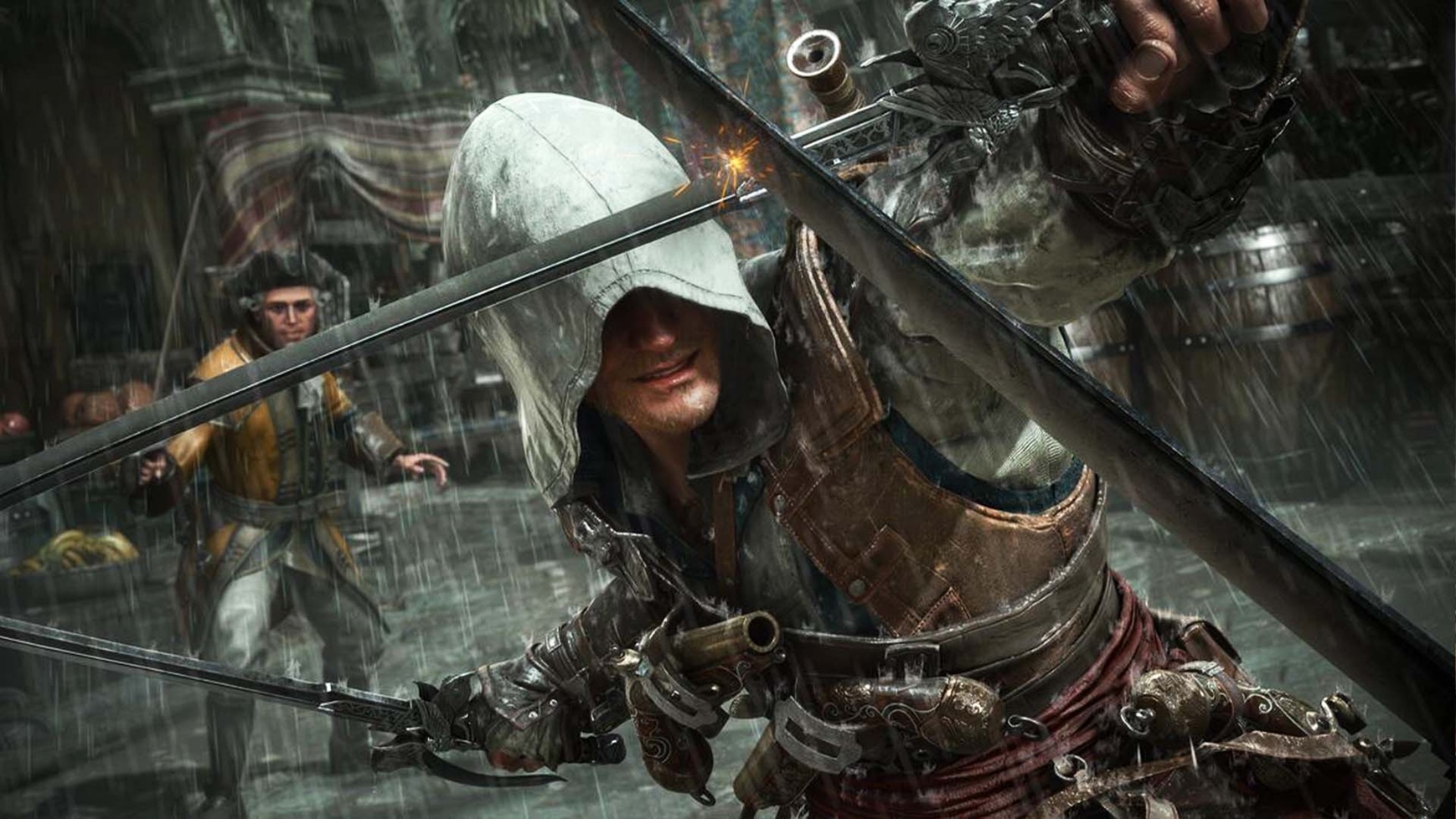
The most significant design choice Ubisoft Singapore made with Resynced is also the one that most directly addresses what has alienated longtime fans from the post-Origins direction of the franchise: this is not an RPG. There are no skill trees. There is no XP. Edward Kenway does not level up. The game is an action-adventure, structured like the 2013 original, designed around the premise that a good game does not need to pad its length with progression mechanics borrowed from MMOs. This is a more philosophically loaded decision than it sounds. Assassin’s Creed Origins, Odyssey, and Valhalla all made the RPG pivot, and while those games have their advocates, they also have a consistent criticism: that the open world became a task list, that the characters became vessels for player customization rather than people with their own interior lives, that the series traded what made it interesting for what made it profitable.
Resynced is saying, implicitly, that Black Flag worked the way it did precisely because of constraints the later games abandoned.
What Has Actually Changed
The rebuild is not a straight port dressed in better textures. Ubisoft Singapore has made substantive mechanical improvements alongside the visual upgrade. Edward can now crouch behind waist-high cover — an absence in the original that felt increasingly anachronistic as the decade progressed. The tailing missions, which in the original would end in desynchronization the moment you were spotted (a frustration that drove players to quit entire sections), have been reworked: detection no longer ends the mission, it changes it, requiring recovery rather than restart. Combat has been expanded: parrying with the dual swords replaces the original’s simpler counter system, combos are more elaborate, and the rope dart, already one of the game’s most satisfying tools, has been quickened.
Naval Combat Revamped
The naval system — the heart of the original — has been rebuilt rather than merely polished. Xbox Wire’s preview coverage detailed secondary weapons added to the Jackdaw, a new system of alliances and rivalries between enemy ships and factions that creates a living naval ecosystem rather than a collection of isolated encounters, and three new recruitable officers who bring different capabilities to the ship’s performance. The dynamic weather system — storms that affect wave height and ship handling, calm seas that reward different tactical approaches — operates in service of a Caribbean that feels genuinely alive rather than decorative. These are not cosmetic improvements. They are the kind of systemic additions that can meaningfully extend the depth of an already-deep gameplay loop.
New Content and the Original Cast
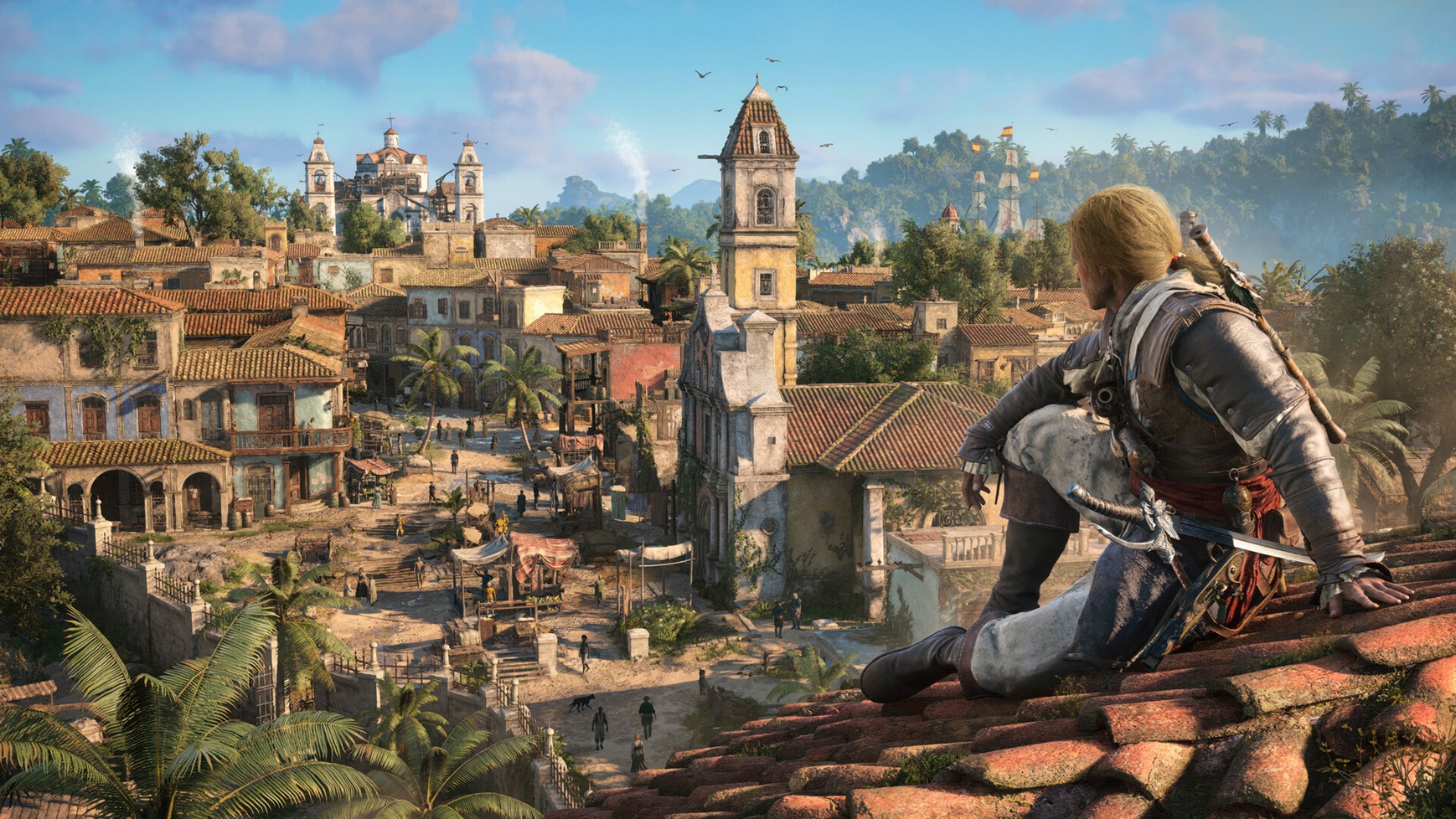
Ubisoft has added new story missions centered on Blackbeard and Stede Bonnet — two of the original game’s most beloved supporting characters — with additional content recorded by the original voice cast. Matt Ryan returns as Edward Kenway, which matters more than it might initially seem: Ryan’s performance was one of the reasons Edward worked as a protagonist, and having him return rather than substituting a soundalike preserves the character’s established register.
The reveal showcase on April 23, 2026, demonstrated that the new content was written to fit the original narrative rather than expand it into franchise building — additional depth for characters already there, rather than a platform for future spinoffs.
The Verdict Before the Verdict
Preview coverage from Game Informer, headlined “Long-Lost Treasure,” captured the anticipation precisely. What Assassin’s Creed Black Flag Resynced represents — for a franchise that has spent years chasing trends and finding that trends do not have the same shelf life as a genuinely good game — is an acknowledgment that the thing worth recovering was already made. Not the formula, not the brand, not the open-world checklist, but the specific alchemical accident of Black Flag: a pirate game that was also, somehow, a surprisingly moving story about the cost of living outside the rules everyone else accepts. Ubisoft Singapore is not being asked to discover that accident again. They are being asked to preserve it, improve it, and return it to a new audience that was not there the first time and an old audience that has been waiting. July 9 will determine whether they managed it. The preview evidence suggests they did.