


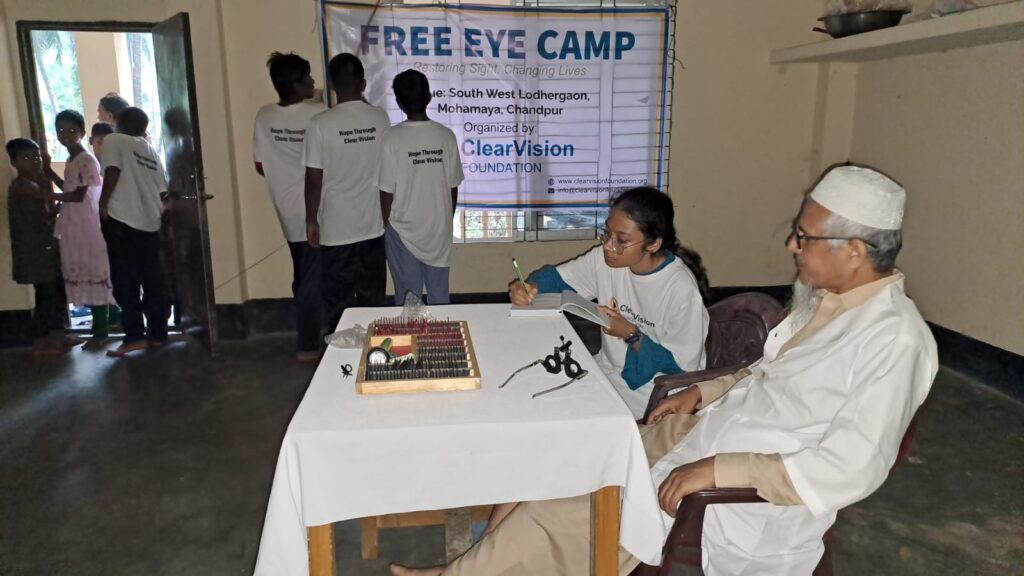


In Chandpur’s quiet villages, where hospitals are hours away and medical specialists even farther, access to basic eyecare has long been a distant dream. Yet, that reality is beginning to change, led by a 16-year-old visionary: Bushra Afroze. Her nonprofit, ClearVision Foundation, represents a new generation of social innovation to confront preventable vision loss, one of the most pervasive yet under-addressed barriers to human potential.
When ClearVision recently conducted an eye health program in Chandpur, dozens of people attended, including many elderly individuals who have been living with untreated vision problems for decades. “After so many years, I finally saw a doctor for my eyes,” said Monoara, 65, her voice trembling with disbelief.
For ClearVision Foundation, stories like Monoara’s are what drive their days and nights of the countless hours spent on calls with mentors, partners, and field teams to bring eye care to places where it simply doesn’t exist. Bushra is building a model that is as practical as it is revolutionary: community-run Vision Hubs that embed basic eyecare services directly into the daily life of rural villages.
In her model, each hub operates within a trusted community of institutions, including schools, cooperatives, or local clinics, so that eye health becomes a familiar part of village life rather than a distant service available only to those who can afford to travel.
Her leadership has already drawn partnerships with some of the world’s biggest names in the optical industry, including EssilorLuxottica, whose collaboration has allowed ClearVision to access high-quality glasses at a fraction of traditional costs.
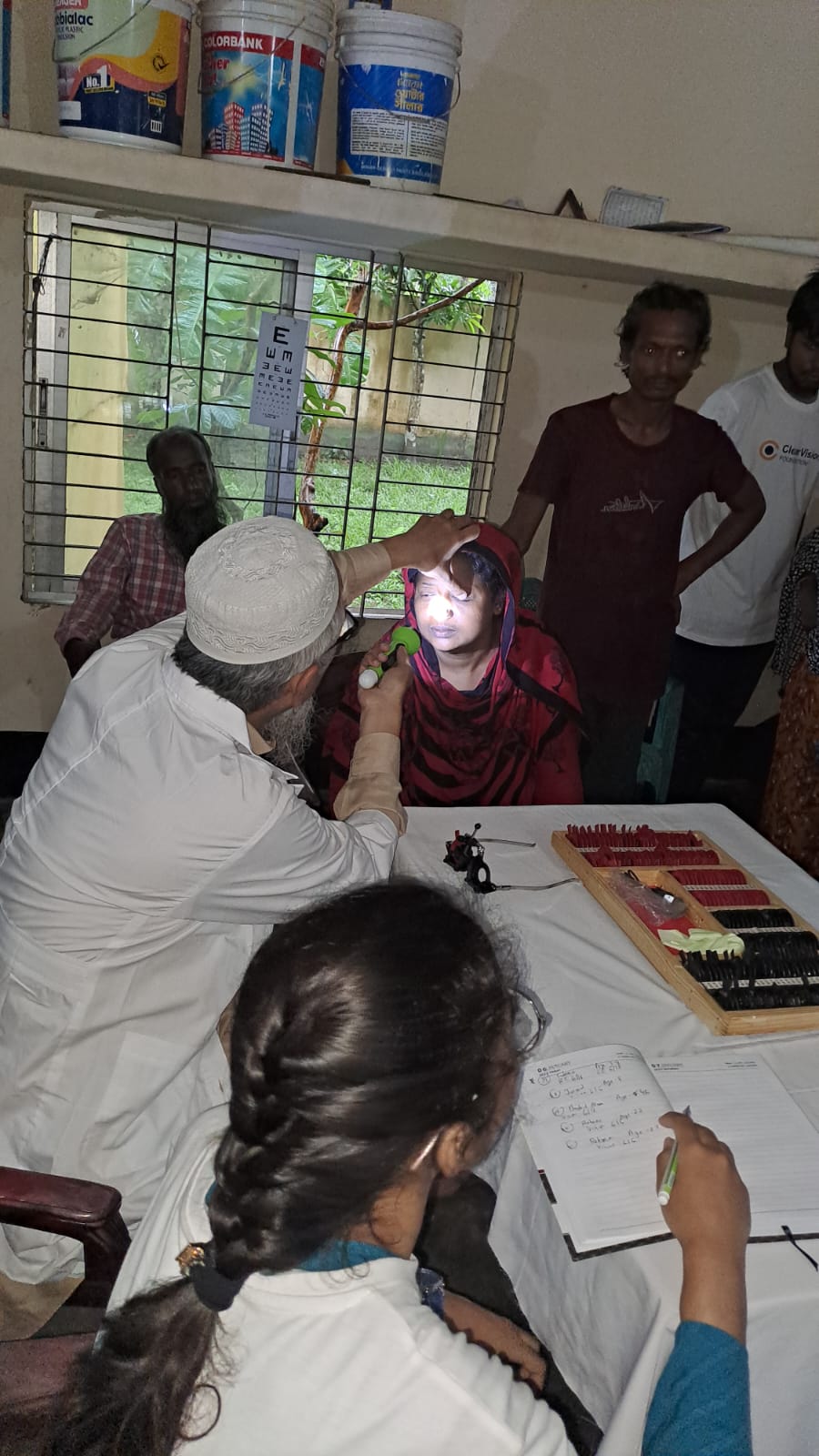

In its early phase, ClearVision has already served hundreds across rural Bangladesh, laying the groundwork for a nationwide network of Vision Hubs designed to reach over 10,000 people in the first year and scale to over 100,000 across Asia and Africa within five years. For Bushra, this is about more than just health; it’s about equality. “A child shouldn’t fall behind in school because she can’t see the board,” she says. “A farmer shouldn’t lose his livelihood because an eye exam is too far away. Clear vision should be a right, not a privilege.” As the sun sets over Chandpur’s rice fields, villagers like Monoara have a newfound hope, clarity, and a young founder is proving that age is no barrier to changing it.