


The announcement that CBS was canceling The Late Show with Stephen Colbert in 2026 caught the television world off guard. For years, the program occupied a central space on America’s late-night television schedule, drawing millions of viewers every evening with its signature mix of sharp political satire, topical interviews, and comedic monologues. Yet, even as The Late Show maintained its high ratings, behind-the-scenes challenges were quietly mounting—challenges that would eventually reshape not only the fate of the show, but the very fabric of late-night TV. We examine whether Stephen Colbert’s The Late Show getting cancelled was influenced by his criticism of Paramount.
At first glance, CBS’s official explanation seemed clear-cut: the network pointed to the financial turmoil upending the entire late-night industry. Their statement referenced the tough environment facing broadcast television, as advertising revenues for late-night content continued an unrelenting decline in the 2020s. The hard numbers traced a sobering picture: while traditional late-night shows generated over $400 million in ad revenue in 2018, by 2024 that figure had been cut nearly in half, to less than $230 million. There was no denying that viewer habits were changing.
Audiences, especially younger ones, were migrating away from network TV toward the fractured, endlessly scrollable world of TikTok, YouTube, and streaming services. Budgets reacted to this shift with advertiser money following the digital crowd, finding better value in influencer marketing and viral content than in big-budget talk shows. All the while, the old model of bankrolling star-driven late-night productions became harder to sustain, leaving networks to face a stark economic reality: even an audience of several million could not guarantee financial success in a new digital age.
The Late Show itself faced this reckoning at an operational level. Running the show in New York City, with a unionized staff and nightly guest stars, required a stunning annual budget—reportedly hovering around $100 million. Despite Colbert’s knack for producing viral, headline-grabbing segments, CBS was only seeing a fraction of that impact reflected in their bottom line. Much of The Late Show’s most popular content circulated on platforms outside CBS’s revenue ecosystem, flattening the link between ratings and profitability.
The disconnect was clear: massive cultural relevance in the digital space, but a growing inability to convert that attention into network revenue. Losses of up to $40 million per year were reportedly not unusual, due to the steep costs and the increasingly fragmented TV ad market. For CBS, the mathematics could no longer be ignored. Stephen Colbert’s show needed to get cancelled.
However, the financial explanations, for all their rationality, seemed incomplete to many industry observers. There was a timing to the show’s end—an abruptness—that made some suspect more complex forces were at play. The official cancelation announcement appeared in the middle of a period of high corporate drama: CBS’s parent company, Paramount, was negotiating an $8 billion merger with Skydance Media, a move being closely scrutinized by the Department of Justice for its potential regulatory consequences. Only days before the announcement, Stephen Colbert himself had dedicated a live monologue to blasting Paramount for settling a $16 million lawsuit brought by former president Donald Trump, who alleged CBS News had improperly edited a controversial interview with Kamala Harris during her 2024 presidential run. Colbert did not mince words, calling the settlement a “big, fat bribe,” accusing the company of bending over backwards to avoid upsetting regulators—and, by extension, the Trump administration. His remarks struck a nerve, both inside the company and beyond.
In the following days, the cancellation was met with a storm of speculation about political motivations. High-profile political figures weighed in—Senator Elizabeth Warren, for one, publicly wondered whether Colbert’s stinging criticism had expedited his own show’s demise, given the suspiciously short interval between his on-air comments and CBS’s announcement. Adam Schiff, who made an appearance on Colbert’s final episode, voiced similar concerns and called for more transparency. On social media, then-President Trump celebrated the cancellation, using his own network to mock Colbert and suggest—without real evidence—that other late-night critics might soon meet the same fate. The pattern, for some, was difficult to ignore.
Layered above the political tension was an equally complex tapestry of corporate relationships. Skydance Media, the company aiming to merge with Paramount, is led by David Ellison—son of Oracle founder Larry Ellison, a high-profile Trump supporter with deep connections in conservative circles. Speculation mounted that Skydance was steering to acquire not just established entertainment properties, but also upstart news and content outlets with an explicit political slant, such as The Free Press. Concerns grew that the impending merger, requiring approval from entities politically aligned with Trump, would further pressure Paramount to shed programming that might complicate the deal. In this light, the elimination of The Late Show was seen by some observers as a calculated move to tidy the corporate image, lessen controversy, and ease regulatory passage for the merger.
Financial details and political drama aside, the pivot away from late-night is part of a longer arc in broadcast history. Even before Colbert’s exit, CBS had already shuttered The Late Late Show with James Corden in 2023, experimenting instead with lower-budget formats like After Midnight, hosted by Taylor Tomlinson. That show too was a temporary solution, lasting just two years before CBS called it quits. These developments aren’t limited to CBS—networks from NBC to ABC have responded to the late-night crisis with their own rounds of cancellations and budget reductions. Across the industry, the old formula—star anchor, nightly show, big studio, live audience—simply couldn’t withstand the pressures of a digital-first age where attention and dollars flowed elsewhere.
The result is a late-night culture fundamentally changed. Where once these programs were appointment viewing—iconic for their blend of humor and pointed social commentary—now they feel more like relics of an earlier media era. The Late Show’s legacy is rooted in this central position: from its creation in 1993, through David Letterman’s legendary run, to Colbert’s ascension in 2015, the show provided a nightly convening place for political reflection wrapped in comedy. Colbert’s version was particularly lauded for fusing sincere interviews with incisive monologues, holding the nation’s politicians and public figures to account in front of millions. Yet, as the economics of TV shifted and audiences sought out real-time commentary in bite-sized digital formats, even The Late Show’s cultural influence became harder to measure and monetize.


Experts have long argued that the late-night model was living on borrowed time. The tension, as described by industry strategists, comes from the financial structure: production and staff costs remain enormous, but so much of the show’s real-world impact blossoms not on the network’s own platform, but in the viral clips shared on social media. These platforms democratize content—making every joke, clip, and monologue instantly accessible—but also siphon away the advertising potential, as networks see their role as distributors slowly eroded. This transition leaves broadcasters chasing relevance while managing ever-tighter margins, unable to compete for ad dollars against nimble influencers and streaming-native shows.
Yet for those who tuned in every night, The Late Show with Stephen Colbert was more than a business equation. Its cancellation marked the loss of a daily ritual—a jolt of wit and candor that helped audiences process the news and share a laugh. Colbert’s final taping, watched by loyal fans and colleagues alike, was infused with a sense of gratitude and nostalgia. The show had fostered real connection, giving viewers not just entertainment, but also a sense of belonging during tumultuous times. The stage was less a set than a community gathering space, where the issues of the day were examined not through sterile debate, but through humor and humanity.
The aftershocks of CBS’s decision radiate outward, highlighting the broader trends shaping twenty-first-century media. The Paramount-Skydance merger is just one example of how media consolidation is transforming the entertainment landscape—prioritizing shareholder returns, streamlining operations, and sometimes sacrificing creative independence for regulatory or political advantage. The involvement of Skydance, with its rumored interest in politically charged properties and its founder’s personal ties to influential policymakers, only intensifies anxieties about editorial independence and the future of open discourse on major platforms.
For late-night itself, the collapse of the Colbert era portends a sobering future. The very attributes that once made these shows essential—topicality, immediacy, and mass appeal—are poorly suited to an attention economy that favors enduring, endlessly replayable material. Streaming services invest in series and specials with long lifespans and global reach, while brands funnel their ad spend into digital campaigns with clear, trackable returns. Some networks will try to adapt by developing leaner, multiplatform talk formats—with more intimate production, younger cast members, and closer integration with the meme-driven ecosystems of the internet. But there’s no guarantee that these hybrids can recapture the centrality once enjoyed by traditional late-night talk shows.
Looking back, it’s striking how effectively The Late Show wove itself into the political and cultural conversations of its era. Through Colbert’s blend of earnest critique and sly humor, the show offered viewers respite and reflection in an anxious age. It took the temperature of the nation’s mood and provided catharsis in moments of national tension or turmoil. Even now, its impact lingers: some of Colbert’s monologues and interviews will endure as key moments in the ongoing dialogue about media, politics, and the power of satire.

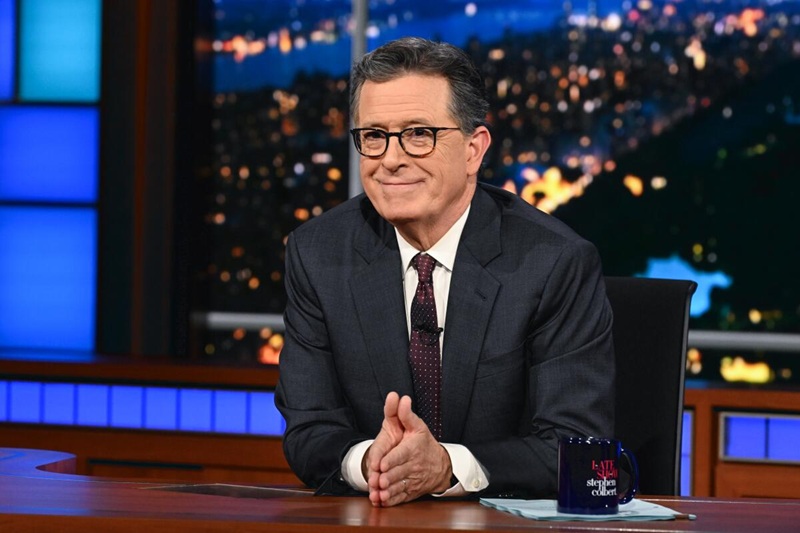
What, then, does the end of The Late Show ultimately mean? It signals, above all, a hard reckoning for legacy television. No longer insulated by their historical status or loyal viewerships, broadcast platforms must grapple with new rules: the audience is fragmented, content is everywhere, and cultural cachet counts for little without a sustainable business model. The intricacies of corporate mergers, regulatory politics, and shifting advertising priorities all play a role, but the blunt truth is that the era of the big network talk shows, as once imagined, is over. In its place emerges a media landscape defined by agility, innovation, and the careful calibration of risk and reward.
For the millions who made The Late Show part of their nightly lives, this ending is bittersweet. But its conclusion also creates opportunity. The space left behind may allow for new voices and formats to take root—formats that embrace digital-first logic, respect the new economics of content, and find fresh ways to bring people together, whether on screens big or small. Like a spy drama that shifts its focus and tone from season to season, the survival of late-night will depend on its willingness to adapt and find meaning within a world that relentlessly changes.
Just as the most successful series combine moments of fast-paced action with those of quiet introspection, the story of The Late Show finds its resonance in both its triumphs and its departures. The final act is not only about endings, but also about embracing new beginnings—searching for new ways to connect, to spark laughter, and to foster real conversation in a complex, unpredictable world.