


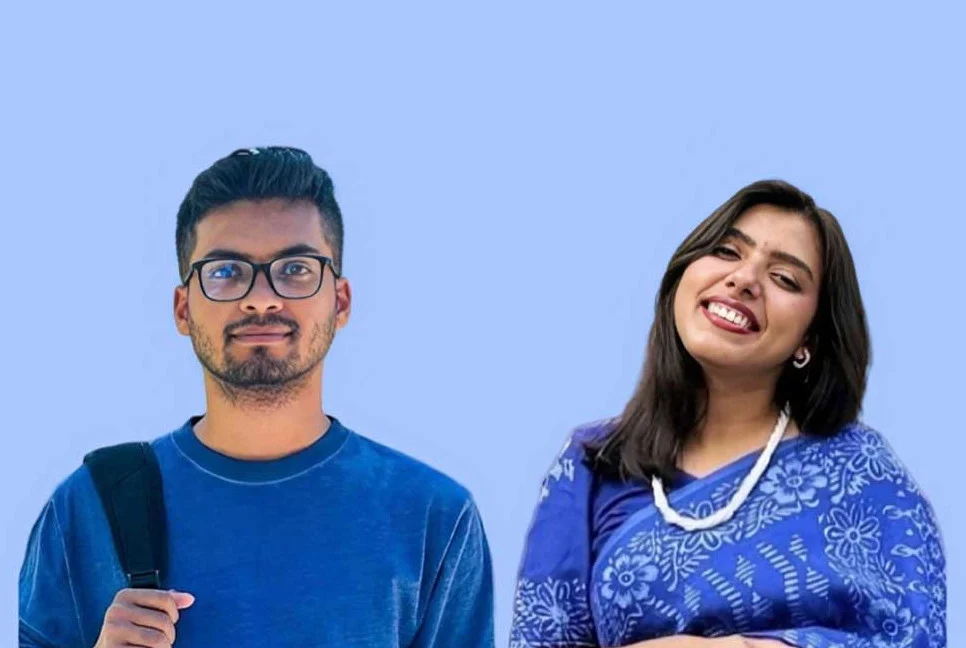


Limon and Bristy were two Bangladeshi students pursuing doctorates at the University of South Florida. Like all of us, they had dreams. Prosecutors believe that on April 16, Limon and Bristy were murdered. A mutual friend reported that they went missing the next day. On April 24, Limon’s remains were found in garbage bags near the Howard Frankland Bridge. His brother remembered him as someone who was “very decent, always had a smile on his face.” Bristy’s father made a heartbreaking plea: “I have only one demand now — find my daughter’s body and bring it back. I just want to see her face one last time.” Two days later, Bristy’s heavily decomposed body was found near the same bridge.
They were planning to get married soon.
Every year, 50,000 to 60,000 Bangladeshis go abroad for higher studies. Last year alone, more than 17,000 went to the United States — a record high. These are not just numbers. They are you and me, with families watching their flight trackers as they go on their departure flights. As each of us leaves the familiarity of our homes, for the first time perhaps, we feel grateful for our mother tongue and our country.
Every year, 50,000 to 60,000 Bangladeshis go abroad for higher studies. Last year alone, more than 17,000 went to the United States — a record high. These are not just numbers. They are you and me, with families watching their flight trackers as they go on their departure flights.
I remember, when my family and I went to Maldives, we always searched for Bangladeshis. Yes, the Maldivians also looked like us, but the sound of Bengali in a foreign land felt like honey. And believe me when I say this, every time we met someone, they always treated us to something— a boat ride, a lunch, a family dinner, you name it. Why? Because they too felt at home.
But familiarity does not always mean safety.
One of the first challenges for students abroad is finding housing. We instinctively look for people who look like us, speak like us, or share our faith — Bangladeshis, South Asians, Muslims. We often prioritize cheap rent over everything else. “How bad could it be?” we tell ourselves. Amidst all this, we forgo basic communication or at least knowing what kind of a person we are going to be living with, just because they’re also a Muslim. “What else to look for?”
The current accused is Hisham Abugharbieh, Limon’s roommate. Abugharbieh had a clear criminal record —two battery charges in 2023. His brother, Ahmad Abugharbieh said, “I didn’t even know he had a roommate. He should’ve lived on his own or been homeless.” Ahmad had declined to move forward with the battery charges due to financial constraints. “I dropped them because I thought it was going to cost me a lot of money,” he said. “I regretted that choice immediately after.” Ahmad also alleged that his brother “would start screaming in the middle of the night about how he is God and we should all bow down to him.”
In fact, just two weeks before the murder, Limon and another roommate had filed a complaint calling Abugharbieh “unsocial” and “psychopathic.” The complaint fell on deaf ears. Now, we could blame the law enforcement, among other things, as to why Limon’s complaint was not taken seriously. But none of it would return Limon and Bristy.
After my own admission season, I was also preparing to study abroad. I had taken the SAT, written and rewritten my college essays. A part of me was excited — thrilled, even — at the idea of a new experience. But after hearing about Limon and Bristy, I felt uncertain. I remembered the video my friend sent from Qatar as he saw shockwaves shaking his windows. I read about sudden ICE raids and visa rejections. And then this, two bright students allegedly murdered by someone they were supposed to be close to — a roommate.
I decided not to go. Not yet at least.
Writing about Limon and Bristy feels strange — almost wrong. They aren’t cautionary tales. Limon was supposed to come home this summer, his family was waiting for him. Turning their deaths into an essay feels uncomfortable, even exploitative. And yet, people write. Perhaps, those who write, write in resistance, hoping that somewhere, someone will be more cautious. Someone will pause, ask better questions, and trust their instincts instead of their comfort. And no one will let a headline become a reason to abandon their dreams.
Perhaps, those who write, write in resistance, hoping that somewhere, someone will be more cautious. Someone will pause, ask better questions, and trust their instincts instead of their comfort.
Because familiarity can feel like home. But it is not the same as safety.
May Limon and Bristy be at peace.